Crises of International Law and Governance: Causes and Consequences
Nowadays we are witnessing serious crisis of international law and governance. It is the major crisis of international legal system that emerged from the horrors of the World War II and aimed at adhering justice, preventing aggressions and protecting victims. Weaknesses of international law and international organizations in preventing illegal wars and aggression or in finding mediated solutions are ostensible. Neither International Courts nor United Nations seem able to deter aggressions, restore justice and punish aggressors.
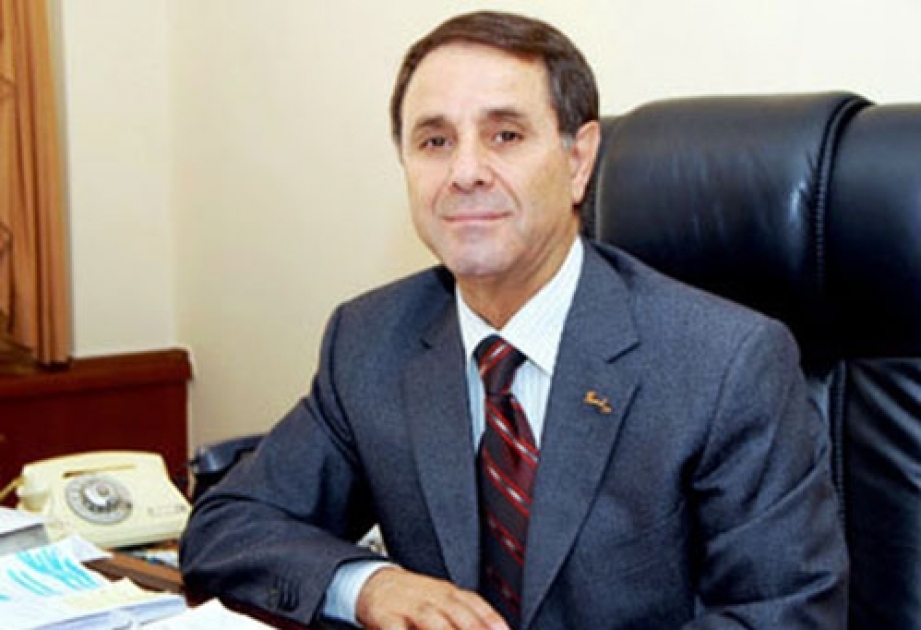
The major powers are demonstrating a differentiated and selective approach to the same type of problems across the world. Double standards, the use of international law and the international organizations as an instrument for implementing national foreign policies has become prevalent. Caucasus International Journal discussed the current crisis of international law and governance with Dr. Novruz Mammadov, Deputy Head of the Presidential Administration of the Republic of Azerbaijan and the Head of the Foreign Relations Department.
Double Standards and the Pursuit of National Interests by Major Powers
While talking about the reasons of failure of international law and its consequences for international politics, Dr. Mammadav draws attention to the double standards and pursuit of national interests by major powers, under the guise of advocating for democracy and human rights. He notes that following the collapse of the USSR, the perseverance of a single pole, embodied by the West, gave great hope to many. There were expectations that the processes would flow smoothly, that problems would be resolved and potential conflicts disentangled not through warfare, but through negotiation and compromise, in compliance with the norms and principles of international law. Yet the West, despite becoming the dominant force, made no effort to harmonize or pacify the system of international relations. On the contrary, facing no serious competition, the West opted to ensure its self-interests completely - to secure total control over the human and natural resources of the entire world.
Dr. Mammadov mentions that very complex situation has emerged in the system of international relations in the new millennium. A number of persistent and enduring processes have contributed to the escalation of international relations, leading to the current tensions. "Military force was relegated - killing people with bullets is now considered an international crime. The mechanisms for influence have adapted to the new realities; becoming more delicate, intricate and ‘civilized’'', says Deputy Head of Administration. Now, the human factor is underlined and various interventions are justified on humanitarian reasons. The West uses democracy and human rights to put pressure on other nations. There has even been a move to take the issue of gay, lesbian, bisexual and transgender marriage into the human rights domain.
''The outcome is obvious'', underlines Dr. Mammadov, "the West, having become a dominant force, bears responsibility for the problems that have emerged in different parts of the world, those which at times have global ramifications.'' The failure of the West to remedy these problems, its reluctance to interfere in some cases, while serving as a root cause of the processes in other cases, as well as the broadening of interstate geopolitical and geoeconomic struggles and territorial conflicts show that contrary to the declaration of Francis Fukuyama, the world has not reached 'the end of history'. Instead, it has just entered a more intense and perilous phase. Suffice to say that if during the Cold War there had been around ten countries consumed by tensions, today the number of troubled areas is around fifty.
According to Dr. Mammadov, the most thought-provoking aspect, against this background, is that at the outset of the 21st century, as societies mature, such problematic developments await resolution. It should be the case that as people and society evolves conflicts, contradictions and problems decrease. The reality, however, indicates the contrary. This is not promising for the future development of the international community.
Lack of Justice in International Law and International Politics
Consequences of the current crisis of international law and failure of international organizations in enforcing the law was an other topic touched upon during the conversation with Dr. Mammadov. CI Journal asked Dr. Mammadov about necessary steps that are needed to be taken for the international law to become a regulatory mechanism for international relations.
According to Dr. Mammadov, first, it should be noted that justice is the most crucial and significant notion in evaluating the collective performance of humans. This principle stands to be the core value for assessing the conduct of everyone - from ordinary citizens to high-ranking politicians. Without justice, it is futile to expect positive outcomes of human activity in any field. The vivid manifestation of the consequences of injustice in the system of international relations is the widespread disregard, for the sake of certain interests, of mass killings and the fact that people are compelled to flee conflict zones in different parts of the world.
The biggest problem in international relations, as Dr. Mammadov notes, is associated with the lack of justice. For this reason, the long-established system of international law with its framework for regulating the activity for all nations is undeniably crumbling. The norms and principles of the international law are no longer honored. Determining the legitimacy of the actions of certain nations within this mechanism, imposed by the West, has become a challenge. That is to say, the assessment of conduct based on the existing principles of the international law is possible, but this assessment has become dependent on the self-interests of certain nations. Therefore, international law is morphing into an instrument that serves the interests of the major powers.
The international organizations that must guarantee the implementation of the international law are in crisis. Dr. Mammadov sees the main cause of the crisis in these institutions’ dependence on the interests of the major powers. These interests lead to the differentiated application of the international law to the same processes. As he mentions, on numerous occasions, President of the Republic of Azerbaijan Ilham Aliyev has stressed that in some cases the interventions into a certain country occur prior to the passing of the relevant UN Security Council resolution. By contrast, other resolutions remain in the archives for decades, without any effort to implement them.
This attitude is clearly manifested in the international community’s approach to the Armenia-Azerbaijan Nagorno-Karabakh conflict, Dr. Mamamdov stresses. There are four UN Security Council resolutions on the Nagorno-Karabakh conflict, as well as decisions and resolutions adopted by the OSCE, European Parliament, the Parliamentary Assembly of the Council of Europe, NATO and others. The UN resolutions, in particular, demand immediate and unconditional withdrawal of the Armenian troops from Azerbaijan’s occupied territories. In all of these documents, the international community and international organizations recognize the territorial integrity of Azerbaijan. However, none of the provisions in these resolutions has been implemented.
"What is to be concluded from this?'', Dr. Mammadov asks, "Are the Western countries interested in preserving the status quo regarding the Nagorno-Karabakh conflict, given that they do not hesitate to intervene immediately, in such places as Afghanistan, Iraq and Libya? Could that explain why the separatist regime in the Nagorno-Karabakh gets special treatment, unlike the separatist entities in Georgia, Moldova and Ukraine?''
According to Dr. Mammadov, the application of double standards, certainly, casts a shadow upon international law. The processes provoked and manufactured by the West eventually backfire and gravely imperil the general system of international relations. This is widely acknowledged by many nations. The need for change is undeniable. The only real cure is to restore the principles of justice and the rule of international law. The major powers must work not for the sake of their own interests, but for the implementation of the norms and principles of international law, be it in bilateral relations or within the international organizations. Deputy Head of Administration asserts that the urgency of this issue is particularly evident in an organization like the UN: "For example, during our membership in the UN Security Council, Azerbaijan championed international law and justice, displayed principled positions on concrete issues and forwarded initiatives aimed at ensuring international peace and security and bolstering cooperation in combating terrorism. I believe that this is the only posture that can alleviate the threats in the system of international relations.''
Failure of OSCE Minsk Group as a Mechanism of Conflict Resolution between Armenia and Azerbaijan
CI Journal also asked Dr. Mammadov about his assessment of the performance or lack of it on the part of the co-chairs of OSCE Minsk Group with respect to the Armenia-Azerbaijan Nagorno-Karabakh conflict? What does he think are the key causes of the failure in the peacemaking efforts of the Minsk Group?
The Armenia-Azerbaijan Nagorno-Karabakh conflict has been ongoing for over twenty-five years. Twenty percent of the internationally recognized territory of Azerbaijan remains occupied by Armenia, with over one million people forced to live as refugees or internally displaced persons. Dr. Mammadov notes that, yet for some reasons, there are persistent efforts to label this conflict ‘frozen’. The international community becomes concerned about constant tensions at the frontline; however, time and again, rather than analyzing the essence of the processes, it attempts to ‘freeze’ the situation.
The Nagorno-Karabakh conflict is the product of geopolitical games, Dr. Mammadov mentions. Nothing is going to change if the endgame is the same. Events in such countries as Georgia, Moldova and Ukraine stand testimony to that.
Hence the question is, according to Dr. Mammadov, what exactly is the OSCE Minsk Group doing? The Co-Chairs are showing certain efforts in the direction of conflict resolution, issuing statements and producing proposals. Armenia, however, rejects these initiatives. "What is the reaction of the co-chairs?'', he asks, "‘Shuttle diplomacy’ and regional ‘tourist tours’ continue, creating an appearance of activity. The essence remains unchanged. How much longer can this kind of mediation last?''
There are some fascinating approaches to the conflict resolution, according to the Deputy Head of Administration. On one hand, the resolution of the conflict has, in fact, been monopolized by the OSCE Minsk Group. Certain quarters have stakes in the situation remaining unchanged. Every time practical efforts towards resolution are made, it says, "The OSCE Minsk Group is dealing with this matter.'' On the other hand, whenever a firm position from the co-chairs is required, arguments such as "the problem has to be resolved by the parties themselves and we will support any solution'' come into play.
''Therefore, there is a need for serious change in the substance of the mediation'', says Dr. Mammadov. He asserts that "first of all the attitude towards the conflict parties must change and concrete, and a clear-cut position needs to be demonstrated. The fact that Armenia is an aggressor country has to be recognized and this must be the underlying theme of the negotiations. Regrettably, we are yet to witness any of this. We cannot be satisfied with the current course of the talks.'' Dr. Mammadov quotes President Aliyev who repeatedly stated that there will be no negotiations simply for the sake of negotiating, Azerbaijan will never agree to even a square inch of its lands remaining under Armenian occupation, and will eventually liberate own land. Legitimate options are on the table - peace, negotiations or other means. According to Dr. Mammadov, it would be productive for all if both the co-chairs and Armenia acknowledge this reality.
Newtimes.az
Other news in this section


