Disruption expected as six-day doctors' strike begins in UK
Baku, April 7, AZERTAC
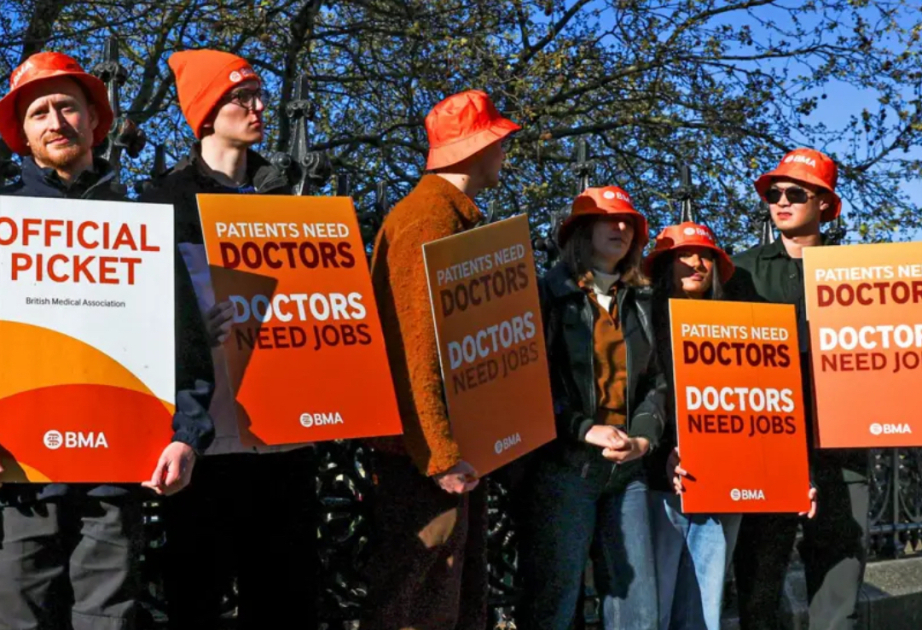
Resident doctors in England have begun a six-day strike, their 15th in a long-running dispute over pay, BBC reported.
The strike began at 07:00 BST on Tuesday and promises to cause significant disruption to services, with resident doctors (formerly called junior doctors) making up nearly half of the medical workforce in the NHS.
Senior medics are being drafted in to provide cover in emergency settings, but it means some pre-planned treatments and appointments are having to be cancelled.
The walkout by British Medical Association (BMA) members comes after talks between the government and doctors' union broke down in March.
The NHS is urging patients not to put off seeking help if needed, saying those with emergency and urgent needs should use 999 and 111 as normal.
Those who have planned appointments and treatments scheduled should attend unless they are told otherwise. GP services are largely unaffected.
Health Secretary Wes Streeting told BBC Breakfast 95% of appointments were still in place and apologized to those affected by cancellations, saying they "deserve better".
He said the government had negotiated with the BMA "in good faith" and criticized the decision not to accept its latest offer - calling resident doctors "by a country mile the best winners of the entire public sector workforce when it comes to pay rises".
The government said the strikes were costing the NHS £50m a day, meaning the health service had lost around £3bn since industrial action started in March 2023 - but a detailed breakdown of costs has not been set out.
Despite receiving pay rises worth 33% over the past four years, the BMA argues doctors are still being paid a fifth less than they were in 2008 once inflation is taken into account.
The government offered the BMA a package of measures last month in a bid to end the dispute - although the union has said elements of it were watered down at the last minute.
It included covering out-of-pocket expenses, such as exam fees, faster pay progression through the five salary bands that span resident doctor training and extra speciality training posts that doctors move into after year two following graduation.
The first tranche of these – 1,000 of them – were meant to be created this summer. But the government has now withdrawn those after the BMA announced it was taking strike action. It comes after 30,000 applicants applied for 10,000 jobs last summer, although some of these were foreign doctors.
The government maintains it will not negotiate on pay after giving resident doctors the most generous pay rises in the public sector.
They have just received a 3.5% pay rise, but this is something that has been given to all doctors as part of the annual pay review process.
It means starting salaries are now just over £40,000, with the most senior doctors getting £76,500 in basic pay. Resident doctors can earn thousands more each year for things like working at unsocial times and doing additional hours.
The government has also challenged the claim that pay is a fifth lower than it was in 2008. That is based on a measure of inflation called RPI that tends to be higher than others. The BMA say it is justified because that is what the government uses to add interest to student loans.
Meanwhile, the BMA's staff are themselves taking strike action.
Members of the GMB union, which includes admin staff, press officers and negotiators, are in the middle of a two-day strike over pay.
They have been offered a 2.75% pay increase this year – and say pay has fallen 17% since 2012 once inflation is taken into account.
Other news in this section


