Indigenous activists storm COP30 climate summit in Brazil, demanding action
Baku, November 12, AZERTAC
Hundreds of people have joined an Indigenous-led protest on the second day of the UN climate summit in the Brazilian city of Belem, highlighting tensions with the Brazilian government’s claim that the meeting is open to Indigenous voices, according to Aljazeera.
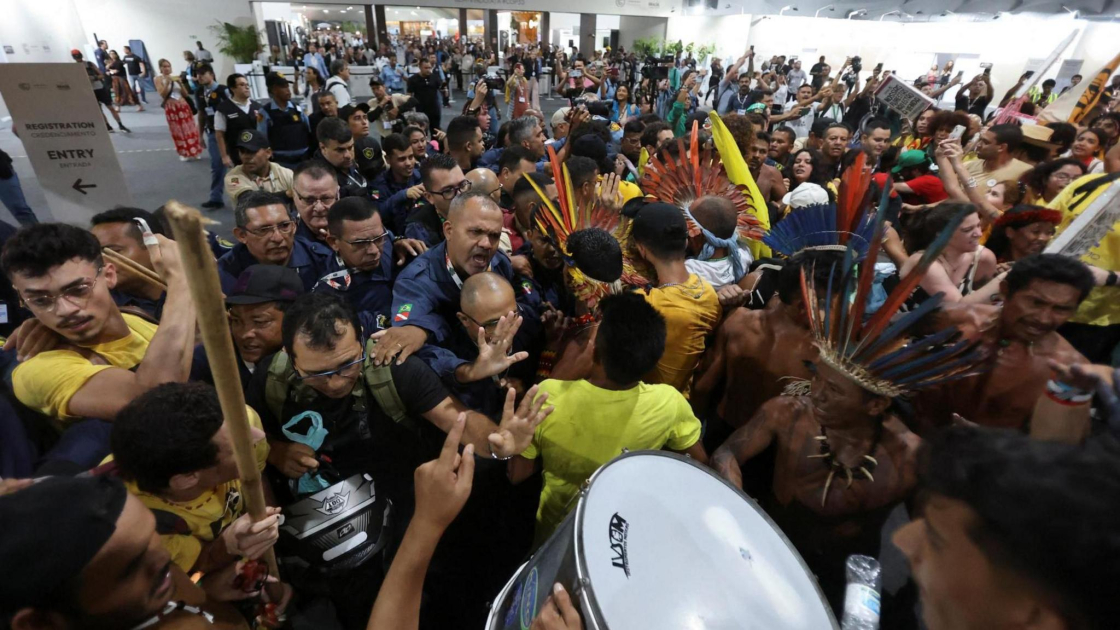
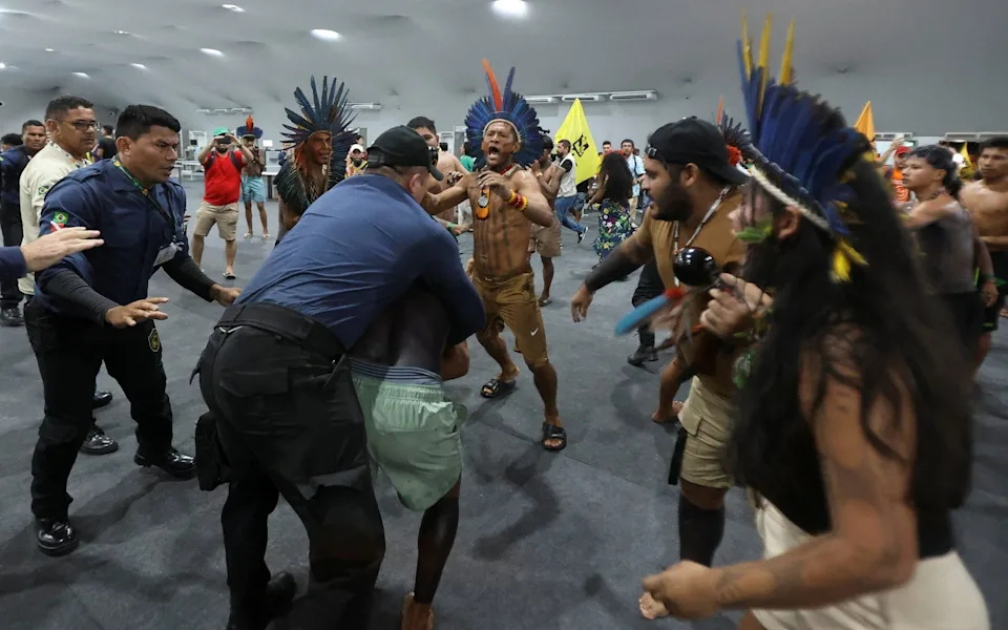
Dozens of Indigenous protesters forced their way into the 30th annual United Nations Climate Change Conference (COP30) on Tuesday evening after hundreds of people participated in a march to the venue.
“We can’t eat money,” said Gilmar, an Indigenous leader from the Tupinamba community near the lower reaches of the Tapajos River in Brazil, who uses only one name, referring to the emphasis on climate finance at many of the meetings during the ongoing summit.
“We want our lands free from agribusiness, oil exploration, illegal miners and illegal loggers.”
A spokesperson from the UN, which is responsible for security inside the venue, said in a statement that “a group of protesters breached security barriers at the main entrance to the COP, causing minor injuries to two security staff, and minor damage to the venue”.
The protest came as Brazilian President Luiz Inácio Lula da Silva has highlighted Indigenous communities as key players in this year’s COP30 negotiations, even as several industries continue to further encroach on the Amazon rainforest during his presidency.
Lula told a leaders summit last week that participants at the COP30 would be “inspired by Indigenous peoples and traditional communities – for whom sustainability has always been synonymous with their way of life”.
However, Indigenous participants taking part in rolling protests in and around the climate change meeting say that more needs to be done, both by Lula’s left-leaning government at home and around the world.
A joint statement ahead of the summit from Indigenous Peoples of the Amazon Basin and all Biomes of Brazil emphasised the importance of protecting Indigenous territories in the Amazon.
As “a carbon sink of approximately 340 million tons” of carbon dioxide, the world’s largest rainforest, “represents one of the most effective mitigation and adaptation strategies”, the statement said. Leo Cerda, one of the organisers of the Yaku Mama protest flotilla, which arrived at the summit after sailing 3,000km (1,864 miles) down the Amazon river, told Al Jazeera that Indigenous peoples are trying to secure nature not just for themselves but for humanity.
“Most states want our resources, but they don’t want to guarantee the rights of Indigenous peoples,” Cerda said.
As the flotilla sailed towards COP30, Brazil’s state-run oil company, Petrobras, received a licence to begin exploratory offshore oil drilling near the mouth of the Amazon River.
Cerda also said it was important for Indigenous people to be present at the conference, considering the fossil fuel industry has also participated in the meetings for several decades.
Other news in this section


