Late Antique rural dwelling uncovered at Kodra e Pusit archaeological site
Baku, October 7, AZERTAC
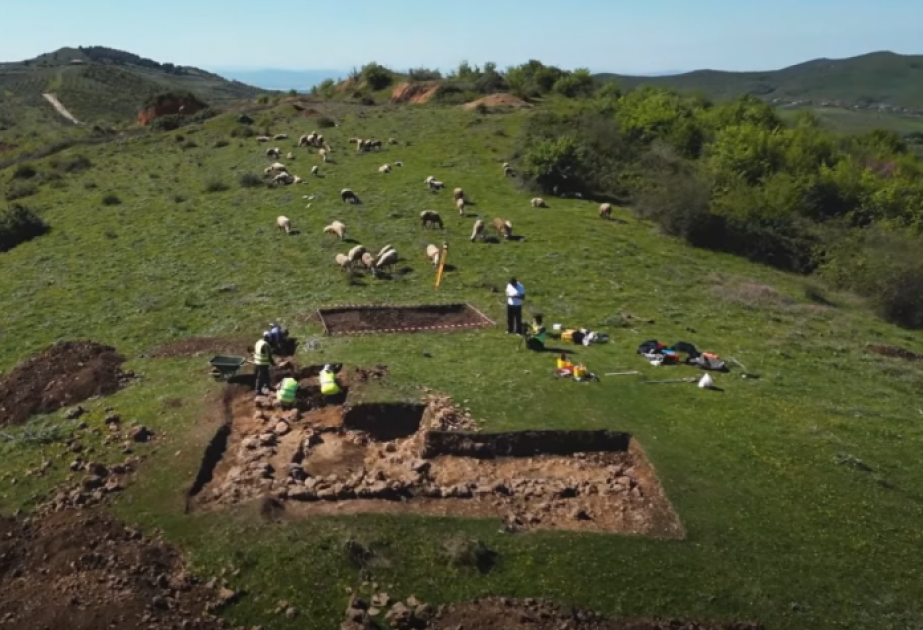
Minister of Tourism, Culture and Sport Blendi Gonxhja shared footage from an archaeological expedition at the site known as Kodra e Pusit, near the city of Lushnjë, according to the ATA.
Archaeologists spoke from the field about the process of researching and examining archaeological evidence in an effort to uncover more about life and traces of the past.
The site at Kodra e Pusit was identified during an archaeological field survey conducted by the National Institute of Cultural Heritage in collaboration with the Department of Archaeology at the University of Tirana, providing students with practical experience in field-walking methodologies and archaeological survey techniques.
During the survey, archaeologists recorded a significant concentration of surface finds, consisting predominantly of roof-tile fragments and ceramic sherds. The density of the archaeological material increased progressively towards the summit of the hill, indicating a potentially significant archaeological context.
The archaeological evidence suggests that Kodra e Pusit was once occupied by a rural settlement. Excavations have uncovered the remains of a Late Antique rural dwelling, provisionally dated to the mid-to-late 6th century, with a rectangular plan measuring 7.5 by 9 metres and walls 70–80 centimetres thick.
Archaeologists are also mapping the site and digitally recording its spatial data, including distances, elevations and angles, using equipment such as a Total Station. The study of plant remains through archaeobotany is likewise important, helping researchers reconstruct past communities’ relationships with food, agriculture and their environment.
Other news in this section


