Syrian refugee population in Türkiye declines 38.5% in 5 years
Baku, April 10, AZERTAC
The number of Syrians under Türkiye’s temporary protection regime has fallen by nearly 40% over the past five years, dropping from about 3.7 million in 2021 to roughly 2.3 million in 2026, according to official data compiled from migration figures, according to Daily Sabah.
The decline of about 1.4 million people reflects a steady reduction in Türkiye’s Syrian refugee population since it peaked in 2021, when arrivals from the Syrian civil war, which began in 2011, reached their highest levels.
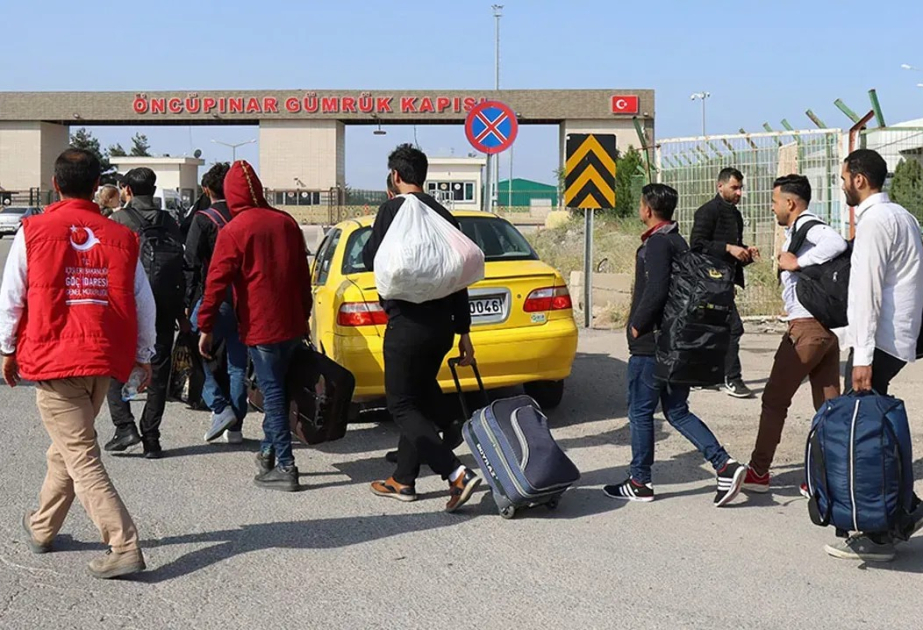
Türkiye, which once hosted the world’s largest Syrian refugee community, has seen a gradual decrease in recent years driven largely by voluntary returns and changing conditions in its southern neighbor.
The population fell to about 3.5 million in 2022, 3.2 million in 2023 and 2.9 million in 2024. It stood at roughly 2.35 million at the end of 2025 before declining further in early 2026.
Officials attribute the downward trend primarily to what they describe as voluntary, safe and dignified returns, supported by stabilization efforts in northern Syria and policies aimed at encouraging repatriation.
Türkiye has hosted Syrians fleeing the war under a temporary protection system that allows legal residence and access to essential services without formal refugee status under the 1951 Refugee Convention framework. Authorities say the policy has been implemented in line with humanitarian principles alongside border security measures.
Interior Minister Mustafa Çiftçi said Türkiye’s approach is being carried out “within the framework of humanitarian values and international law,” adding that return policies are implemented in line with President Recep Tayyip Erdoğan’s directives.
“In line with the instructions of our President, we are carefully and resolutely taking steps that will contribute to our Syrian brothers and sisters living in peace and security in their own lands,” Çiftçi said in remarks to Anadolu Agency (AA).
He added that Türkiye supports broader reconstruction efforts inside Syria. “We support the ongoing efforts for revival, reconstruction, and normalization of life,” he said, noting that such developments help enable what he described as a more orderly return process.
Other news in this section


