Galib Hasan oglu: I would like to dedicate music to Azerbaijan’s victory in Karabakh and to the person who brought this victory to our country – Interview VIDEO
Stockholm, March 17, Nargiz Jafarli, AZERTAC
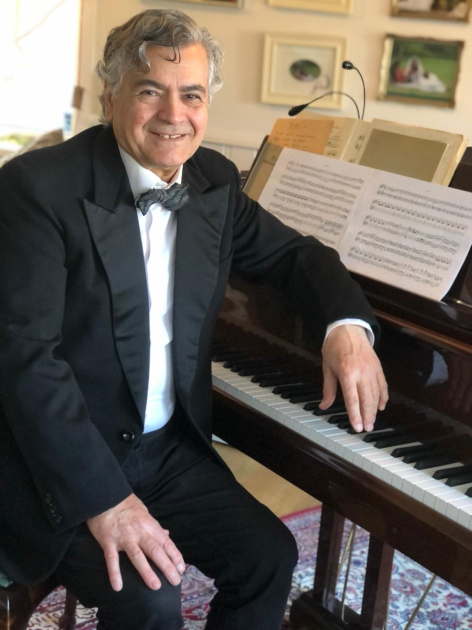
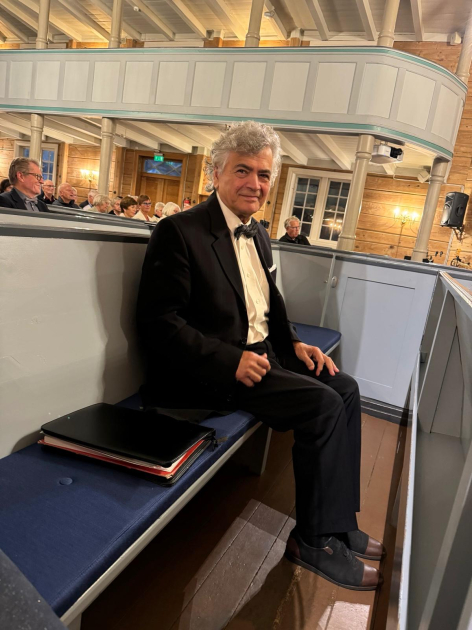
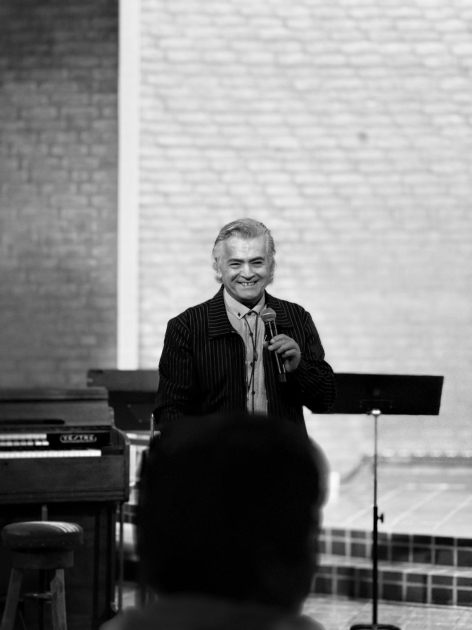
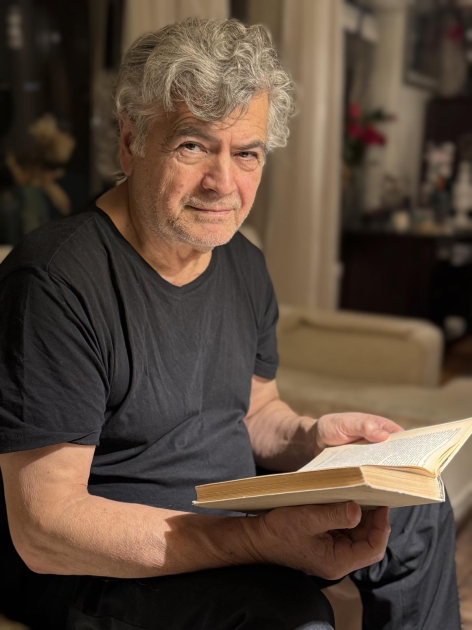
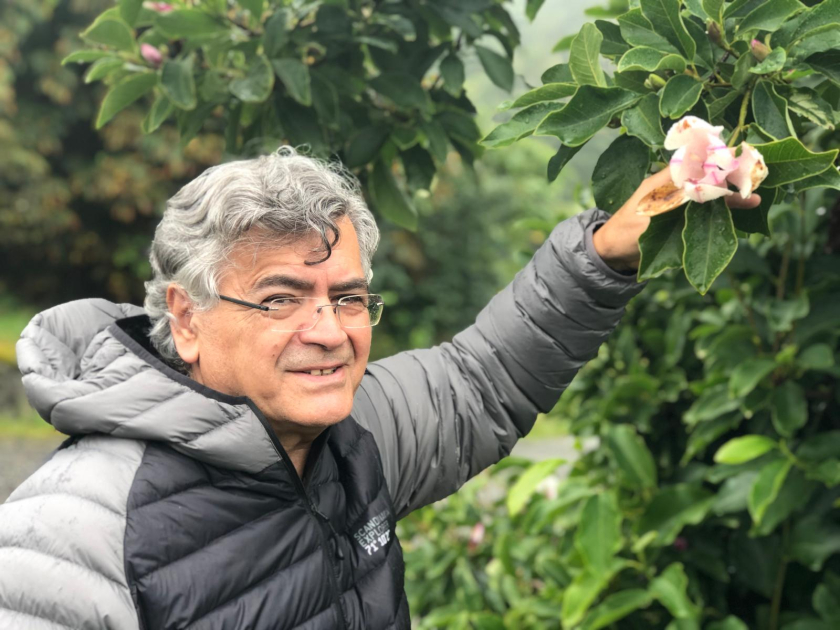
The traveler Thor Heyerdahl spoke about the historical ties between Azerbaijanis and Norwegians, asserting that the ancestors of Norwegians migrated to Scandinavia from Azerbaijan around two thousand years ago. Today, these two countries are connected by strong diplomatic, economic, and cultural relations. One of the symbols of this cultural bridge is Galib Hasan oglu – an Azerbaijani-Norwegian composer whose work combines the traditions of the East and the West. His musical journey began in Azerbaijan, where he studied with outstanding composers such as Fikret Amirov and Kara Karaev. Since the early 2000s, he has lived in Norway, where he continues to create.
His works incorporate elements of classical music, folk motifs, and spiritual compositions, making his style truly unique.
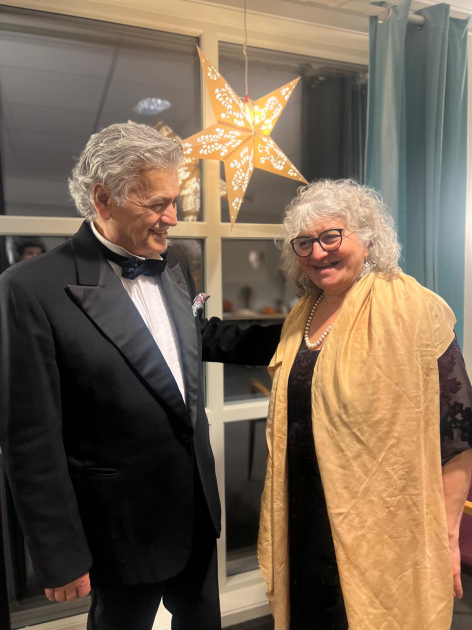
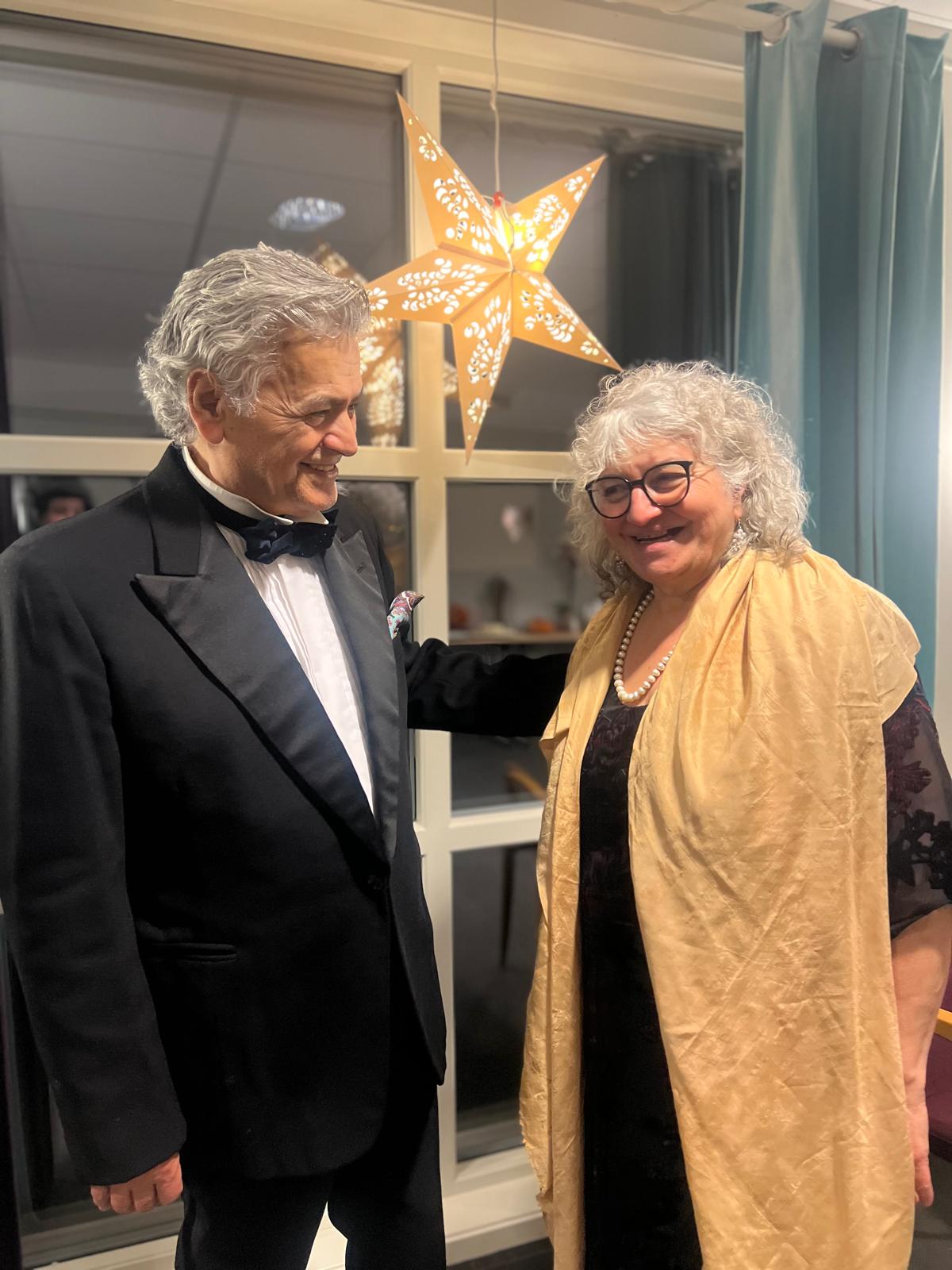
In an interview with AZERTAC’s correspondent, Galib Hasan oglu spoke about his creativity and shared his memories, while his life partner and muse, Sevda khanim, complemented the image of the modest, unspoiled composer.
Correspondent: Mr. Galib, you grew up in Ganja, studied in Baku, and worked in the Norwegian town of Kvinesdal. What does the concept of "home" mean to you? Which country gives you more of a sense of home – Norway or Azerbaijan?
Galib Hasan oglu: For me, home is not just a place where I live, but my family, friends, memories, and culture. When I think about home, first and foremost, Azerbaijan comes to mind, as that’s where my youth was spent, where I studied with great masters such as Fikret Amirov, Kara Karaev, Khayyam Mirzazadeh, and other outstanding Azerbaijanis. I’ve always told my children that our home is a small Azerbaijan, and we must preserve our identity, showing the dignity of the Azerbaijani people to the world. Although I live in Norway, my heart will always be in Azerbaijan. I carry Azerbaijan's culture, history, and music within me, no matter where I am.
Sevda khanim: Of course, there is homesickness, and it was this longing for home that led Galib to create the work "Nostalgia." The dominant theme of yearning for the homeland flows through the piece, page by page, just like the waters of the Norwegian waterfalls, whose picturesque beauty served as an inspiring element.
Correspondent: In 2002, you moved to Norway, where you initially worked as an organist. How did the move to another country impact your creativity?
Galib Hasan oglu: My creative journey didn’t change with the move. Even in Azerbaijan, I collaborated with Norwegian musicians, writing music for them and sending scores to Norway, where they were performed. Later, a large project titled Landet vi kommer fra ("The Country We Came From") emerged as confirmation of our connections with the Norwegians, and it gained wide recognition. Performers like Brilliant Dadasheva, Siyavush Kerimi, Ilgar Muradov, and Rashad Gashimov took part in it. In fact, work on this project began three years before my move, and it was fully completed in 2006.
Correspondent: How has the Azerbaijani musical tradition influenced your style and creative expression?
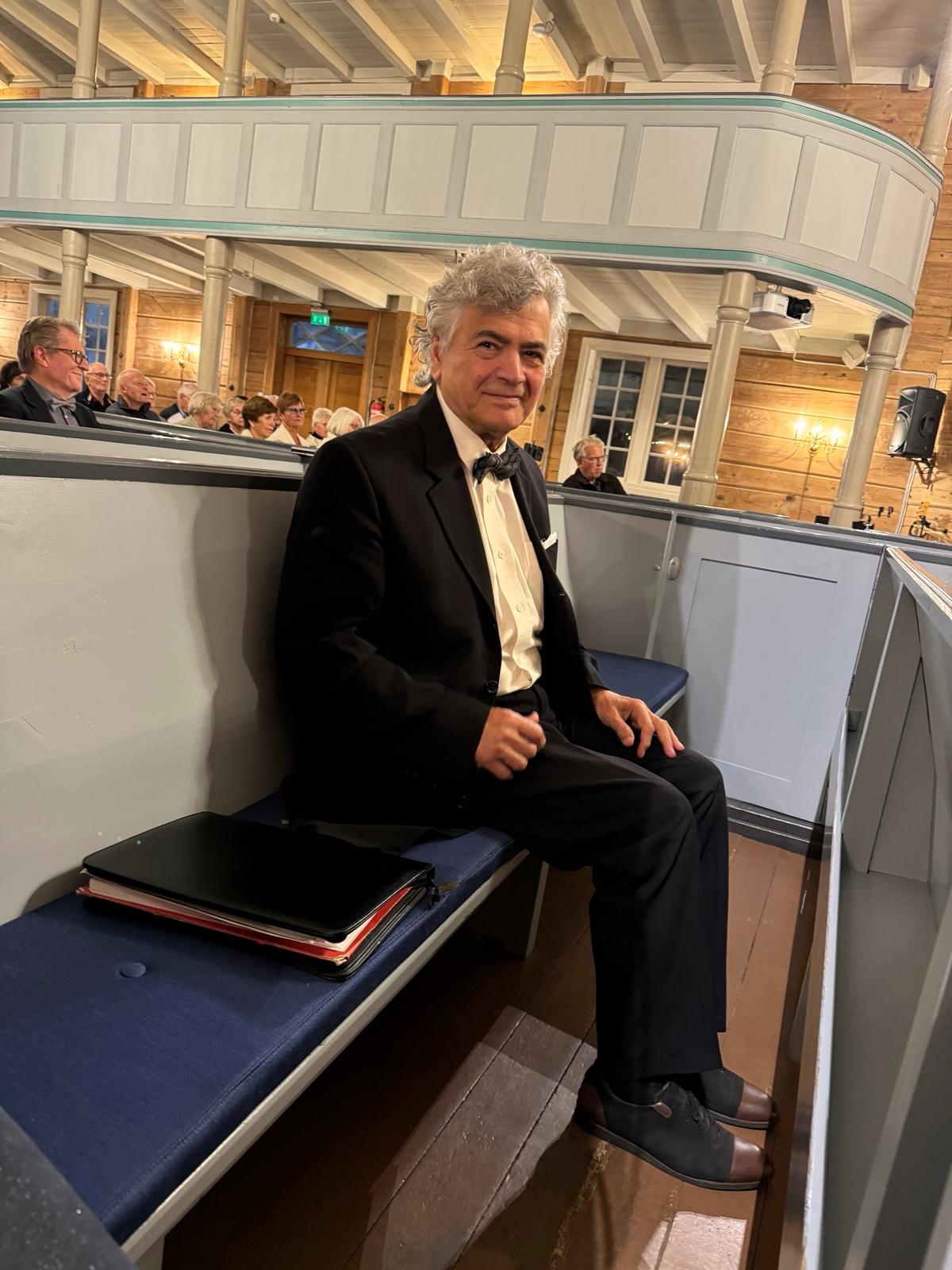
Galib Hasan oglu: Azerbaijani music has always been an essential part of my creativity. This is not surprising, considering that I was fortunate enough to study with giants of the Azerbaijani music school. I started composing as a child in Ganja. I remember once my music teacher, who knew Fikret Jamilovich, said: "I’ve made arrangements, let’s go to Baku to meet Fikret Amirov." For me, it was like meeting Mozart.
Later, when I was already taking lessons from him, Niyazi would often visit, and Amirov proudly introduced me as a young composer. Soon, I entered the Asaf Zeynalli Music College to study composition and theory. Fikret Amirov recommended that I study with Khayyam Mirzazadeh, saying he was the best teacher in composition. After graduating, Mirzazadeh told me, "If you work hard, you’ll be able to study with Kara Karaev." And that's exactly what happened. I entered the conservatory and studied in Kara Karaev’s class, graduating in 1975.
I was incredibly fortunate to communicate, learn, and grow among such great masters of Azerbaijani music.
Sevda khanim: Azerbaijani music has always accompanied Galib. He transcribed the entire Dastgah performed by Bahram Mansurov into notation, preserved Ashugh music, and folk dance melodies, which we brought with us to Norway.
Correspondent: Your work combines elements of both Eastern and Western musical cultures. How do you manage to balance these musical worlds?
Galib Hasan oglu: The balance was probably established in childhood. Back then, in Azerbaijan, there were, in modern terms, second-hand shops where my brother and I often bought Tchaikovsky and Rachmaninoff records for 5 kopecks. We had a record player, and we constantly listened to the music of great composers. Sometimes, we even played it outside.
Since we lived on the outskirts of Ganja, where most people were engaged in agriculture, few understood this music. However, it sparked interest in many. Thus, not only Azerbaijani music, which played on the radio and television, but also European music became part of our lives.
Sevda khanim: As a child, Galib played in a brass band, on the accordion, and for 15 years on the cello. (Turns to Mr. Galib.) Tell the story about the cello.
Galib Hasan oglu: Once, I decided to do some enlightening. I took what the boys teasingly called my “big violin” and went to visit my grandparents in Bagmanlar. I sat them down, tired from working in the fields, and started playing the cello. I played and played… and suddenly I saw: everyone was asleep! Later, I was outraged and said I would never play for them again. (Laughs.)
My teachers — Fikret Amirov and Gara Garayev — always said that one should not limit oneself to just mugham and folk songs. Music should be written to match contemporary times. For example, in my piano sonata, I used Schoenberg’s twelve-tone technique, connecting it with mughams. And in the string quartet I dedicated to Gara Garayev, there are national elements, but at the same time, complex 12-tone techniques are used. It’s a kind of synthesis of East and West.
Sevda khanim: From time to time, Galib creates unique prayers dedicated to Zoroaster, Krishna, and Sufi compositions. While working in a church, he wrote many psalms. It seems like he has learned to overcome crises through such compositions.
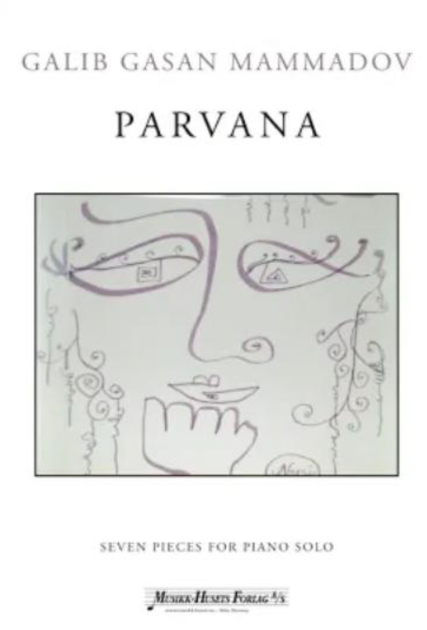
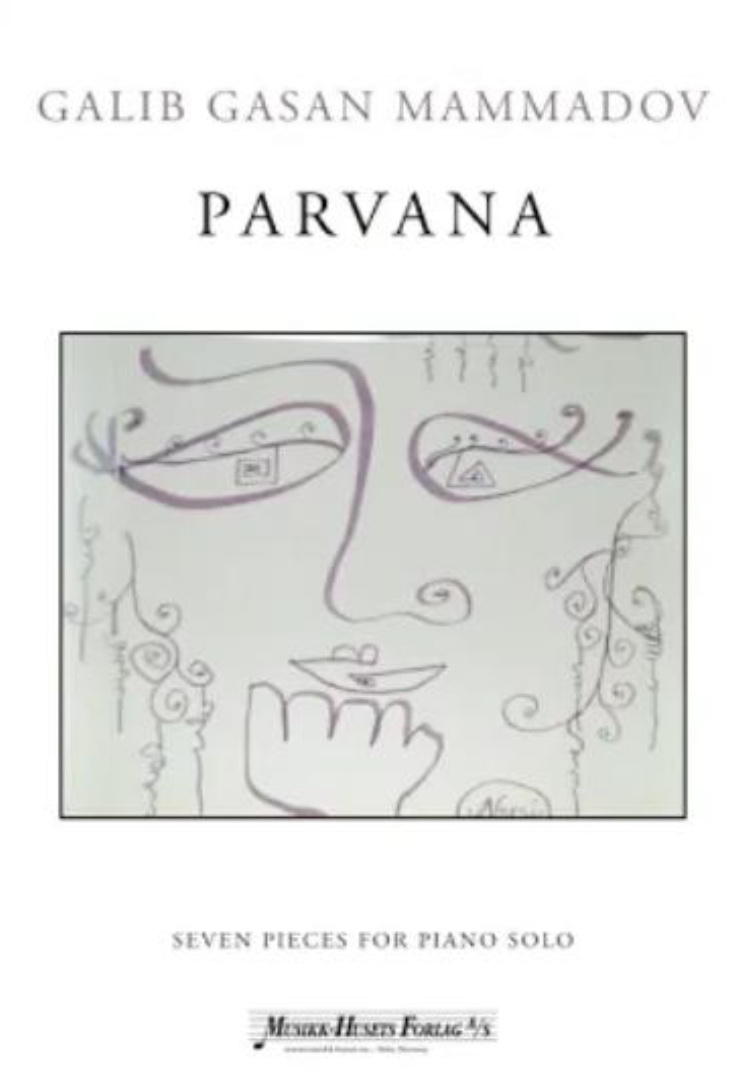
Galib has a collection of seven works titled “Parvane” (“Moth, Butterfly” – ed.). Everyone knows that a butterfly lives only 24 hours, and this collection shows how much one can experience in a single day. The collection includes the contemplative “Prelude”, the nostalgic “Nardaran”, and a “Waltz” dedicated to Chopin.
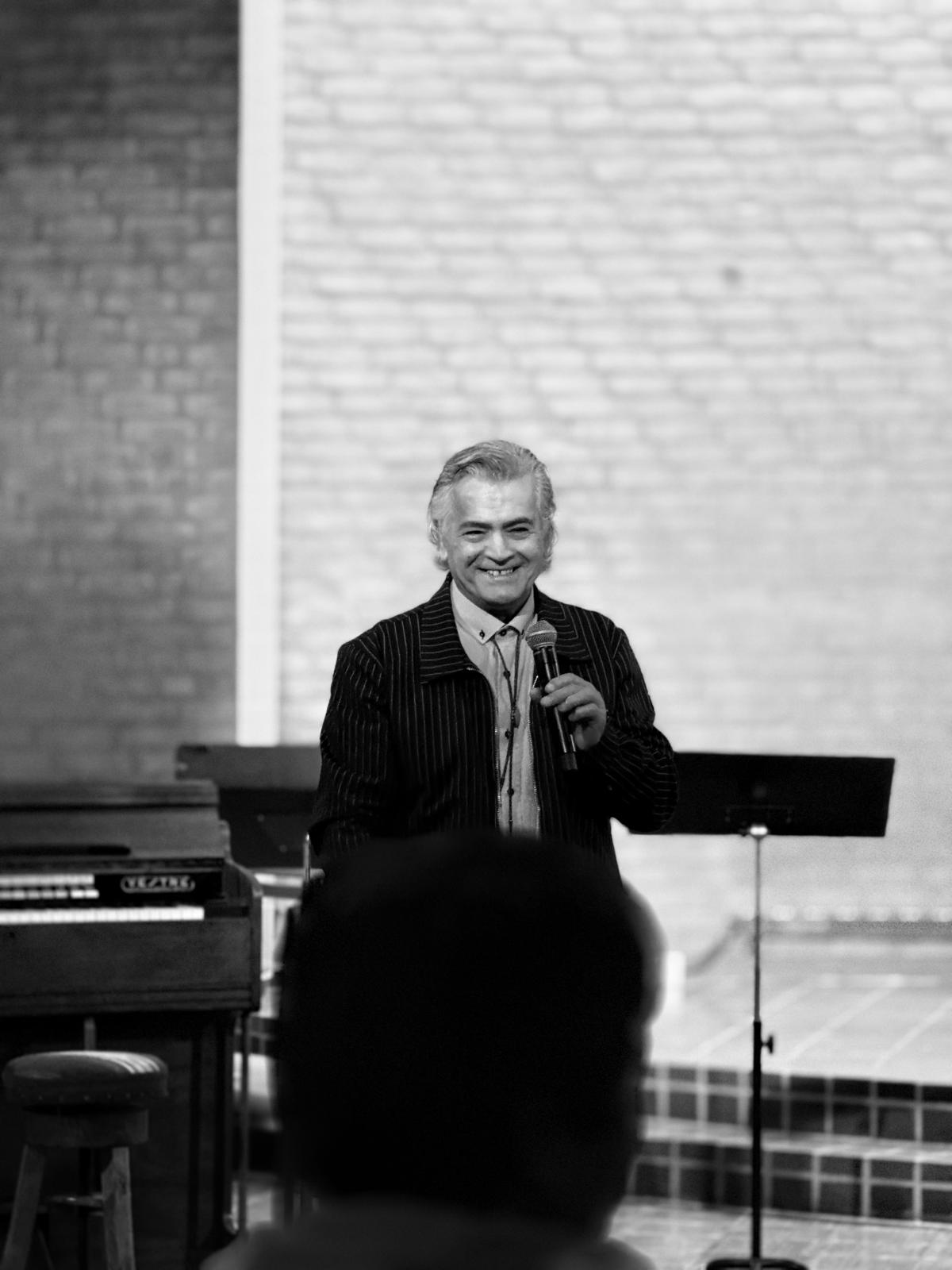
Correspondent: Sevda khanim mentioned creative crises. I gather you've experienced them as well.
Sevda khanim: (Preempting Mr. Galib.) Yes! He did! (Continues, almost demanding an explanation from him.) I remember once Galib's mother came to us, barely holding back tears, and said, "You don't know what he has done! He burned his works."
Galib Hasan oglu: There are no creative people who haven't experienced crises. The more you take on, the higher your goals, the heavier the burden. I started composing at the age of 10-12. First for the accordion, then for the cello. But the works I burned were pieces written after graduating from the conservatory. I've heard stories of many great artists and composers who destroyed their works to start over. I tried to imitate them. My mother and Sevda didn’t understand this. But I did it precisely to start from scratch. For a while, music took a back seat. Books and yoga helped me get out of the crisis.
Correspondent: Do you still have such moments now?
Galib Hasan oglu: It's difficult to create as I did before, due to my health condition. And I feel like I’ve already done everything I could. I don’t think I’ll write something as grand as Oratorium Albanum or Treasury of Secrets again. What’s happening now is not a crisis. It’s just age. It’s time to calm down a bit, so to speak.
When I was young, my day started at six in the morning. Among composers, there was often an analogy: a composer should be like a shoemaker – already in his "workshop" by eight in the morning. For many years, I adhered to this routine. But now I have more freedom. When the desire to compose arises or an interesting idea comes to me, I sit down to work. If not, I do something else: I draw, read.
By the way, I would like to say that I’m currently writing a piece for organ and voice for the brilliant Azerbaijani organist Nigyar Gahramanova, who has a wide vocal range. She is one of the best organists in Norway, a rare talent.
Correspondent: What does success mean to you? Do you think you’ve achieved enough success for your music to be preserved for future generations?
Galib Hasan oglu: Only fools can think they’ve achieved everything. Even the great Tchaikovsky said before his death, "I had so many plans!" On my desk, there’s a cup with the inscription The new life starts from everyday. And I fully agree with that. For me, success is when a friend calls and says, "I really liked your works Nostalgia and Rafoss." When a Norwegian producer, working with popular artists, came to Azerbaijan and offered to write lyrics for the composition La den brenne – that was also success. When my music is performed in Turkey, Iran, and other countries in different languages – that’s success. When the instrumental version of my music became the theme of love in the series Magnificent Century – that was also success. Although we wanted to sue, but it would have required quite a sum.
As for future generations, it’s not for me to decide what they should listen to. I don’t have such grand ambitions. Bach's Mass in C Minor was lost, and no one knew about this great work until Mendelssohn needed bread. The baker wrapped the bread in music sheets. When Mendelssohn returned home, he discovered that it was Bach’s work. So, if even such great compositions are lost, what can we say about me, poor me?! (Laughs.)
Correspondent: Has your compositional style changed over the years? Do you feel that your music now is significantly different from what you wrote in your youth?
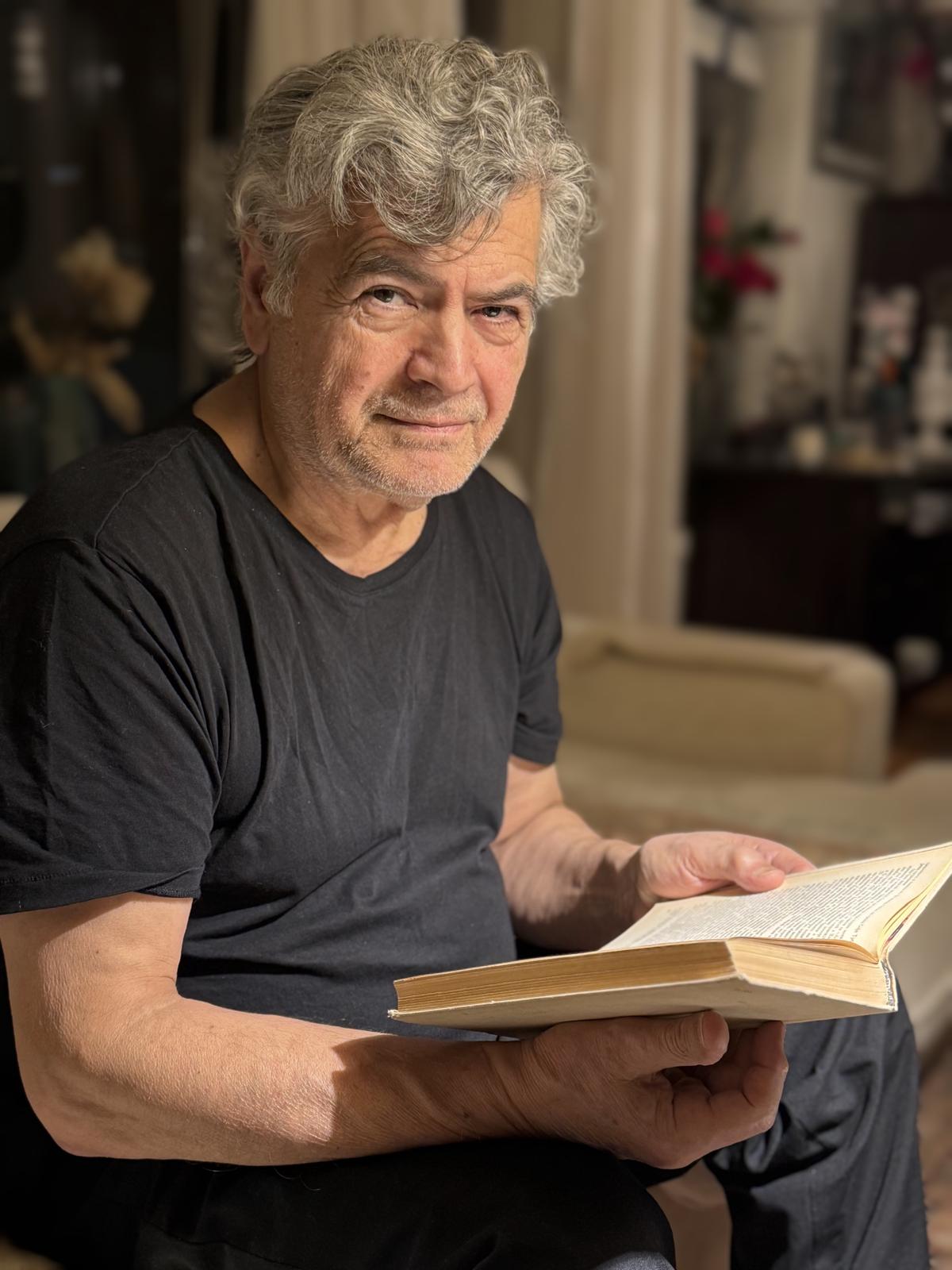
Galib Hasan oglu: Yes, of course, now I write much more simply. Sometimes, it seems to me that I’ve become too simple in my writing. Every creative person, whether a composer or an artist, goes through various periods and styles. Take Picasso, for example. He had a blue period, and he had a pink period. Gara Abulfazovich also had his creative stages. I remember one time he walked into the classroom and said, "We must begin writing music in a new way."
Sevda khanim: But still, you write complex music, Galib. I want to point out that over the years, while living abroad, Galib’s works have incorporated more elements of national music.
Correspondent: If you had the opportunity, which legend or historical event would you turn into a musical work?
Galib Hasan oglu: For the birth of my son and his wife, I wanted to dedicate a piano concerto. For two weeks, I worked day and night on the first movement of the playfully conceived concerto. But unexpectedly, tragic episodes began to creep into the piece. I didn’t even understand where they were coming from. I was filled with anxiety. I didn’t want to dedicate tragic music to my children. Then Sevda turned on the TV and shouted, "Galib, the war has begun!" I realized that it was some kind of vision. Long days and weeks of worrying about the young men who were fighting began.
During the war here in Norway, there were even arguments with some locals who supported Armenia. As an organist, I sometimes played mughams during services. One day, some Armenians were in the church, and upon hearing the music, they left in protest. Additionally, during the war, Norway sent 70 million kroner (over 11 million manats) to Armenia, and we wrote an official protest.
Sevda khanim: Galib’s piano concerto turned into a kind of epic of the Second Karabakh War. When the lands occupied by Armenians were reclaimed, we were filled with mixed emotions. On one hand, there was boundless joy, on the other – the large number of martyrs. Do you remember the procession in memory of those who died in the Patriotic War? When Galib saw the portrait that Mehriban khanim Aliyeva was holding – the portrait of an innocent child whose life was cut short by the war – he had a heart attack.
Galib Hasan oglu: And I wanted to dedicate the music to Azerbaijan's victory in Karabakh and the person who brought this victory to our country (President Ilham Aliyev – ed.).

Other news in this section


