Project Officer at International Federation of Pedestrians: In WUF13 we will start a new program of Walking Ambassadors
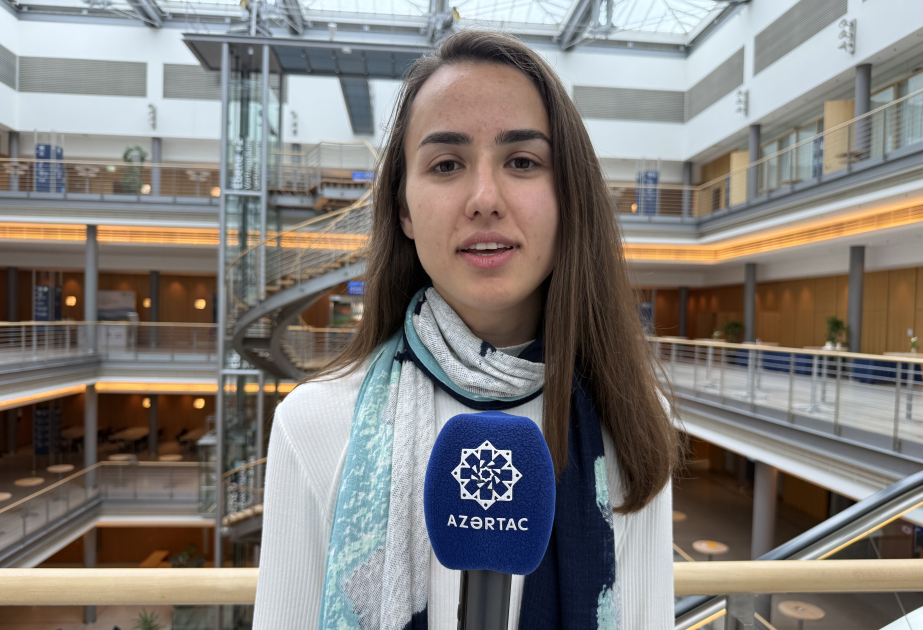
Baku, May 12, AZERTAC
Interest in the upcoming WUF13 in Baku is increasing globally, with international organizations and experts viewing it as a key platform for discussing urban planning, sustainable transport, social housing, and people-centered urbanization. The International Federation of Pedestrians will also participate in the forum. In an interview with AZERTAC, Project Officer at the International Federation of Pedestrians Olena Kuzhym praised Azerbaijan’s efforts in urban development and mobility, and shared her expectations for the event.
AZERTAC presents the interview:
- As I know, you are invited to WUF13 in Baku. What does it mean for you?
- It means a lot, first, because last year we were also invited to the Azerbaijan Urban Forum, the National Urban Forum, and we saw how much the country is doing to rethink how cities are developing and rethink how mobility is operating. We know that Azerbaijan has developed its national sustainable transport action plan. It's really moving from car-centric development to people-centered mobility. Streets are getting pedestrianized in the city center of Baku. Baku is developing its cycling plan and improving its public transport. So we see that the country is doing immense work to rethink how the cities are developing, and that's why we are very much excited for WUF13.
- In that context, as you said, how would you assess Azerbaijan as a host country of WUF13?
- I think it's very, very important that it's happening in Azerbaijan because I think Azerbaijan is really taking quite a leadership role in terms of new transport development in the region and can be a great example for other countries that haven't started this work 50 years ago, but are starting in these last decades. And it is a great inspiration to know that it's never too late and you can always make significant progress and there is no given state of affairs, even though Azerbaijan used to be much more car-centered in terms of urban development. You can see that everything is possible and that you can really always change things.
And we also, at this WUF, together with the United Nations, will start a new program of Walking Ambassadors where we invite not only pedestrian organizations but also individual activists to get engaged and start working on the improvement of pedestrian accessibility in their cities. And we do hope that Azerbaijan and Baku will be our first pilots. So, yeah, we have very, very big expectations.
- As you know, Azerbaijan is carrying out large-scale reconstruction and development work in its liberated territories, establishing “Smart Cities,” “Smart Villages,” and green zones. What are your thoughts on these initiatives?
- Well, I think it's very important that Azerbaijan is bringing new opportunities to these territories, and that it's also not concentrating all the resources in the capital, but is also trying to take care of the territories that need the most attention and the most reconstruction and rebuilding right now. So it is very great, and it's also something that we've been talking about at the International Transport Forum, that we need to take care of smaller cities, of rural areas, and especially areas that are affected by global instability, because they require the support the most.
- What contributions do you expect WUF13 to make toward creating more livable cities?
- I just really hope that everything that we discuss at WUF about social housing and people-centered housing, which is impossible without people-centered mobility, will also begin to be implemented, and that we also come to the level of concrete discussions about concrete plans and about concrete tools that we can start using to make our cities more livable, because we are short on time. We really need to start working.
Other news in this section


