6th World Forum on Intercultural Dialogue commenced in Baku
President Ilham Aliyev attended opening ceremony of the Forum VIDEO








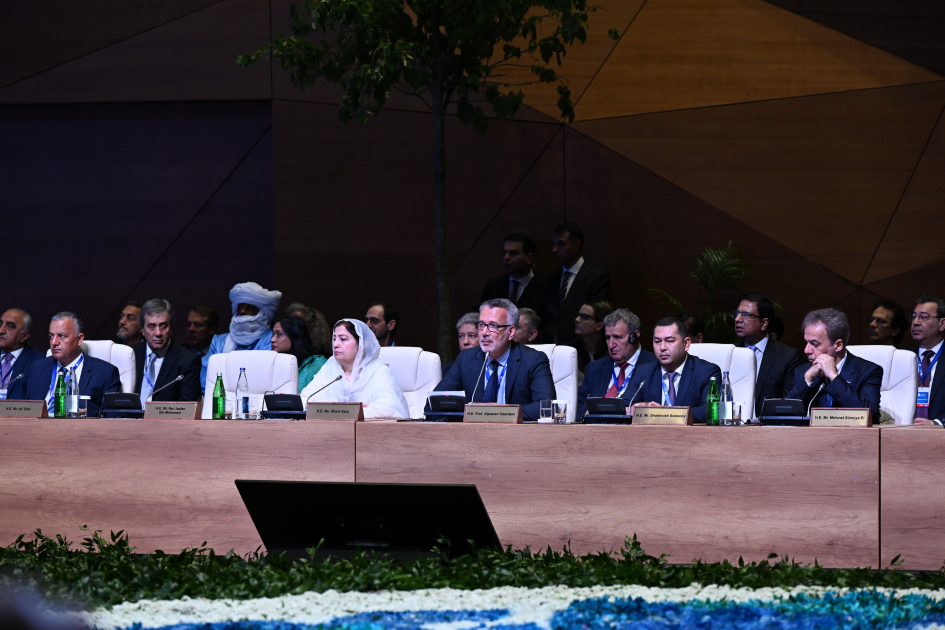

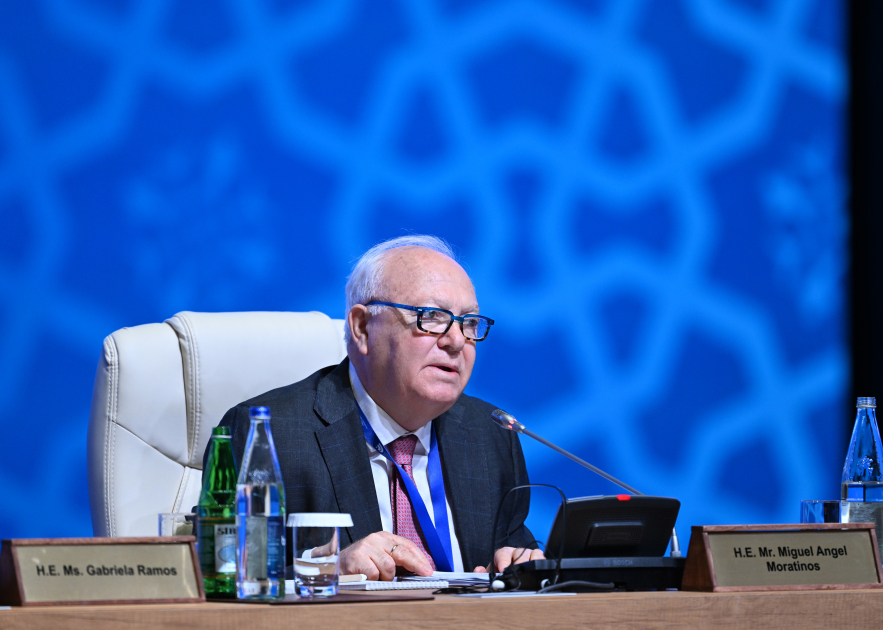


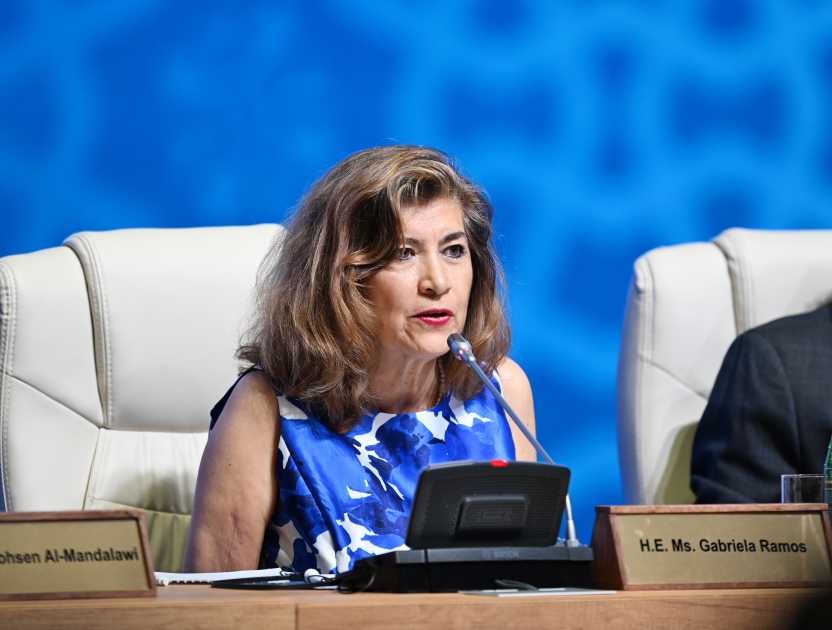
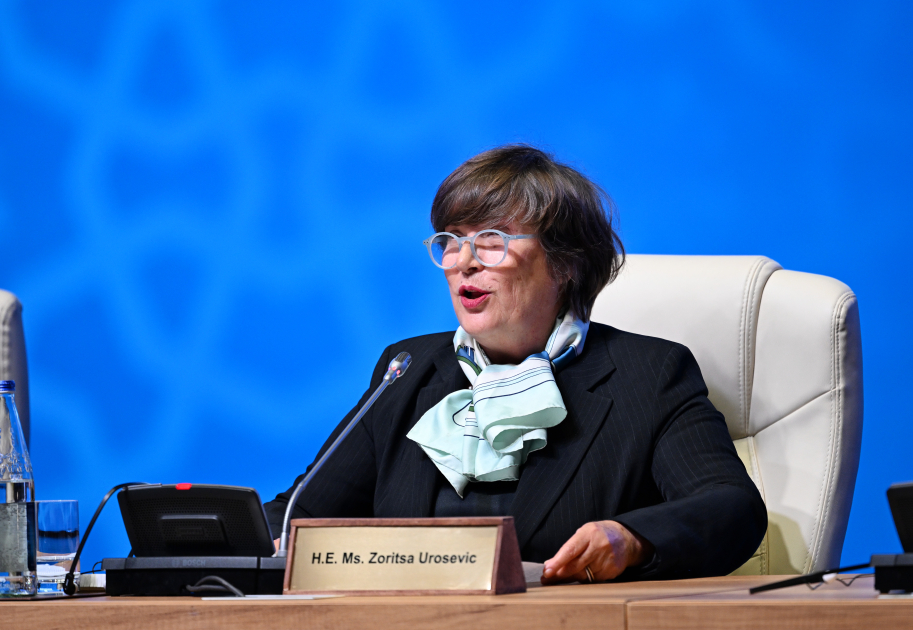


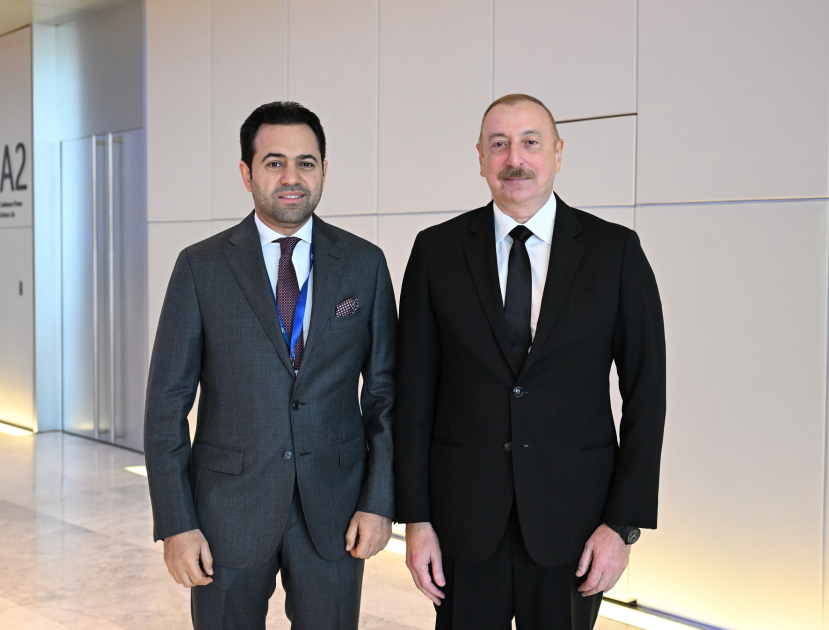
Baku, May 1, AZERTAC
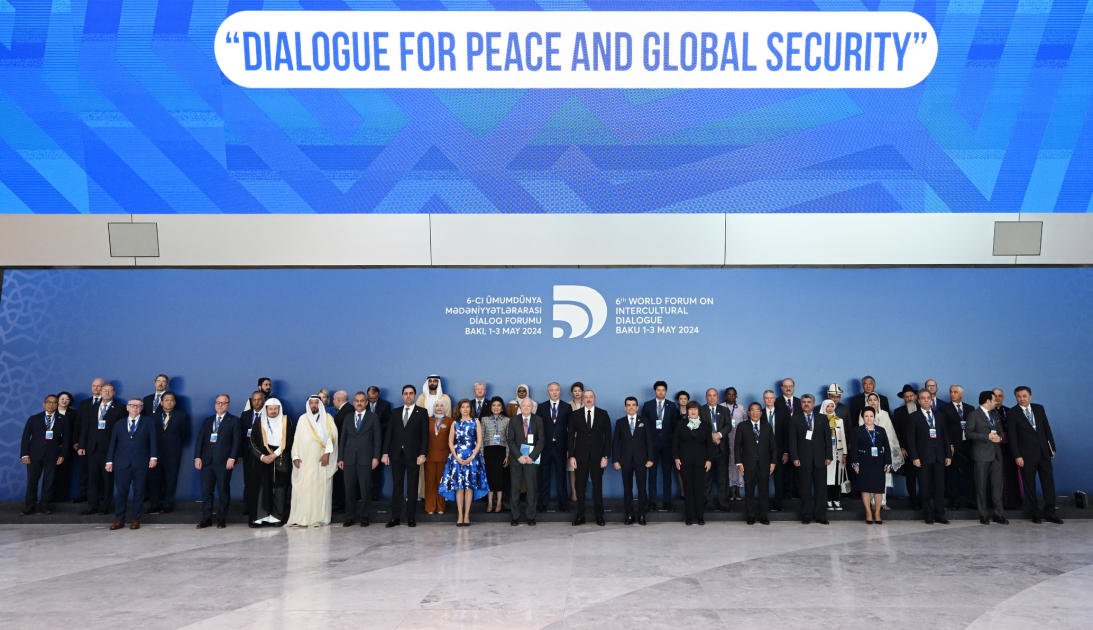
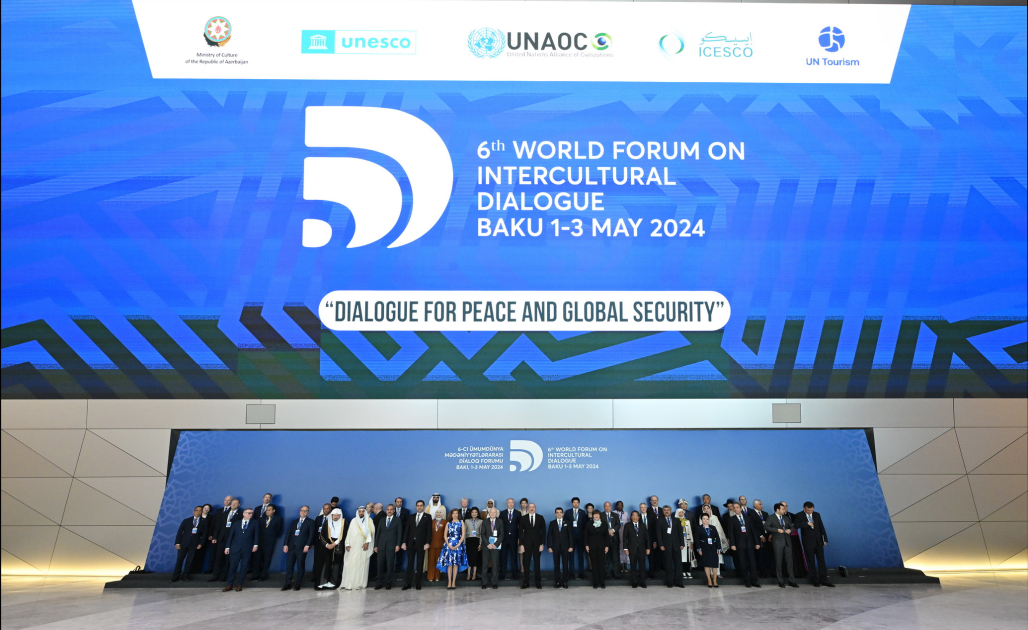
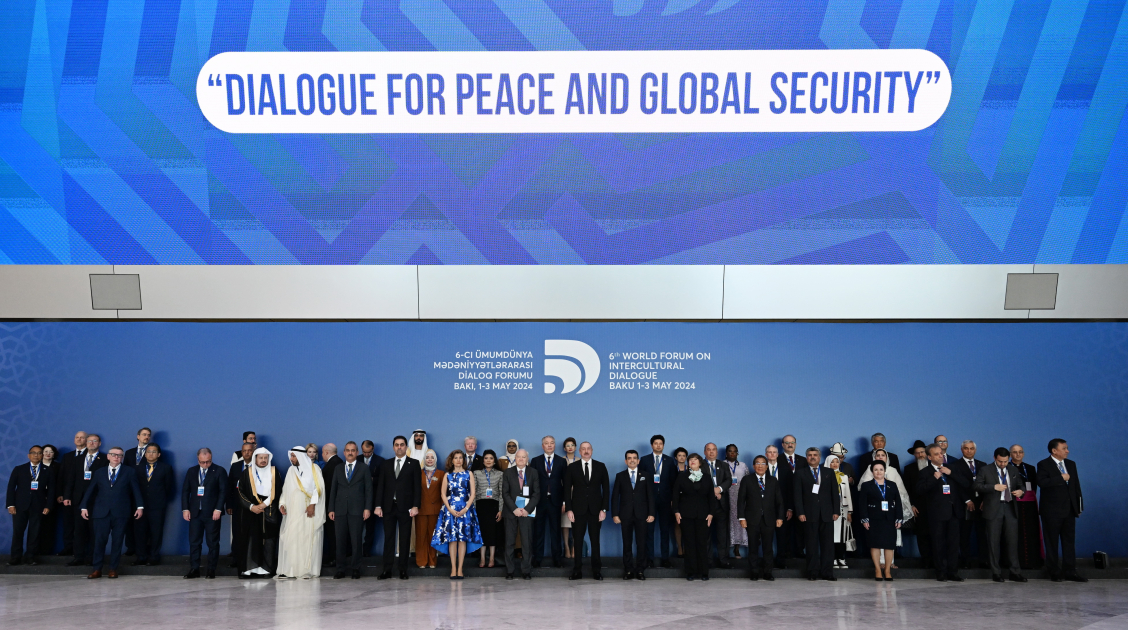
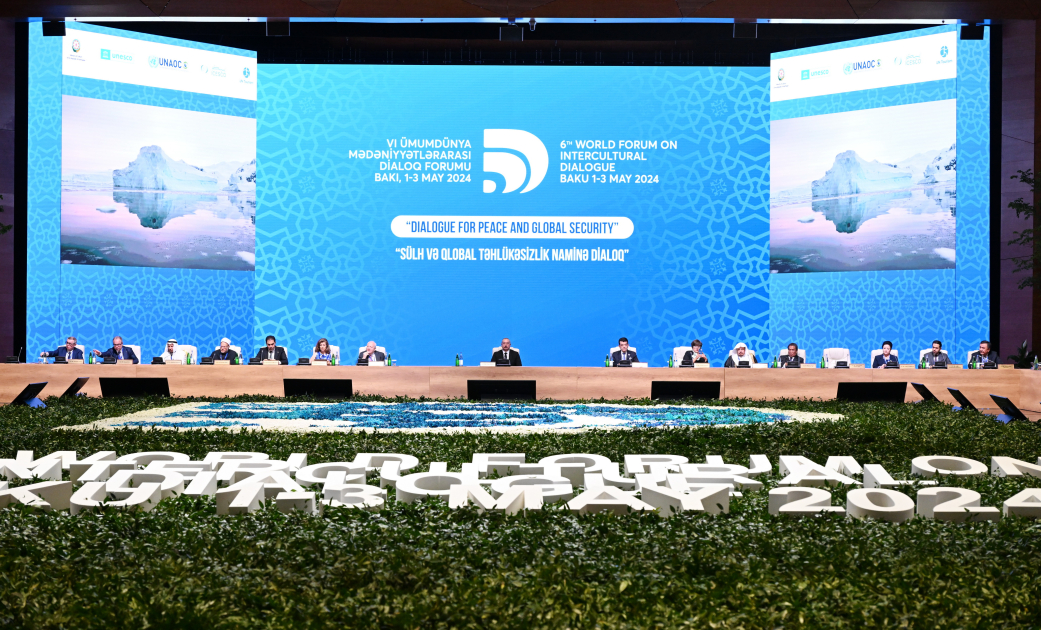
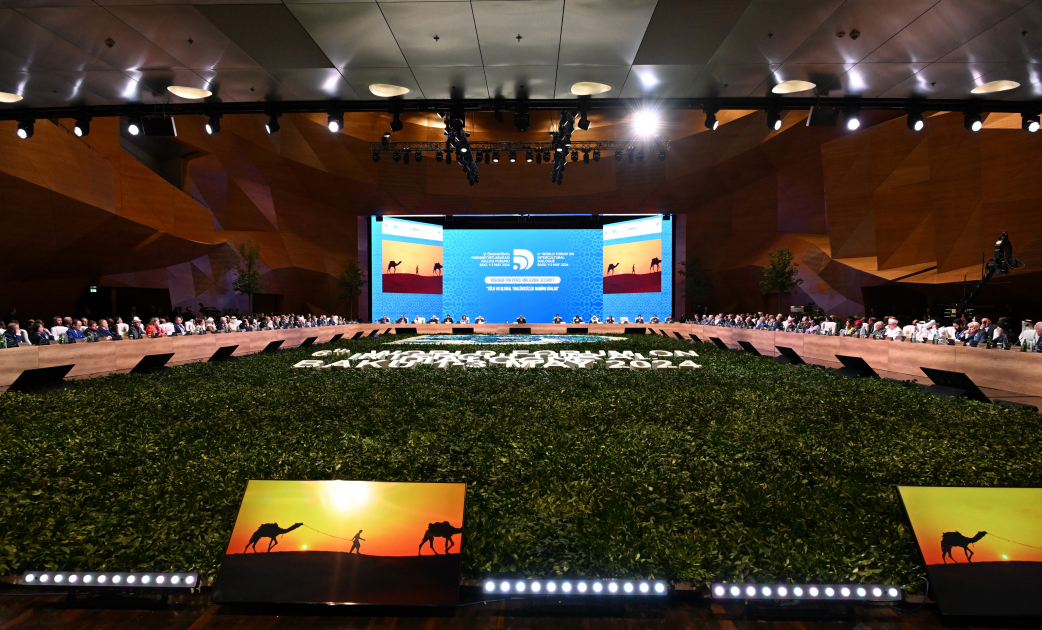
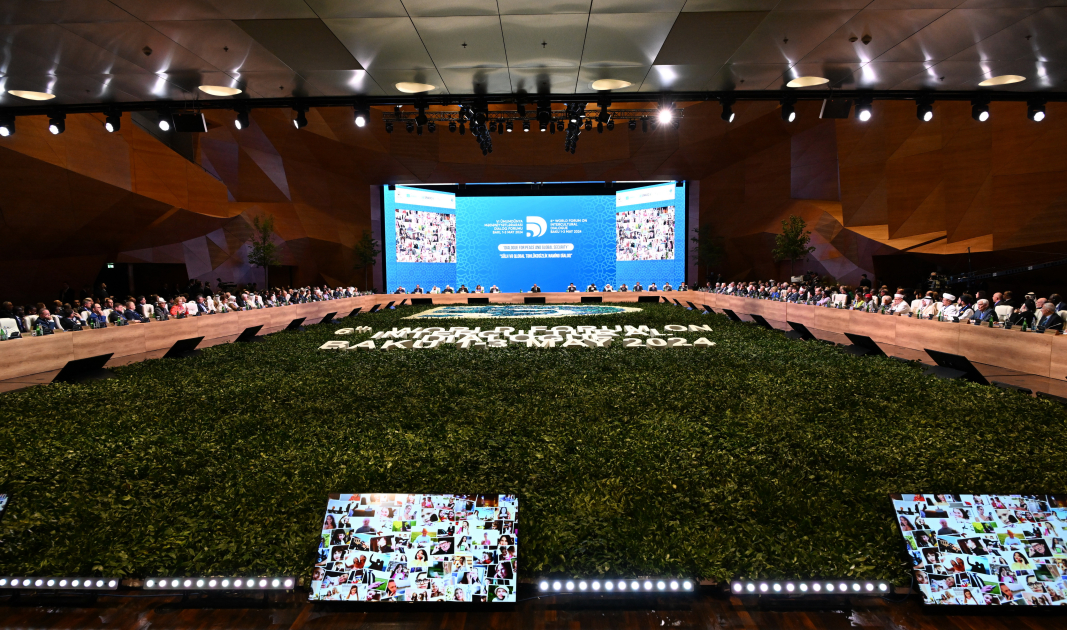
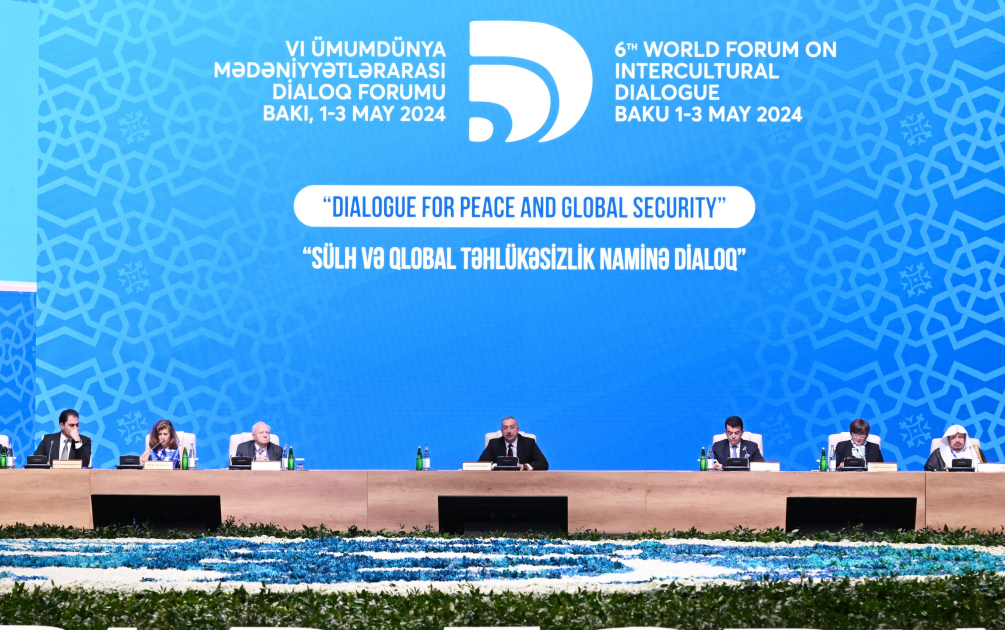
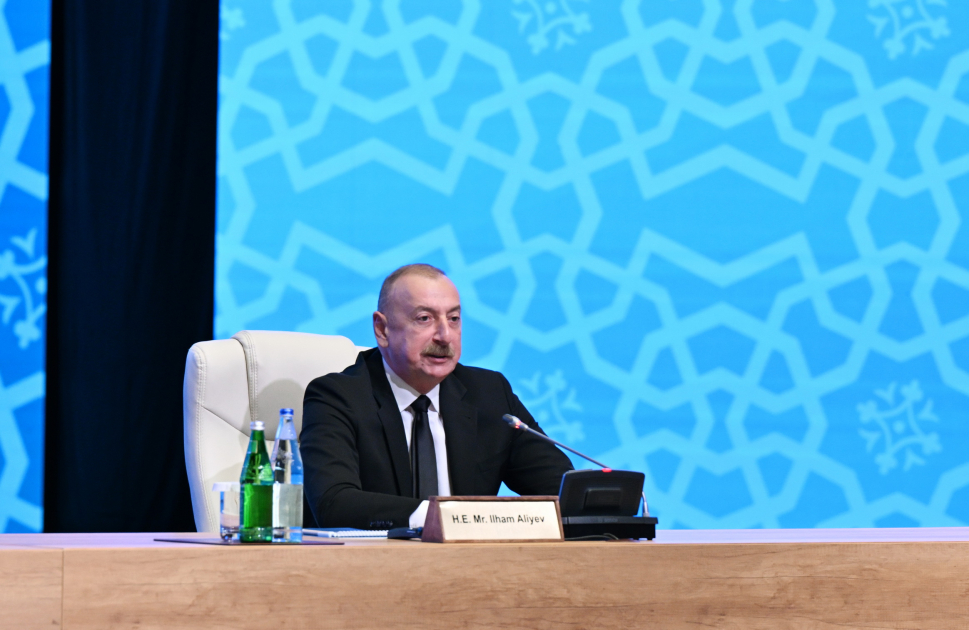
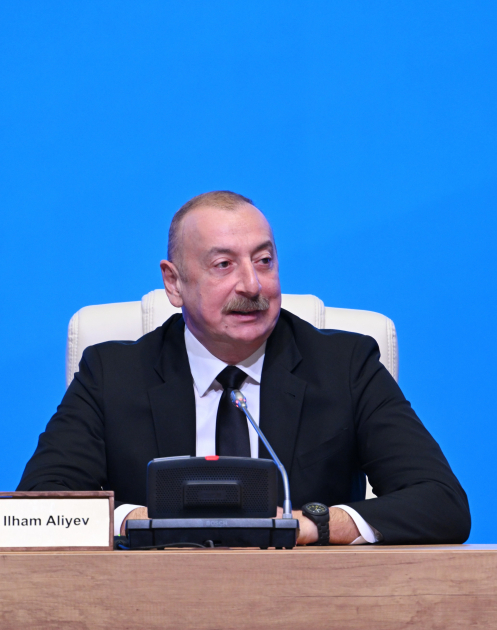
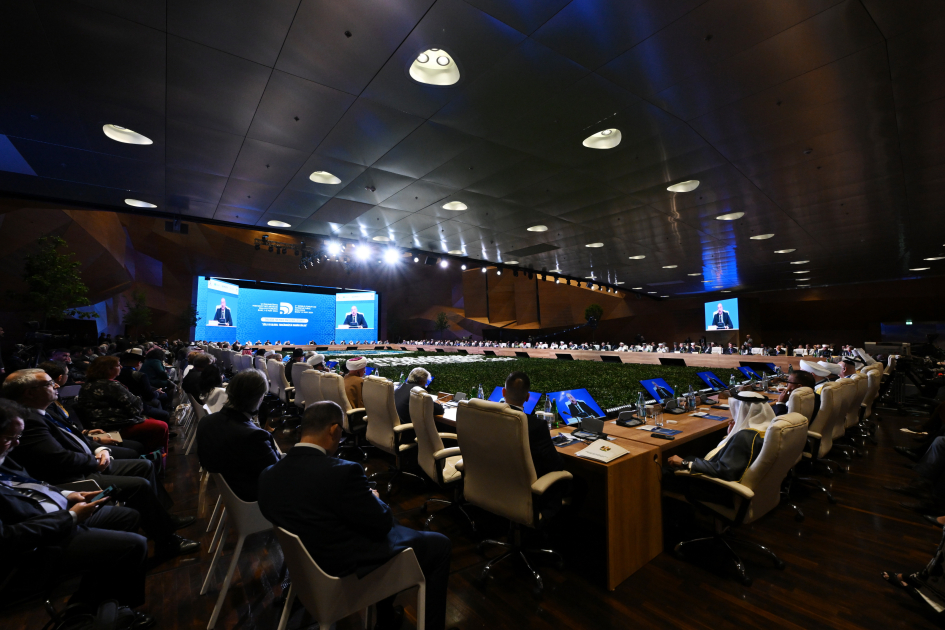
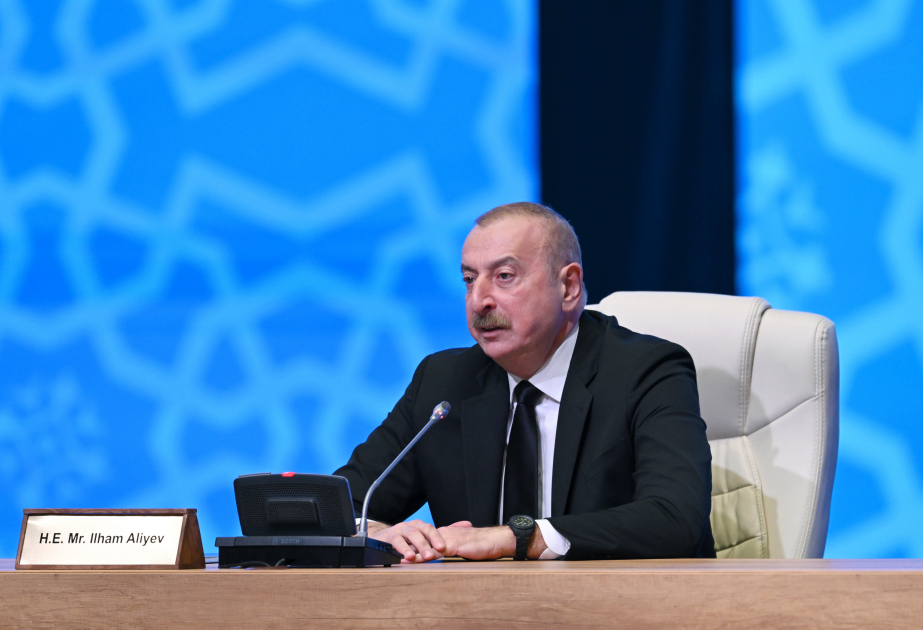
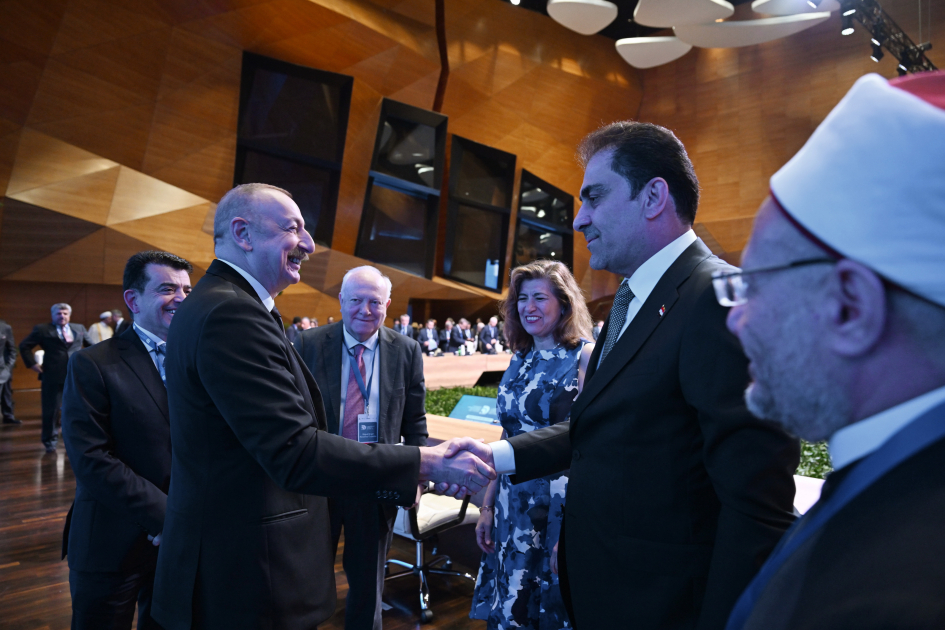
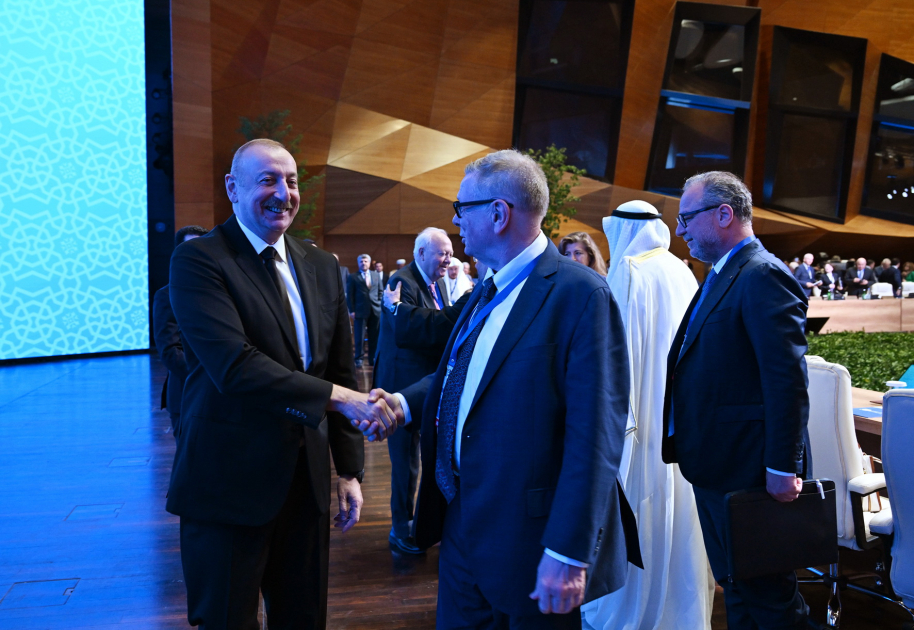
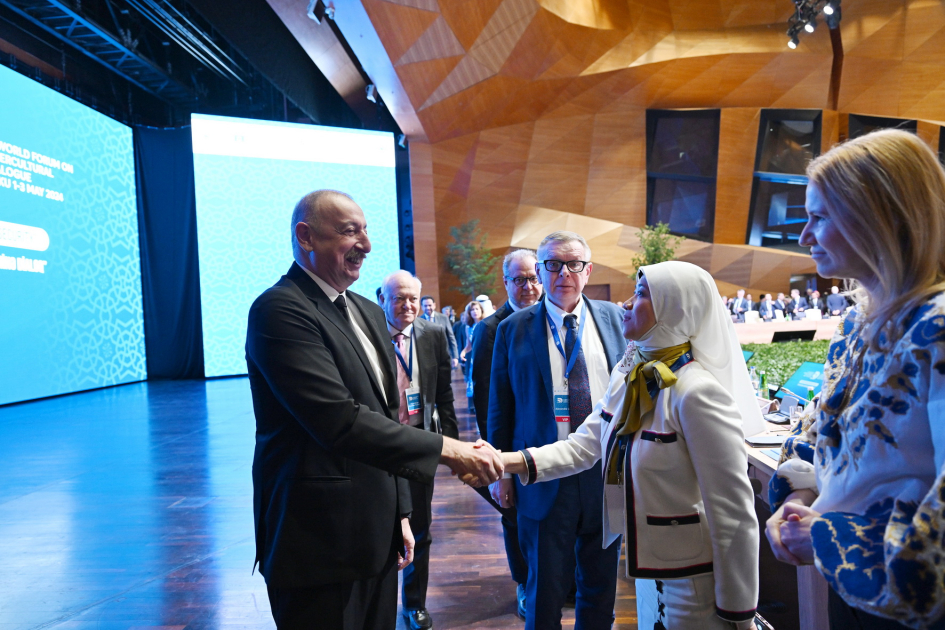
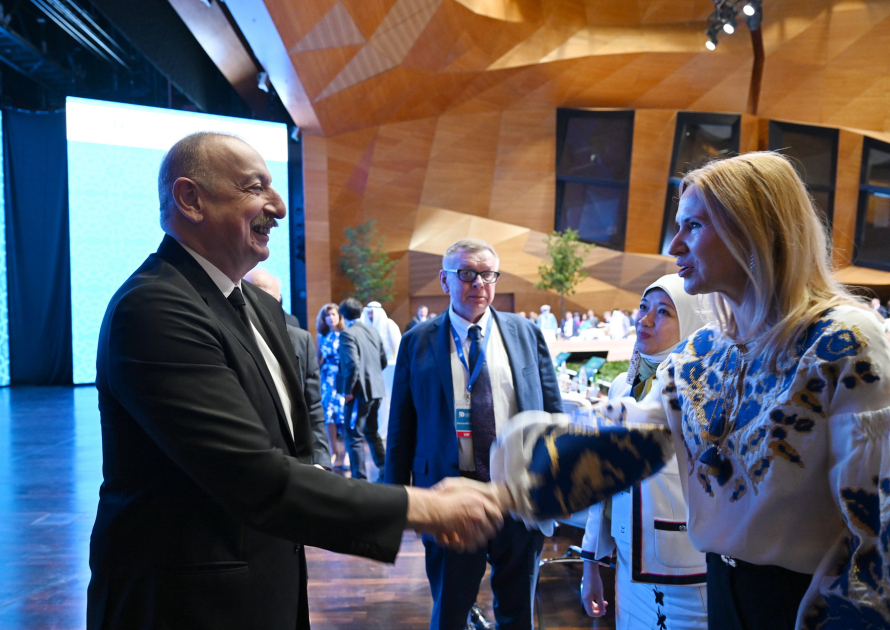
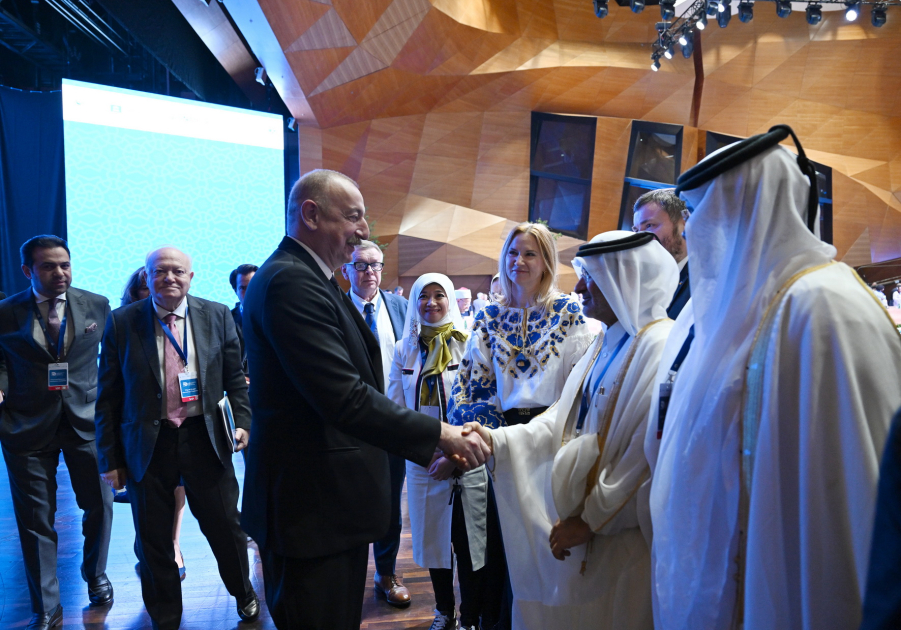
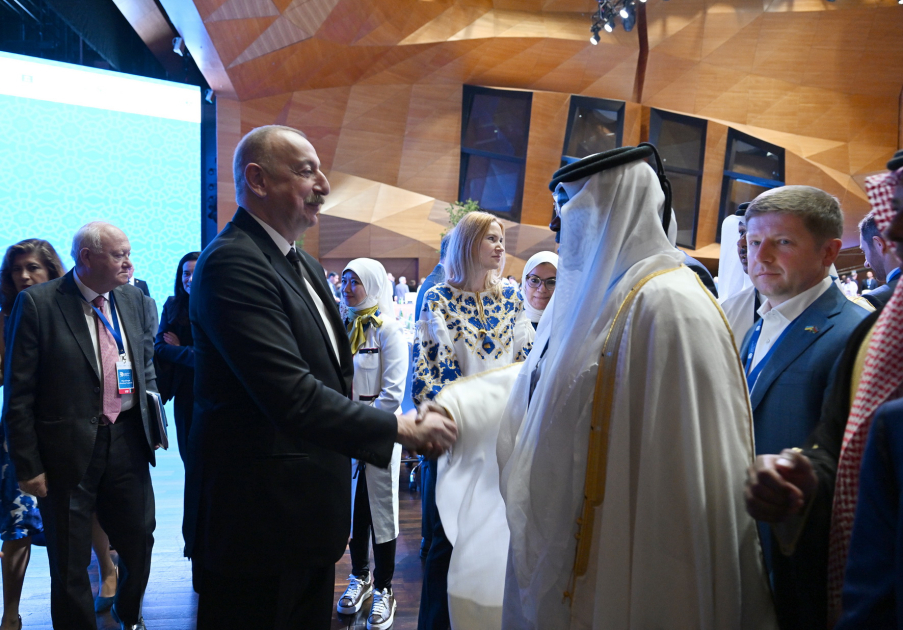
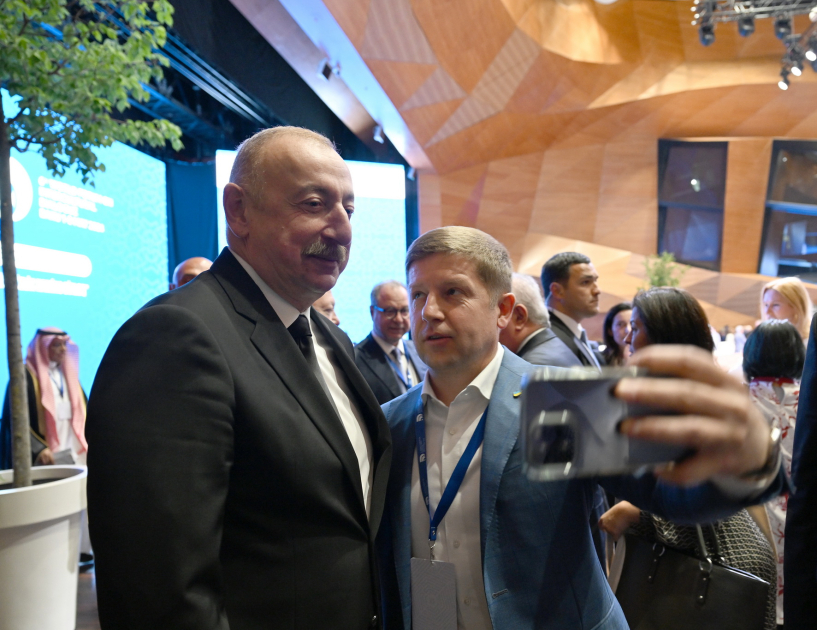
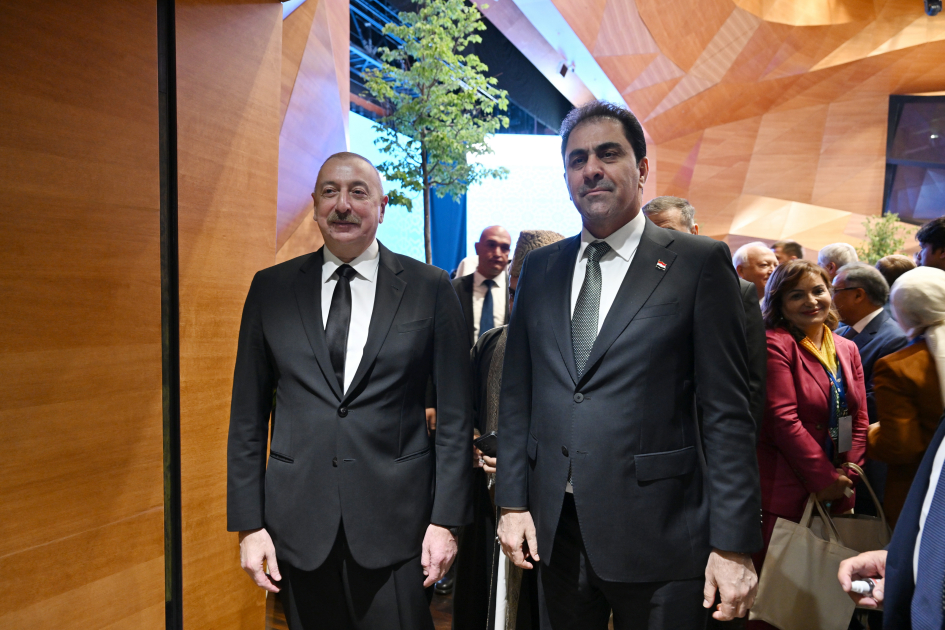
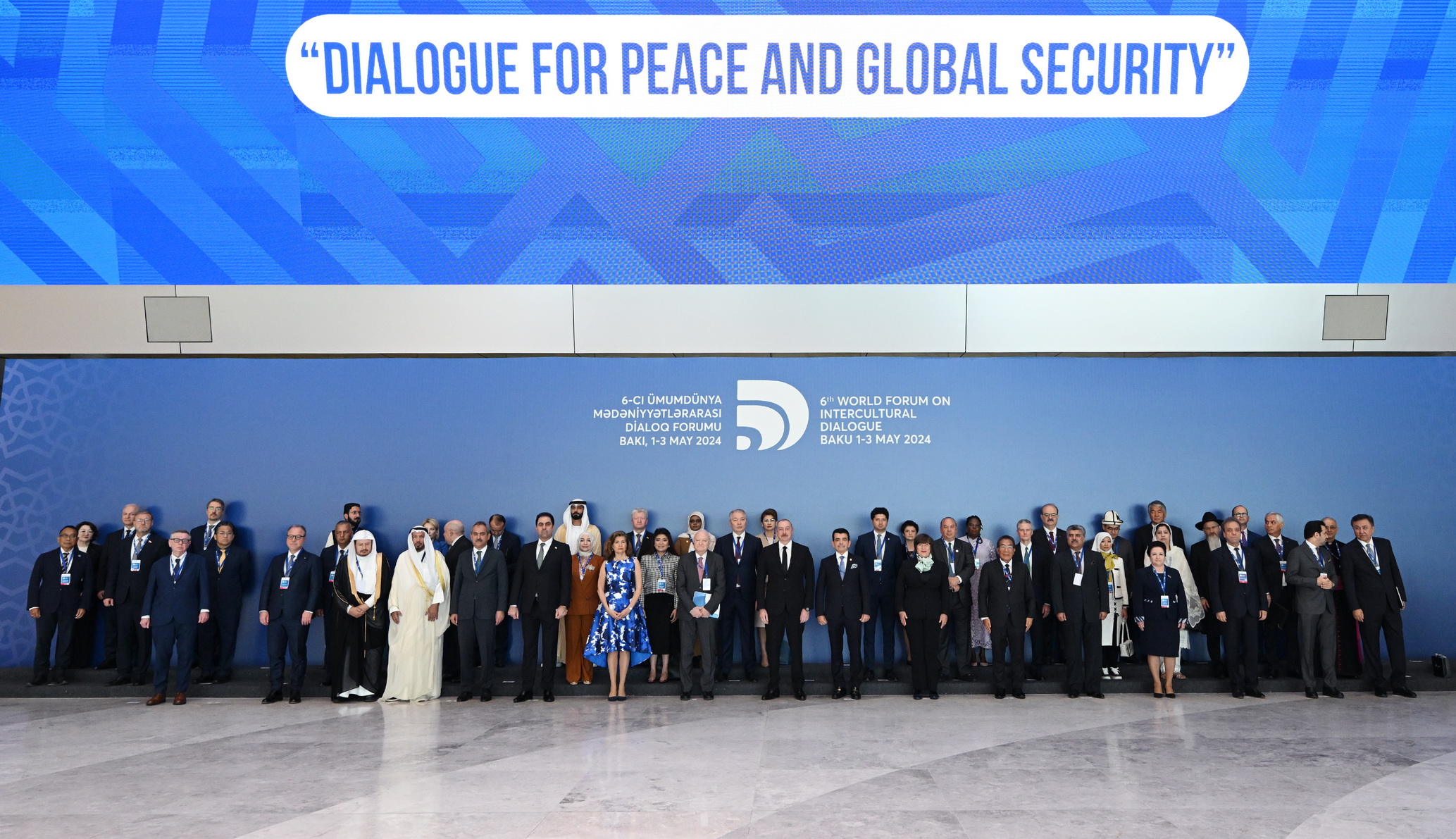
The opening ceremony of the 6th World Forum on Intercultural Dialogue themed “Dialogue for Peace and Global Security” was held at the Baku Convention Center on May 1.
President of the Republic of Azerbaijan Ilham Aliyev attended the event.
The family photo was taken first.
Later, a video highlighting the "Baku Process" and Azerbaijan's contributions to intercultural dialogue was screened.
x x x
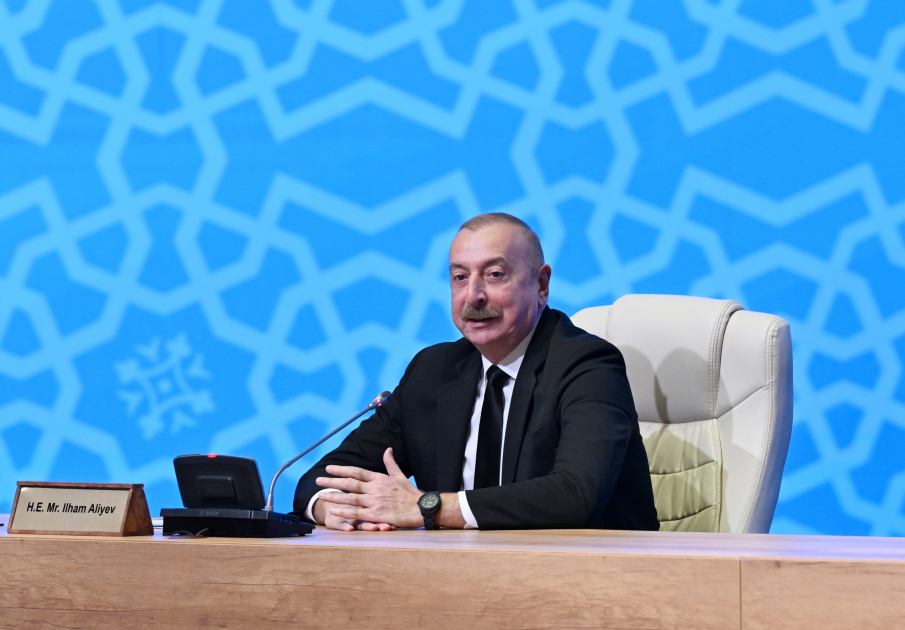
The President of Azerbaijan delivered a speech at the Forum's opening ceremony.
Speech by President Ilham Aliyev
- Thank you. Thank you very much for your kind introductory words.
Dear ladies and gentlemen. Dear guests. Welcome to Azerbaijan.
I'm very glad that the Forum is back on track. As you know, we had several years of break due to COVID and the post-COVID situation, but now I'm confident that our traditional timetable is completely restored.
I'm glad to see representatives from more than 100 countries, actually 110. This really demonstrates that this Forum is a very important international platform to address the issues of intercultural dialogue. In the short video we have just seen, it tells about the “Baku Process”. Actually, when we launched the process, we could not have even imagined that it would transform into a global platform bringing together people—intellectuals, politicians, decision-makers, media representatives, representatives of civil society, and religious leaders—united with one goal of making the world safer and more secure. Because dialogue between cultures is the basis for this.
I looked at the program of the Forum. It's really very comprehensive, covering many areas. The agenda is really very broad, covering cultural diversity, interreligious dialogue, climate change, migration, peace and security, post-conflict situations, tourism, and artificial intelligence. I wish you productive discussions. I'm confident that the discussions and ideas presented during the Forum will help us continue to elaborate approaches towards intercultural dialogue: how to strengthen it and how to work jointly to reduce existing and potential threats.
Since we last met time in 2019 in Baku, unfortunately, the world has not become safer. On the contrary, we see new conflicts, new areas of instability, and new challenges. Therefore, I'm sure that this esteemed audience of personalities will contribute to the elaboration of ideas and new approaches to address the most urgent issues on the global agenda.
Azerbaijan has its own experience in addressing those issues, which are on the agenda of the Forum. So, I will maybe talk a little bit about how we see our role in these processes and what we have done in order to strengthen these positive trends. Azerbaijan has been a place for cultures to meet for centuries. Our geographical location between East and West has actually predominated this trend. The multicultural and ethnically diverse Azerbaijani society has managed to protect the most important values throughout the centuries; values of tolerance, mutual respect, friendship, and partnership. One of the main reasons for successful development of Azerbaijan as an independent country, I'm absolutely sure, is exactly that. All the people who live in Azerbaijan, representatives of different ethnic groups and religions, live as one family, as great citizens of Azerbaijan, as patriots of our state and statehood. They do everything in order to strengthen our country and to strengthen the positive trends of cultural dialogue and cultural diversity. So, having this great experience, which is coming from many ages before, we thought that it would be right for us to undertake this initiative and launch the “Baku Process”. As you know, three years after the “Baku Process” was officially launched, we held the 1st World Forum on Intercultural Dialogue. And now, it continues. One of the main reasons and factors for the peace, stability, and solidarity of Azerbaijani society is exactly cultural diversity and mutual respect. Intercultural dialogue within Azerbaijan has always been very positive. We demonstrate this in our day-to-day lives. When we talk about multiculturalism for Azerbaijani citizens, it's not something abstract or something that must be learned, it's how we live, it's our lifestyle. We are proud of that and also proud that we have managed to protect these values throughout the centuries, even in this turbulent times of clashes, conflicts, and wars happening very close to our borders as well as several years ago within Azerbaijan. So, all of this is something we really want to share with our friends and express our firm commitment to continue on this path, which is the only way for, I'm sure, any country to succeed. Because, first, you have to address these issues internally and create such an atmosphere where representatives of all ethnic groups and religions feel themselves safe, dignified and respected. If the policy is different, it will only lead to discrimination and mistrust, and in the end, to social and, in many cases, political difficulties. It can also lead to the disintegration of countries. Therefore, our experience really demonstrates how we managed to survive in the very difficult first years of independence when we were occupied and faced a lot of economic and social difficulties. There were attempts to disintegrate Azerbaijan, and aggressive separatism posed a challenge to our statehood. The unity of all the peoples who live in Azerbaijan and their commitment to national interests were crucial factors for our success. The role of religious leaders, of course, is of special importance in this context. One of the topics you will discuss is particularly related to that. We have more than 100 religious leaders attending the Forum. I'm sure they will contribute to strengthening mutual understanding and mutual respect.
Interreligious dialogue is also something we strongly advocate for in Azerbaijan. We have organized numerous events on interreligious dialogue in our country. Some of these discussions were held within the framework of the World Forum on Intercultural Dialogue, while others were part of a different agenda. There'll be a special session and discussion format during COP29 focusing on interreligious dialogue. I'm sure that the large audience of religious leaders from around the world who gathered in these days in Baku will demonstrate solidarity and leadership. Because the words of religious leaders are very important for all the peoples in the world, and it's very important when they hear from them positive messages of peace, tolerance, and mutual respect. Unfortunately, sometimes we hear different messages that create additional tensions. So, I think that positive trends in this direction must be strongly supported.
One of the issues to be discussed is multilateralism. Azerbaijan can also demonstrate its experience here. We are strongly committed to multilateralism and have promoted the values of multilateralism during our four-year chairmanship in the Non-Aligned Movement from 2019 until the beginning of this year. By unanimous decision of all 120 countries, we were elected to chair the second-largest international institution after the United Nations. By the way, our chairmanship was also extended for one more year by unanimous decision. We are strongly committed to the founding principles of the Non-Aligned Movement, which include territorial integrity, sovereignty of the countries, and non-interference in internal affairs of the countries. At the same time, we try to strengthen the institutional segment of the Movement. Based on our initiative, the Parliamentary Network was created for the first time, the youth and women platforms were created. So, these initiatives are all the legacy of Azerbaijan.
I'm sure that the institutional development of the Non-Aligned Movement will continue in the future. Because the world now needs a large group of countries, which do not belong to any of the confronting poles and have their own agenda and rights. Most of these countries have a very difficult and tragic colonial past. The voice of these countries must be heard, they cannot be ignored. Our chairmanship in the NAM aimed to make the Movement more vocal, active, proactive, and capable. We also used the platform of NAM during the COVID time to address important issues related to this tragic disease. The pandemic hit all countries, and Azerbaijan was among those actively spoke and acted against vaccine nationalism. As you may remember, in the first months of the pandemic, there was a shortage of vaccine. Many countries, which had a lot of money, stockpiled vaccines, some of them five times more vaccines they needed, thus, destroying the health system of many other countries, which could not get access to vaccines. So, the fight against vaccine nationalism was on top of agenda of Azerbaijan as the chair of NAM. We also addressed this issue during a special session of the UN General Assembly that we initiated.
One of the issues, which we always addressed as the chair of Non-Aligned Movement, was the fight against neo-colonialism. As I already said, most countries in the Non-Aligned Movement have a very dark and tragic colonial past. The fight against neo-colonialism is something that I strongly believe in. Because we speak for justice, we speak for international law. Today in the 21st century, we cannot afford to allow some big European countries to continue colonizing other peoples. This is absolutely unacceptable. When we raise our voice nationally, and previously as the chair of NAM, it's not because we are acting against any country. It’s just because we defend justice and international law. This issue should not be ignored. The world should not turn a blind eye to this disgusting practice of neo-colonialism, which is leading to forceful assimilation. Forceful assimilation of more than ten French overseas territories is absolutely unacceptable and must be stopped. I wonder why European institutions, such as the European Parliament and the Parliamentary Assembly of the Council of Europe, which sometimes try to interfere in the internal affairs of countries not situated in Europe, are silent. Don't they see that neo-colonialism continues today? Why don't they criticize it? Why don't they impose sanctions? Why don't they raise their voice? We did it as the chair of NAM; it was our duty. As the country and people who lived within other countries and within other empires, we know what it is to be free and independent. We want to help these people protect their rights, achieve independence, promote their culture, and preserve their language. This is something, which I believe every normal human being will defend. This is an important issue for intercultural dialogue. We cannot demonstrate hypocrisy, double standards, or simply ignore and turn a blind eye when we see that hypocrisy and double standards are demonstrated. When you articulate pleasant-sounding values like tolerance, dialogue, democracy, and human rights, yet continue to colonize more than a dozen overseas territories, this is nothing but hypocrisy and must be stopped. Our experiences in multilateralism will certainly help us during our presidency of COP29.
By unanimous decision, Azerbaijan was elected as a host country, and we see our role in building bridges. As I mentioned, our history, geography, and interaction with European institutions and at the same time being geographically located between West and East enable us to do a lot. Our experience as the chair of NAM will also help us build bridges.
I think that for successful development of issues related to climate change, we need not only finance—finance will be, by the way, the main topic of COP 29— but also solidarity and mutual trust. We should not try to blame each other or argue who has done more to damage the planet or who is responsible for global warming. If we continue acting like that, it will be a disaster. I recently spoke at one of the important climate conference where I emphasized that there should be no discrimination against oil-producing countries. I want to reiterate that it's not our fault that we have oil and gas. Some countries have other natural resources. Of course, every country has the right to use its natural resources for the benefit of the country and not only your own country. As far as Azerbaijan is concerned, we ensure energy security by supplying natural gas to eight countries. If you look at our oil supply geography, it maybe be several times more.
Our efforts will focus on building bridges between Europe and the Global South while strengthening solidarity. I think that we can do it. Of course, we will need to work hard. But this is our agenda. At the same time, we have our own green agenda, which started long before we were awarded with the honor to host COP29. By 2027, we will have two gigawatts of solar and wind power stations operational. By 2030, we will have an additional five gigawatts of solar and wind capacity operational. This will allow us to use 100% renewables for electricity production. So, this is what we do with oil and gas revenues. We create a very good investment climate, attracting investors. At the same time, we invest in renewable sources ourselves. This is a factor by which we must be judged by the international community - not for the oil we have, but because we did something wrong. We haven’t done anything wrong, and Azerbaijan’s performance in issues related to climate change can be considered exemplary.
The last point, referring to your agenda discussions on peace, security, and post-conflict situations, Azerbaijan ensured peace by war. I think that this should be thoroughly examined. We were under occupation for almost 30 years. During all the previous world forums on international dialogue, I spoke about occupation, injustice, and the suffering of the people of Azerbaijan. Almost 20% of our internationally recognized territories were occupied until 2020—just from the first days of our independence. One million Azerbaijanis became refugees and internally displaced. We were victims of ethnic cleansing in Karabakh and Eastern Zangazur. So, there is total devastation, and now those who visit the liberated territories can see it with their own eyes. I know that some of the participants will visit the liberated territories. We raised our voice, yes. We worked hard on the diplomatic track. All the major international organizations adopted resolutions and decisions demanding the withdrawal of Armenian forces, including four resolutions by the UN Security Council. But it did not work. There was no mechanism for implementation. Armenia ignored them. Those who adopted those resolutions did not do anything in order to implement them. So, we had to achieve peace through war. What we did in 2020 - 44 days of the Patriotic War - allowed us to liberate the largest part of the territories. Last September, we completely restored our territorial integrity and sovereignty. Now we are in a post-conflict situation. In this post-conflict situation, once again, it was Azerbaijan that behaved proactively. It was Azerbaijan that offered Armenia to start negotiations on a peace agreement. It was Azerbaijan, the country that elaborated basic principles and even drafted the peace agreement. Currently, negotiations between two countries are being held based on our draft proposal. So, after suffering of the people for almost 30 years, violations of international law, total destruction of all our cultural and historical sites - including 65 out of 67 mosques by Armenian vandals – we liberated our territories by force despite strong opposition from the countries sponsoring Armenia. Although we fully restored territorial integrity and sovereignty last September and became the subject of unjustified political attacks from Armenia and so-called guarantors. Nevertheless, we made a proposal for peace.
Now we are seeing positive trends on the peace track, at the same time, border delimitation has actually started. It is not just delimitation but demarcation. It is currently underway - when I speak, it's happening now. This was achieved by the two countries without any mediation. This once again demonstrates that we don't need mediators, especially those who pursue their own goals and don't want to help but rather want to penetrate in our region for their personal, political, and economic interests. They want to once again pour oil to the fire and explode the South Caucasus. We will not allow that to happen. After 30 years of confrontation, I think, Azerbaijan and Armenia clearly understand that we need peace in the South Caucasus. Peace in the South Caucasus can only be achieved through normalization between Azerbaijan and Armenia.
I will conclude now to not to take much of your time. Thank you for your attention. I wish you all the best, good discussions, and a pleasant stay in Azerbaijan. Thank you.
x x x
The opening ceremony of the Forum continued with plenary and panel sessions.
x x x
The Forum, organized by the government of Azerbaijan, in partnership with the United Nations Educational, Scientific and Cultural Organization (UNESCO), the United Nations Alliance of Civilizations (UNAOC), the World Tourism Organization (WTO) and the Islamic World Educational, Scientific and Cultural Organization (ICESCO), brings together 700 distinguished guests representing more than 100 countries.
High-level officials, heads of parliament, religious leaders, scholars, journalists, and participants from diverse ethnic and cultural backgrounds came together to advance peace and global security through meaningful dialogue.
The three-day Forum will feature 4 plenary sessions and 12 panel discussions on topics such as education, youth, climate change, artificial intelligence, protection of cultural heritage, illegal migration and other areas.
The Forum participants will visit the territories of Azerbaijan liberated from the 30-year-long occupation. The Forum will also feature special panel sessions scheduled to be held in Aghdam and Shusha. This is also a good opportunity to provide a platform to address to the international community from the liberated territories of Azerbaijan.
The World Forum on Intercultural Dialogue, which is an integral part of the "Baku Process" on intercultural dialogue initiated by President Ilham Aliyev in 2008, was first held in Baku in 2011, and subsequently organized in 2013, 2015, 2017 and 2019. The number of countries and organizations participating in the Forum has significantly increased over the past period. In total, more than 10,000 participants - government officials, heads and representatives of international organizations and institutions attended the forums. At the same time, more than 200 various events, plenary and panel discussions, presentations were organized as part of the forums. The discussions held as part of the five previous forums, which focused on the challenges facing humanity, and the documents drawn up there, served as the main reference for international organizations, and the “Baku Process” has been recognized as an important platform for intercultural dialogue.
Other news in this section


VIDEO

