Swedish blogger discovers Azerbaijani cuisine INTERVIEW VIDEO
Stockholm, April 6, AZERTAC
Azerbaijani cuisine is a harmony of rich flavors, aromatic spices, and centuries-old traditions of hospitality. It blends the culinary influences of the East and the Caucasus, creating a vibrant and distinctive gastronomic culture.
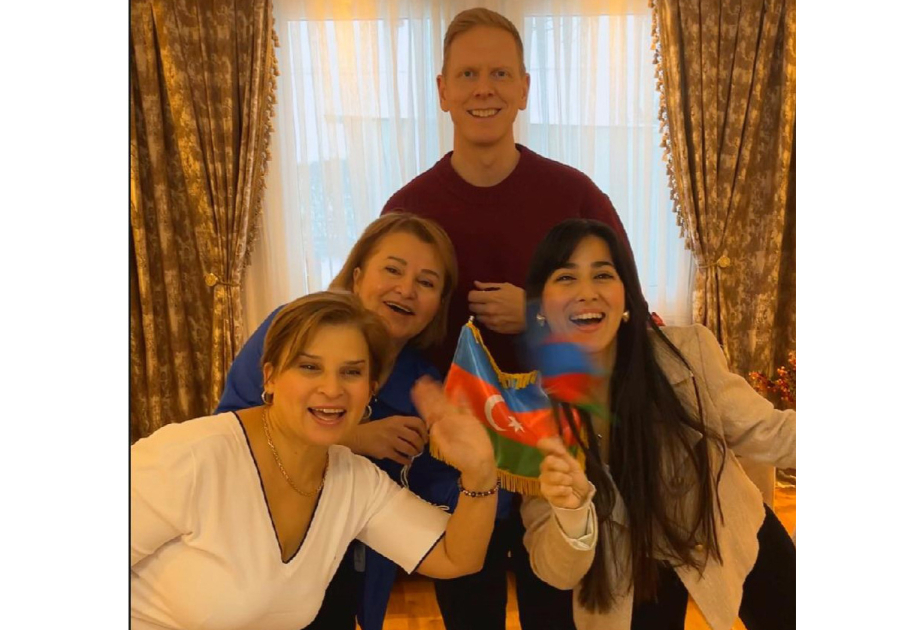
Erik Nahlén, a popular Swedish food blogger who runs the verified Instagram account @varldensbastamat ("the world's best food") as well as accounts on tiktok, facebook and Youtube, recently experienced this richness. Erik has set an ambitious goal for himself – to try the cuisines of all 195 countries in the world–and Azerbaijan became the 60th country on his gastronomic map.
The hospitable host was Samira Huseynova, founder and director of the Butaland kindergarten chain in Stockholm. Together with her sister Naila and her niece Aysel, she welcomed Erik into her home, treating him to traditional dishes. At the table, the blogger tried badamjan dolmasi (stuffed eggplant, tomato, and pepper) and the crowning dish of the national cuisine–plov. The evening concluded with a traditional tea ceremony featuring national sweets, apricot jam, and a game of backgammon.
In a conversation with an AZERTAC correspondent, Erik shared his impressions of Azerbaijani cuisine, while Samira Khanum explained the choice of dishes.

– Erik, you tasted the gastronomic symbols of Azerbaijani cuisine while visiting Samira Khanum. Which dish made the strongest impression on you and why?
– I really enjoyed the warm and generous hospitality–it’s clear that this is a vital part of Azerbaijani culture. I truly liked all the dishes; the dolma was a delicacy, but I was most impressed by the levengi chicken–it’s unlike anything I’ve tried in Sweden.
By the way, there are quite a few similarities between Azerbaijani and Swedish cuisines. Both are rich in flavor but not spicy, and we also use a lot of fresh herbs. We have a similar dessert called mandelkubb (almond cube), which can be compared to shekerbura, but our version is certainly not as tasty or beautiful as the Azerbaijani one. And, of course, I must mention the amazing tea.


– How do you choose whose home to visit to try these dishes?
– Mostly it depends on who writes to me and offers advice, as well as invitations–I visit those who invite me and who strike me as kind people.
– Did you have any preconception of Azerbaijani cuisine before experiencing it?
– Before visiting Samira Khanum and her family, I didn’t know much, but I had tried cuisines similar to Azerbaijani food and enjoyed them. It seems to me that Azerbaijani cuisine combines elements from the cuisines of neighboring countries.

– Samira khanum, you treated Erik Nahlén to badamjan dolmasi and plov with levengi. Why did you decide to present these specific dishes to the guest?
– I believe our dolma is not just a dish, but a beautiful culinary concept where different flavors and textures combine, immediately showcasing our love for detail. As for plov with levengi, I think it demonstrates unique regional traditions and a combination of sweet and sour notes that might exist in European cuisine, but it's still not quite the same. I chose dishes that could surprise the guest–not just with taste, but with presentation. Badamjan dolmasi looks very impressive.

– What was the guest's reaction to our cuisine?
– The guests were pleasantly surprised. They were especially impressed by the combination of flavors–Erik noted that the dishes are very rich yet harmonious. As a food blogger, he paid attention to the details–texture, the balance of spices, and the presentation.

Other news in this section


