Ukrainian Deputy Prime Minister evaluates the significance of WUF13 EXCLUSIVE
Kyiv, May 14, AZERTAC
“The World Urban Forum (WUF) is currently one of the UN’s key global platforms, shaping the future vision of cities, communities, housing policy, and infrastructure,” said
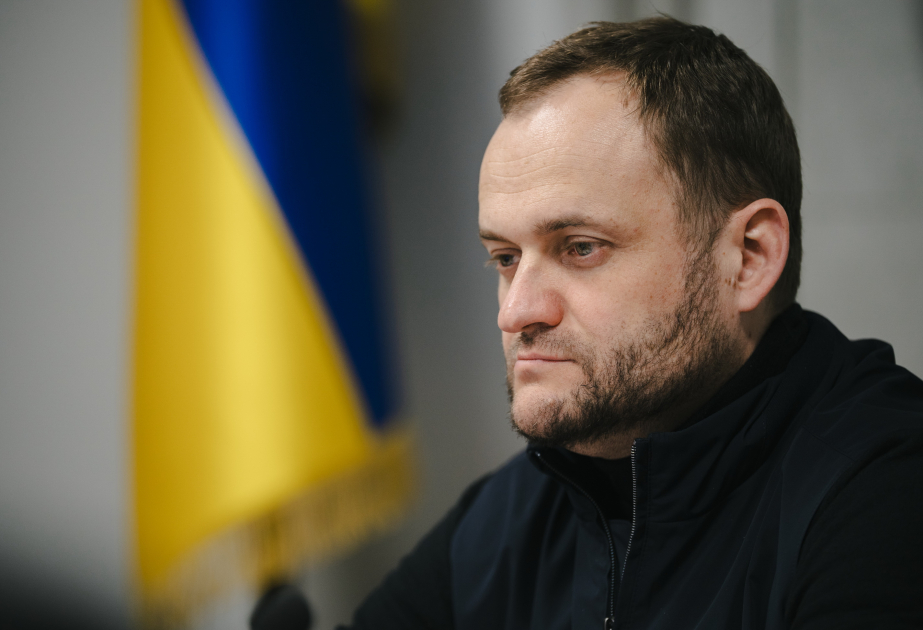
Oleksii Kuleba, Ukraine’s Deputy Prime Minister for Restoration of Ukraine and Minister for Development of Communities and Territories, in an exclusive interview with AZERTAC.
"In effect, this is a space where the world seeks answers to the greatest challenges of the 21st century: urbanization, the housing crisis, migration, climate change, the consequences of war, and urban resilience. For Ukraine, this forum holds special significance because we are discussing recovery not theoretically, but practically – amidst a full-scale war. Ukraine is currently gaining a unique experience. We are simultaneously defending our country, restoring communities, modernizing infrastructure, and implementing reforms," Kuleba noted.
According to the Minister, most global reconstruction models have historically been implemented after a conflict has ended.
"Ukraine is effectively forming a new approach: recovery during wartime. This experience is becoming vital for the international community. The war has shown that a modern city is no longer just about architecture or economics; it is about resilience – the community's ability to function during crises, attacks, blackouts, and constant threats. We have seen the critical importance of decentralization, strong local self-governance, digital services, resilient energy, modern logistics, the protection of critical infrastructure, and, above all, people and trust within communities," the Minister emphasized.
He added that Ukraine can share not only the painful experience of destruction but also concrete solutions.
"According to the Fifth Rapid Damage and Needs Assessment (RDNA5) by the World Bank, the European Commission, the UN, and the Government of Ukraine, by the end of 2025, damage to Ukraine's housing sector exceeded $61 billion. Approximately 14% of the country’s housing stock has been partially damaged or completely destroyed. This includes over 338,000 private houses, more than 41,000 apartment buildings, and about 900 dormitories. To date, more than 293,000 residential properties have been entered into the registry of damaged and destroyed property. At the same time, Ukraine has over 4.6 million officially registered internally displaced persons (IDPs). This is why it is crucial for the world to clearly understand the source of this crisis on international platforms like this," Kuleba explained.
Noting that Russia daily strikes Ukrainian cities, residential areas, energy grids, schools, hospitals, and critical infrastructure, the Minister stressed that Russian aggression has created one of the largest humanitarian and housing crises in Europe in decades.
"Therefore, we are convinced: a country that systematically destroys cities and the homes of peaceful people cannot claim a role as a participant in global discussions regarding a sustainable urban future, community development, or recovery," he stated.
According to Kuleba, cities have moved to the center of global challenges – security, humanitarian, economic, demographic, and climatic.
"The significance of WUF13 lies in its ability to unite governments, international organizations, cities, financial institutions, businesses, and experts in the search for collective solutions. It is particularly important that one of the central focuses of this year's forum is housing as the foundation of safe and sustainable communities. For Ukraine, this is extremely relevant. Millions of Ukrainians have lost their homes due to Russian agression. However, we are already developing new approaches to housing policy and recovery – digital compensation mechanisms, restoration programs, the development of social housing, new support mechanisms for IDPs, the modernization of outdated housing stock, the development of public-private partnerships, and the integration of energy efficiency and sustainability principles," stated the Vice Prime Minister.
The Minister noted that under the state program for compensation for damaged or destroyed housing, nearly 360,000 people have already received aid.
"We increasingly talk about the fact that recovery is not simply the reconstruction of what was destroyed. It is an opportunity to build a new quality of urban environment, new infrastructure, and a new model of community development. Today, Ukraine is becoming a center for the formation of new approaches to recovery and resilience. That is why participation in such global forums is important not only for Ukraine; it is essential for the international discussion on what the cities of the future should look like in a world of new risks. We are grateful to Azerbaijan for organizing such a global platform and for supporting Ukraine. It is vital today that the international community maintains its focus on the issues of recovery, community resilience, and the humanitarian consequences of war," Kuleba added.
Other news in this section


