Azerbaijani violinist based in London: My Azerbaijani roots inspire my creativity
London, August 20, AZERTAC
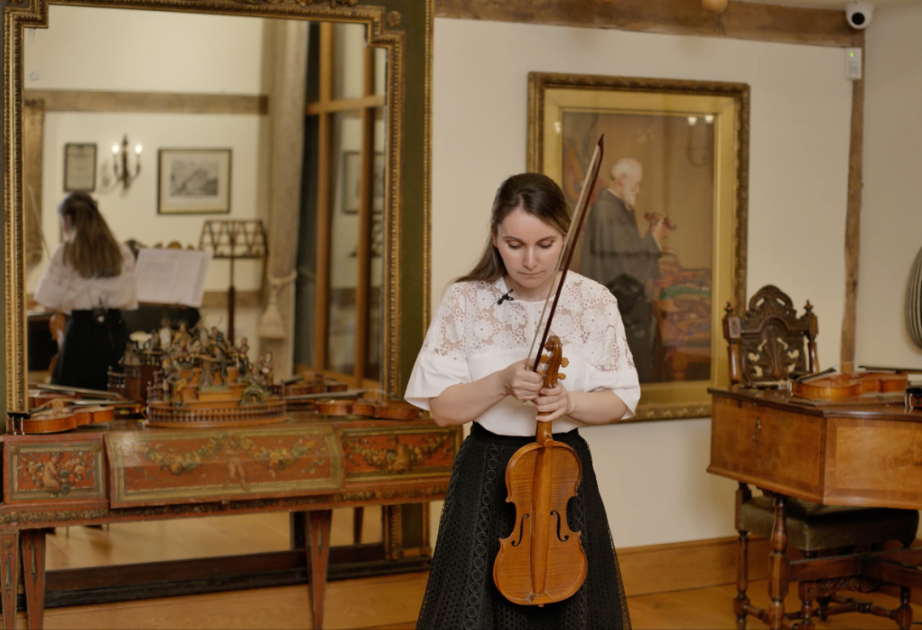
Azerbaijani violinist Nazrin Rashidova, who is currently based in London, made her first solo appearance in Baku at the age of three. Raised in a family of professional musicians, Rashidova has established an international career as a soloist, recitalist, chamber musician, orchestral director, pedagogue and researcher. At the age of 21, she founded FeMusa, the first female chamber orchestra to be established in the United Kingdom since the 1950s.
In an interview with AZERTAC, Rashidova spoke about her 35-year career on stage, her childhood, the influence of her Azerbaijani roots and culture on her creative work, her career in the United Kingdom, as well as her plans to make Azerbaijani classical music more widely accessible to international audiences.
—You made your solo debut at just three years old in Baku, which is an extraordinary age to begin performing publicly. What do you remember about those early years, and when did you first realise that the violin would become such an important part of your life?
-From very early on, the violin became such an integral part of my existence and identity, thus I would find it challenging to place the moment I realised it would become such an important part of my life. I feel very fortunate to be able to step back into moments of my younger years in practice and on stage though photographs and videos my parents made sure to retain in our family archives.
-Both of your parents are musicians. How did growing up in a musical family shape you as an artist? Were your parents the main influence behind your decision to pursue music professionally?
-Both of my parents are professional violinists who used to perform before and are now teaching in various junior and senior institutions and conservatoires in the UK. When we read stories and see documentaries about other artists’ upbringings, we often find there to be a thin line between influence, pressure and just mere guidance. I happen to fall into the last category, as there was always room and space left for me to feel inspired and engage creatively with the profession.
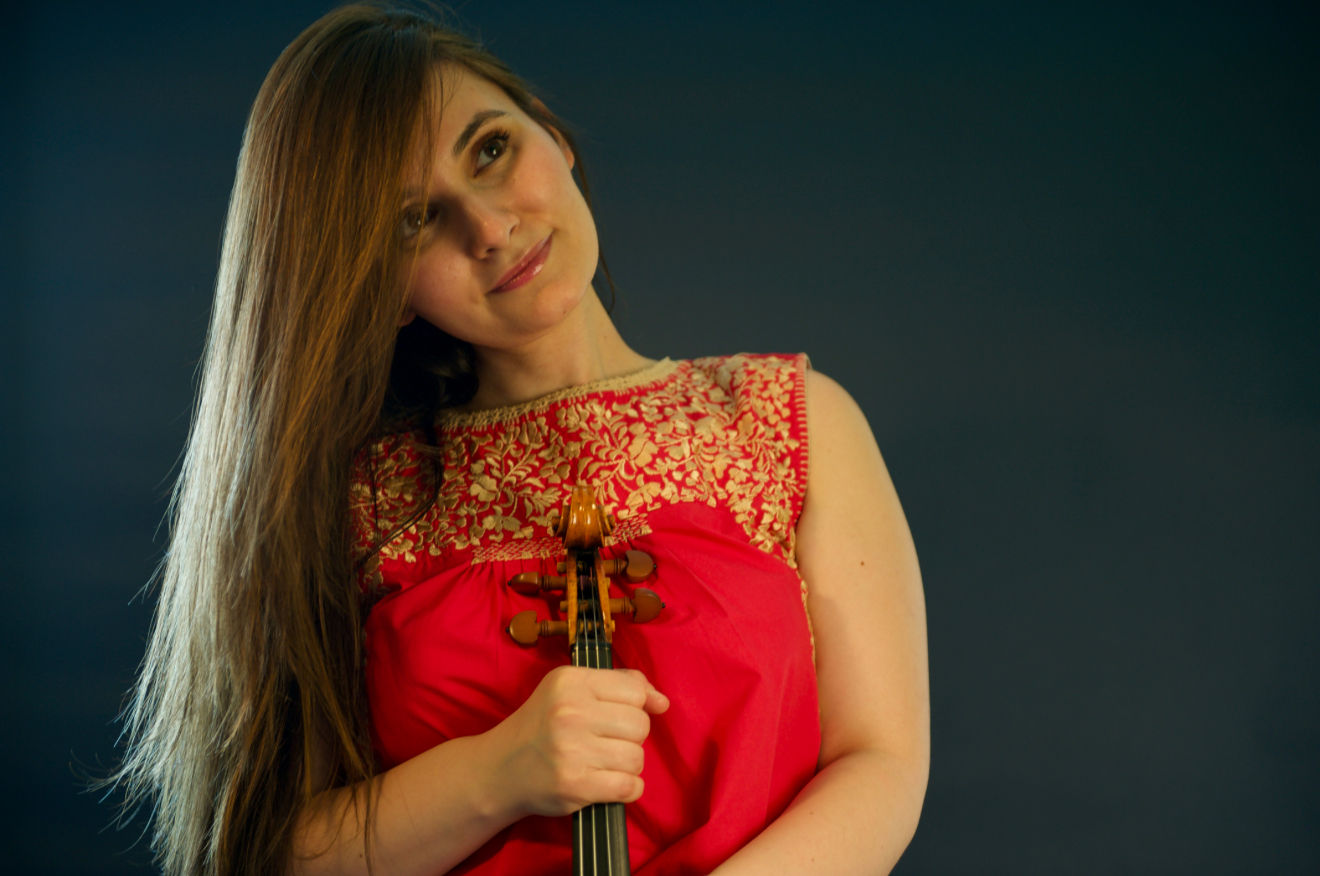
-You were born in Azerbaijan but have built much of your professional career in the United Kingdom. How has your Azerbaijani background influenced your musical identity and the way you approach your work today?
-Although I have lived more than a third of my life in the UK (meaning that my first taught language in school at the age of seven was English), I feel my Azerbaijani roots offer extra layers of colour, inspiration and the capacity to be able to see life, and express myself, in the way I do. From the richness of our cuisine to the depth of our historically cultural scene (traditional, classical, jazz and modern arts), I feel blessed to have been born in the Land of Fire.
-Could you tell us about your journey from being a young violinist in Baku to establishing yourself as an internationally acclaimed soloist, recitalist, chamber musician and orchestral director in Britain? What have been some of the biggest challenges you have faced along the way?
-The beauty of our profession lies in the fact that our journey can be as long as it can be. As Arthur Ashe put it, “success is a journey, not a destination”. Being able to explore a wide array of roles has meant that I have formed myself a portfolio career. In hindsight, every role or project I have taken on or created from scratch have clear threads running through my creative output (be it in the performing, pedagogical, research, editorial or management sectors). In terms of challenges, if one is always willing to grow - they will always be there. I will fuse in another quote with my own motto “it is a matter of how you respond to them”.
-You founded the FeMusa Orchestra, described as Britain’s first female chamber orchestra in 70 years. What inspired you to establish the orchestra, and why did you feel there was a need for an ensemble of this kind?
-FeMusa, I founded as a 21 year-old - in the last year of my Masters at the Royal Academy of Music. When I had entered the institution as a fifteen year-old, the social aspect became more obvious as upon completing my Bachelors, my school mates were just entering into their first year of university studies. This meant that every single member in my orchestra was older than me when we established ourselves in 2008. At the time, FeMusa was the first female orchestra to have been founded in the UK since the 1950s. Apart from the professional growth and aspects of managing, directing and leading the orchestra, being able to create more performance opportunities for female collectives inspired further ensembles of the same kind to be founded in the East following our performances in Oman and Azerbaijan.
-Alongside performing, you are also a pedagogue and researcher. How important is it for you to pass your knowledge onto the next generation of musicians, and what qualities do you try to develop in your students beyond technical ability?
-In the process of my work, I feel there is little separation in my mind between performance, pedagogy and research. Lately, I have certainly invested more energy into the latter two areas as I find it quite rewarding to work with students, starting them off at five years old and overseeing their work at postgraduate level and beyond. One of my utmost goals is to create a space for students of all ages to always feel a sense of love for their instrument and subject - the same feeling which has not left me since I first came into contact with mine. In terms of qualities I try to develop in my students - definitely a sense of confidence which will come with the technical assurance one needs to develop well into their foundations. In addition to this, giving them a sense of artistic freedom, in order for them to be able to express themselves independently.
-Having lived and worked internationally, do you continue to maintain a connection with Azerbaijan’s musical community? Are there Azerbaijani composers or musical traditions that you particularly enjoy bringing to international audiences?
-Compositions of Azerbaijani composers are often programmed into my concerts - most recently in Poland. The Dreams album I worked on in collaboration with my colleague and talented guitarist, Stanislav Hvartchilkov remains one of my most treasured projects linking me with Azerbaijan. The process of arranging Tofig Guliyev’s songs for the violin and guitar has not only contributed to increasing the repertory for this combination of instruments but the original music has also attracted a wide audience through its dissemination and radio broadcasts.
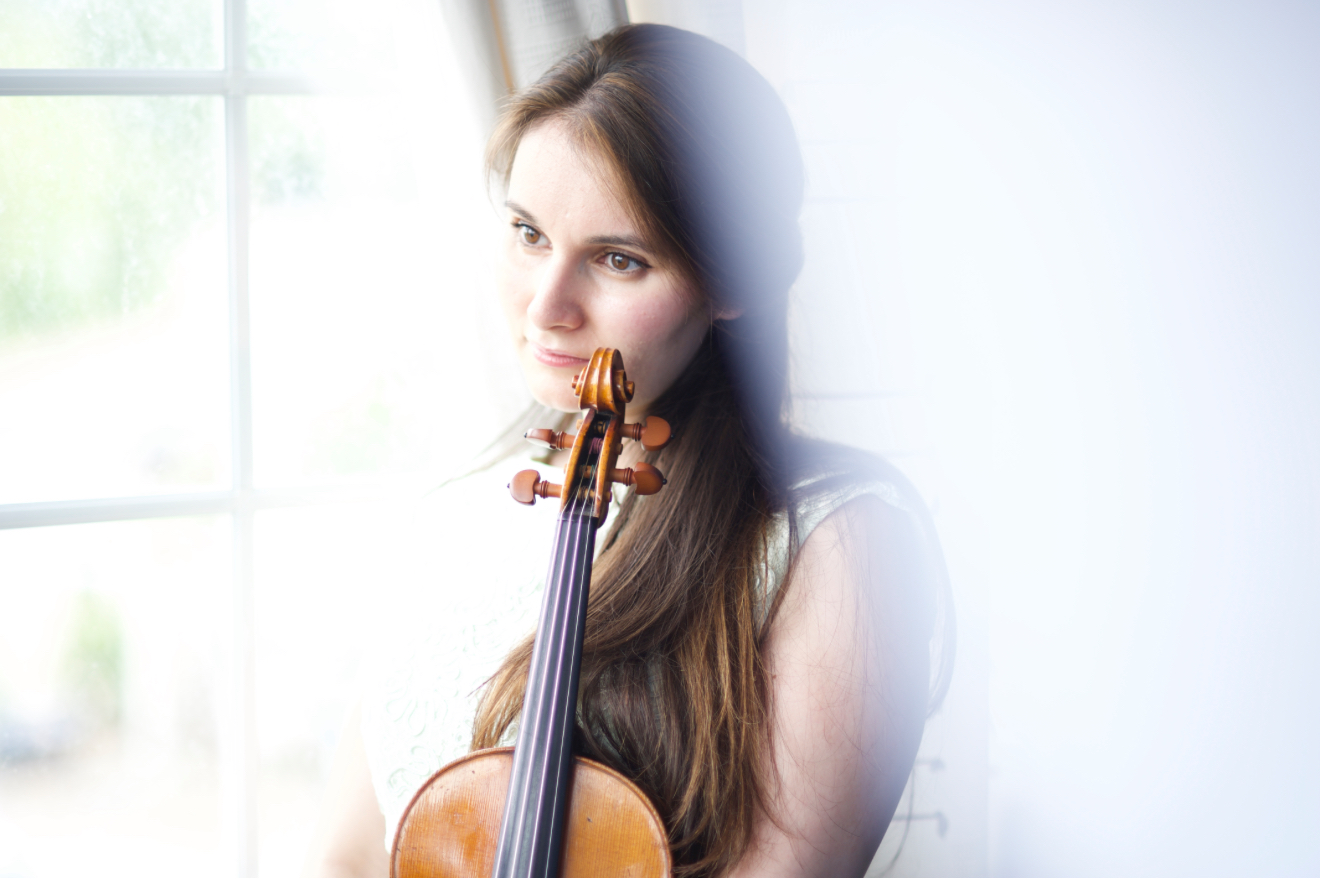
-Azerbaijan has a strong classical music tradition and has produced many internationally recognised musicians. In your view, what makes Azerbaijan’s musical culture distinctive, and how is it perceived within the international classical music world?
-Whenever I introduce Azerbaijani classical orchestral works of Niyazi, Garayev and Amirov to classical professionals, the most common adjectives to be expressed of the music tend to, “how rich and lush is the music of your land.” And, I could not agree more. It’s distinctive because its harmonic language is like no other and it all stems from the complex modal systems of our mugham which is similarly capable of evoking an exceptionally wide range of emotional states.
-Looking back from your first performance in Baku at the age of three to your career today, which achievement or moment has been the most meaningful to you personally?
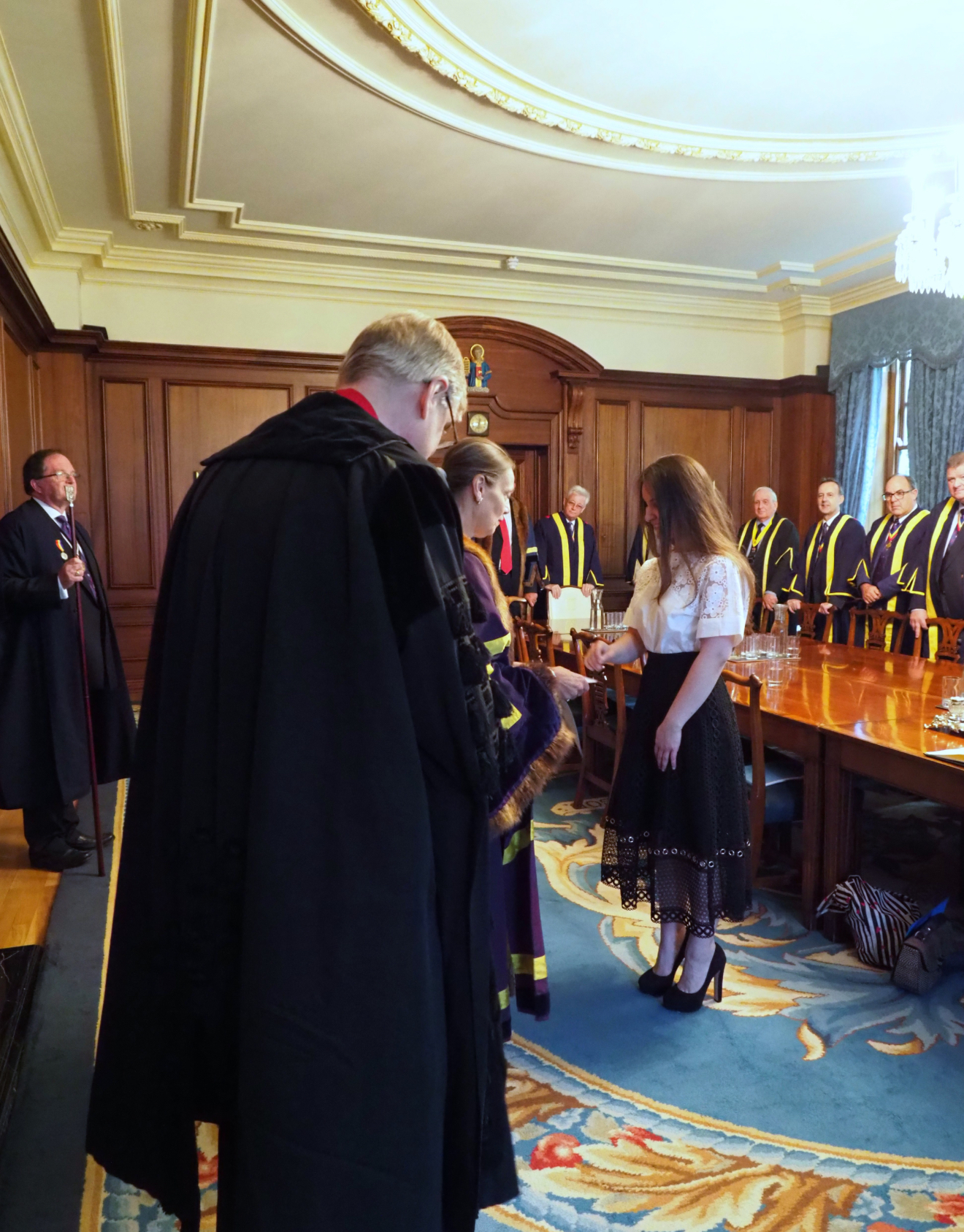
-While I consider each moment and achievement, and the next I am preparing for, as meaningful to me as the first I do have a few memorable moments which relate to one major project I pursued for four and a half years. In order of appearance, my Doctoral project at the Royal Academy of Music, saw the release of a premiere recording series of the 24 Études Caprices of Émile Sauret, the French violin celebrity of the 19th century. Partially recorded on Sauret’s own Stradivari violin of 35 years - the four- volume CD series was released on the Naxos record label. Half way through my research project, I was awarded in a ceremonious occasion, one of the most prestigious awards of the Worshipful Company of Musicians, The John Clementi Collard Fellowship. It was an honour to have my signature feature in the same book which featured the ones of Sir Edward Elgar and
Ralph Vaughan Williams. This project culminated by the launch of a new edition of Sauret’s 24 Etudes Caprices, with suggestions of my fingerings, bowings and a substantial biographical portrait of Emile Sauret, while giving further insights into the performance tradition of the period - published by the illustrious Edition Peters publication.
-What projects are you currently working on, and are there any future performances, research projects or collaborations connected with Azerbaijan that you would particularly like to pursue?
-I just had a co-written ‘In Focus’ article published in The Strad Magazine’s August 2026 issue. It features probably one of the most unusually beautiful and unique violins I have played and recorded on, to date. This unusual mute violin, made in 1776 by Neapolitan luthier Nicolò Gagliano, celebrates its 250th birthday this year. The instrument has recently (2024-25) been exhibited in the “Stradivarius and the Golden Age of Violins and Guitars” exhibition, held at the Musical Instrument Museum in Phoenix, AZ, US. We have a lot of video footage made on a few other very valuable instruments, also featured in the above exhibition. I am currently working on releasing them to the public soon. Owing to popular demand, other arrangements I made in collaboration with the guitarist, Stanislav Hvartchilkov (for the violin and guitar) now appear to be in Faber Music, the illustrious publishers’ catalogue - Bizet's Carmen & Trad. Variations on the Carnival of Venice.
It is my wish to be able to make the scores of our Azerbaijani classical works more globally accessible and available to musicians and audiences alike, through international publishing channels. I am working on it.
Other news in this section


