Tokyo's historic Hyakudan Kaidan building reopens after one-year closure
Baku, October 9, AZERTAC
Tokyo's historic Hyakudan Kaidan building reopened to the public on October 1 after a yearlong closure, offering visitors a special opportunity to directly experience the charm of its 1930s architecture and ornaments, Jiji Press reported.
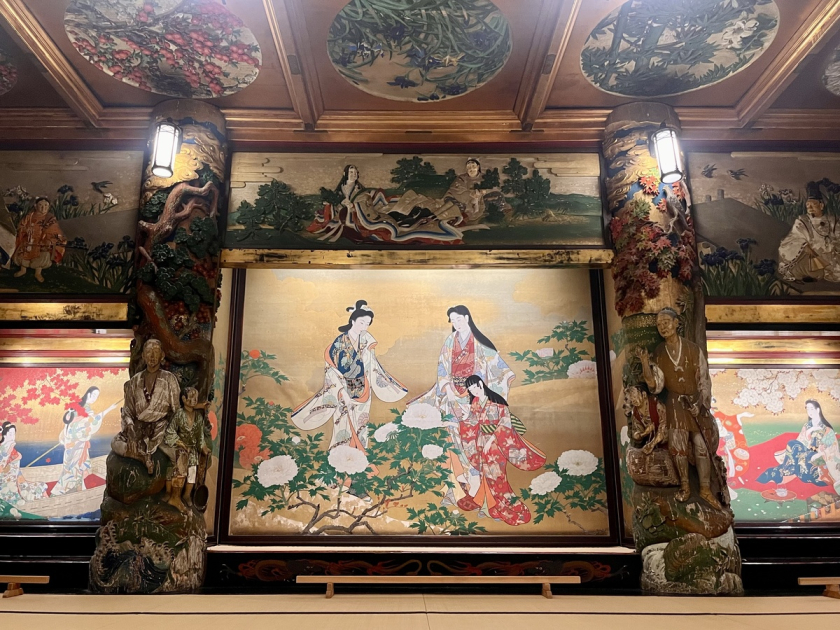
The event, which runs until March 30, 2027, features only a few exhibits in the building, which is designated as a tangible cultural property by the Tokyo metropolitan government. This differs from previous events, when exhibits and showcases partially blocked views of ceiling paintings, pillars and architectural details.
"We aim to have visitors experience the architecture firsthand and directly feel its charm," the public relations office for Hyakudan Kaidan said.
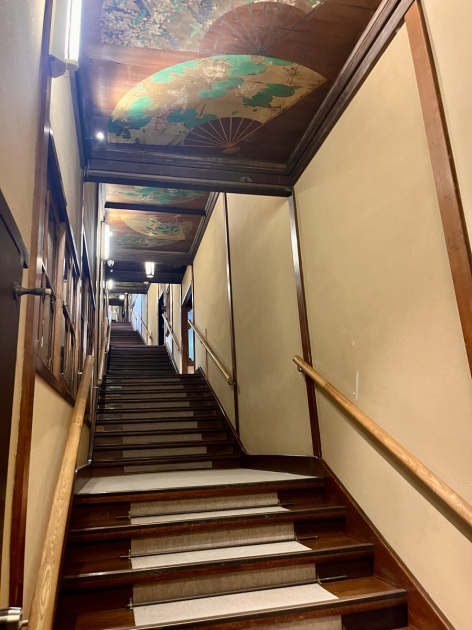
The building features seven traditional Japanese-style rooms connected by a wooden staircase with 99 steps. Visitors can find about 100 motifs associated with good fortune in paintings and architectural decorations on ceilings, walls and alcove pillars.
Among them are numerous Japanese "sensu" folding fan motifs representing the Japanese concept of "suehirogari," which literally means widening toward the end like an open folding fan and symbolizes growing prosperity, good fortune and future success.
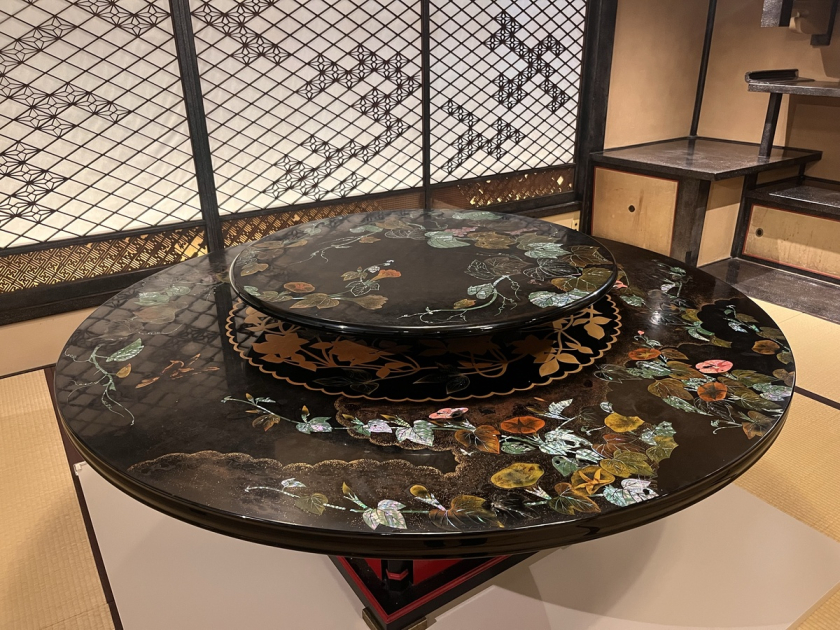
In the Jippo room, the building's first room, a table believed to be Japan's oldest surviving rotating table is on display.
The table, restored from a pre-World War II piece, is decorated with mother-of-pearl inlay, a traditional decorative technique in which the shimmering, silvery-white parts of shells are cut out and inlaid into the surface of lacquerware and other objects.
The architectural features and the rotating table offer insight into the history of Hyakudan Kaidan, which once served as a "ryotei," a traditional Japanese restaurant at the former Meguro Gajoen, a famous venue for lavish banquets and wedding receptions. The building was completed in 1935.
Although most of the buildings in the original 1935 complex were demolished in 1988 due to redevelopment projects, Hyakudan Kaidan has been preserved largely in its original state to this day.
"As the cityscape continues to transform, the survival of Hyakudan Kaidan, nearly unchanged since the early Showa period, holds profound significance, allowing the area's history and memories to remain present within the modern landscape," the office said.
Other news in this section


