The Azerbaijan State News Agency

Expert: Reconstruction of territories such as Garabagh presents a rare opportunity to rethink very structure of urbanism
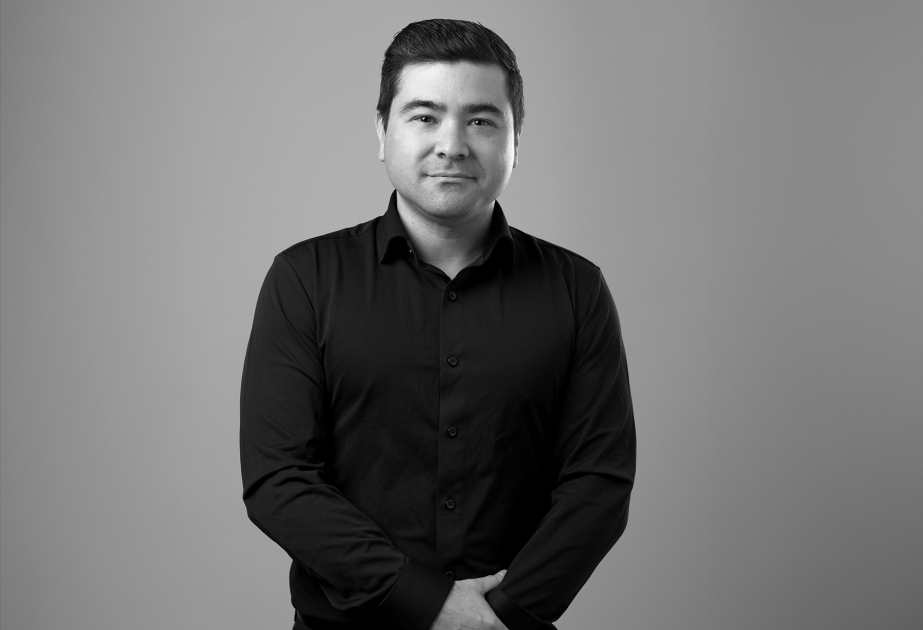
Expert: Reconstruction of territories such as Garabagh presents a rare opportunity to rethink very structure of urbanism

Baku, May 18, AZERTAC

AZERTAC presents an interview with Dr. Rafael Luna, architect, urban researcher, and director of the Infra-Architecture Lab. He is also co-founder of PRAUD and Senior Lecturer at the University of Technology Sydney.

- Why is Azerbaijan’s reconstruction process particularly significant in today’s global urban context?

- Azerbaijan’s reconstruction and urban transformation efforts arrive at a particularly important moment globally because cities are increasingly being forced to rethink their relationship to climate, infrastructure, housing, resources, mobility, and collective life. In many parts of the world, urban development remains constrained by outdated zoning models, fragmented infrastructures, and highly consumptive patterns of growth. The reconstruction of territories such as Garabagh, however, presents a rare opportunity to rethink the operational structure of urbanism itself.

What makes this process especially compelling is that reconstruction is not simply about replacing what was lost. It creates the possibility to test new forms of living, new infrastructures, and new relationships between architecture, ecology, technology, and community. In many ways, the future of sustainable urbanism will depend not only on how cities grow, but on how they reorganise systems of housing, production, mobility, environmental management, and public life into more integrated and resilient models.

- What role can architecture and infrastructure play in shaping more sustainable and resilient cities?

- Through the work developed at the Infra-Architecture Lab, we explore what we call hybrid or productive architecture — architectural and infrastructural systems that integrate the production and management of resources directly into the built environment. Historically, cities have separated housing, industry, ecology, transportation, energy, and infrastructure into isolated zones. Increasingly, resilient cities will depend on hybrid urban typologies where these systems become integrated into shared operational frameworks.

Rather than treating infrastructure as hidden technical systems operating independently from architecture and public life, future urban models can integrate renewable energy generation, biodiversity systems, water management, mobility networks, productive landscapes, and public amenities into multifunctional infrastructures. A single system can simultaneously provide housing, support biodiversity, generate energy, collect water, reduce urban heat, and activate public space.

One of the most significant opportunities for Azerbaijan is the possibility of developing cities that are environmentally productive rather than environmentally consumptive from the beginning.

- How should cities respond to changing demographics and new patterns of urban life?

- This relates directly to changing demographic realities. Around the world, cities are facing major shifts in household structures, including ageing populations, smaller family units, migration, and the rapid growth of single-person households. New urban developments should therefore not be conceived as static models, but as adaptable frameworks capable of evolving.

Hybrid typologies offer important opportunities because they can support mixed-use living, multi-generational communities, local economic production, and flexible housing systems that respond to changing social conditions.

Density also needs to be reconsidered. Too often, density is discussed only quantitatively through floor area ratios or population numbers. However, the vitality of cities depends on the qualitative relationship between density, public space, mobility, accessibility, and typological diversity. Successful urban environments create proximity between housing, work, culture, recreation, and infrastructure, allowing daily life to function through pedestrian networks and accessible public transportation rather than long-distance dependency.

- Why are collective memory and smart technologies both essential for the future of urban development?

- Another critical aspect of future urbanism is the integration of collective memory into contemporary development. Cities are not simply technological systems; they are accumulations of history, identity, infrastructure, and social experience layered over time. One of the risks of rapid urban development is the production of generic environments disconnected from local culture and memory.

This becomes particularly meaningful within post-conflict reconstruction. Preserving traces of history while simultaneously introducing new infrastructures and contemporary urban systems creates continuity between past and future. Collective memory becomes part of the cultural and spatial richness of the city itself.

At the same time, the role of smart technologies deserves reconsideration. Many contemporary smart-city models remain focused primarily on data collection, monitoring, surveillance, and optimisation. However, the next generation of smart cities should move beyond passive data gathering toward adaptive urban intelligence — cities that can learn, evolve, and respond dynamically to environmental and social change.

- What opportunity does WUF13 create for Azerbaijan and the wider South Caucasus region?

- Hosting global events such as World Urban Forum 13 places Azerbaijan within the broader international conversation about the future of cities. The forum’s focus on housing, resilience, reconstruction, climate adaptation, and sustainable urban development reflects many of the central questions currently shaping global urban discourse.

For Azerbaijan and the South Caucasus more broadly, there is a unique opportunity to position the region as a laboratory for future-oriented urbanism. Few regions currently can rethink urban systems at such a scale while simultaneously engaging with questions of sustainability, reconstruction, demographic transformation, environmental transition, and technological change.

The future of sustainable cities will depend on how architecture, infrastructure, ecology, mobility, memory, and public life are reorganised into integrated urban systems capable of adapting over time. Reconstruction becomes more than rebuilding — it becomes an opportunity to imagine new forms of urban life that are resilient, productive, ecologically integrated, and deeply connected to both people and place.

Author – Tamilla Mammadova

Share news on social media

Follow us on social network

Nearly half of humanity may be affected by a global crisis in housing, according to a new UN report

High-Level dialogue on climate-resilient cities and communities in the Caspian region organized at WUF13

Former Turkish ambassador: Azerbaijan’s hosting of WUF13 marks a major success for the entire Turkic world

WUF13 highlights global partnerships in urban planning and influence of NGOs on decision-making

Original mud sealings of Tutankhamun’s tomb on display for first time in Luxor Museum

Saudi Arabian company aims to invest in Azerbaijan's real estate market

UN-Habitat presents World Cities Report 2026 at WUF13

Azerbaijan, Slovakia discuss cooperation in industry, trade, energy, infrastructure and other sectors

Azerbaijan’s urban statistics highlighted at WUF13

Azerbaijan to work out roadmap on cybersecurity and AI with World Bank

® Bring your loan to Birbank and get up to 6% discount

Azerbaijan, Turkmenistan review prospects for economic partnership

WUF13: High-level meeting of Baku Continuity Coalition concludes

Alternative housing models in spotlight of WUF13

Azerbaijan, Pakistan explore agriculture cooperation

UN-Habitat Regional Director: Climate-resilient cities are essential in urban development

Azerbaijan, Belarus hail strategic partnership

Top stories update

Azerbaijan, Belarus eye to expand cooperation in construction

DRC Ebola outbreak: hundreds of suspected cases, no vaccine

Azerbaijani population reaches 10,268,165

Deputy Minister: Baku Continuity Coalition serves to bridge urban planning and climate actions

Outstanding Diplomat Medal presented

OTS member states ink MoU on cooperation in urban development at WUF13

NGO Forum held at Azerbaijan's initiative for the first time in WUF history

WUF13 hosts press conference of International Urban Professionals Forum

Azerbaijani and Uzbek Table Tennis Federations ink memorandum

Igor Sergeyenko: WUF13 is an important platform for discussing urban planning issues

Special session at WUF13: “Cities at the heart of connectivity: urban reconstruction and regional cooperation”

UN-Habitat, Alwaleed Philanthropies sign partnership agreement as part of WUF13

D-8 Secretary-General: Organization of the WUF13 is another success for Azerbaijan after COP29

National Coordinator for WUF13: Garabagh and East Zangezur are becoming a hub of sustainable development

Azerbaijan maintains close cooperation with civil society institutions in restoration and reconstruction of mine-contaminated territories

Azerbaijan ensured that transit routes which could have bypassed country now cross through its territory, says minister

Informal moments at WUF13 - PHOTO REPORT

Transportation corridors to define living standards in coming decades, minister says

Minister: Green energy corridors are shaping a new energy architecture connecting Caspian region with Europe and Asia

Anacláudia Rossbach: We urgently need to respond to the housing crisis

Azerbaijan’s tourism opportunities presented as part of WUF13

Session on “Future urbanisation, how will your city change over the next decades” held as part of WUF13

Advisor to PM of Saint Vincent and Grenadines: Justice has always remained a fundamental issue

Pakistani delegate: WUF13 is extremely well and professionally organized VIDEO

Pakistani delegate: WUF13 is extremely well and professionally organized VIDEO

Peace positive climate action through urban solutions in fragile and conflict-affected settings discussed at WUF13 VIDEO

Peace positive climate action through urban solutions in fragile and conflict-affected settings discussed at WUF13 VIDEO

Event on "Early Warning and Climate-Resilient Cities" held as part of WUF13 VIDEO

Event on "Early Warning and Climate-Resilient Cities" held as part of WUF13 VIDEO

Parviz Shahbazov: Future cities will generate more value with less energy

Anar Guliyev highlights state-led initiatives in liberated territories

Speaker of Milli Majlis: Important projects are being implemented between Azerbaijan and Belarus

WUF13 explores impact of mega events on urban development

Mayor of Malaysian City Council: WUF13 contributes to strengthening sustainable urban development and sharing best practices

UN report: Half of future urban population growth to be concentrated in just seven countries

Panel session at WUF13: UNESCO's creative cities and sustainable urban development

Anar Guliyev: Azerbaijan implementing one of the most extensive and comprehensive reconstruction programs in the region’s recent history

Mukhtar Babayev: Climate change is reshaping urban realities across the world

Hikmet Hajiyev: The government of Azerbaijan pays special attention to the development of civil society institutions

Hikmet Hajiyev: Azerbaijan preserves historical traditions while modernizing in the process of urban development VIDEO

Hikmet Hajiyev: Azerbaijan preserves historical traditions while modernizing in the process of urban development VIDEO

WUF13 features Global Urban Data Coalition meeting

Cameroon representative: Azerbaijan plays a significant role in sustainable development VIDEO

Cameroon representative: Azerbaijan plays a significant role in sustainable development VIDEO

WUF13: Event held on "NDCs 3.0: Urban Law and Multi-level Governance to Enable Climate Commitments"

Azerbaijani freestyle wrestlers win two medals in Russia

Reports regarding future development trends of global cities released at WUF13

Presidential Assistant: Certain campaigns against Azerbaijan are launched during periods when global-scale events are held in the country

UNDP Deputy Director: We must regard housing as a social function

Kenyan representative: WUF13 will deliver important results and contribute to positive change

Pavilion of Pakistan’s Punjab Province opens as part of WUF13 VIDEO

Pavilion of Pakistan’s Punjab Province opens as part of WUF13 VIDEO

WUF13 features new partnership initiative on future of cities

Special Representative of the President: Structures reflecting Azerbaijan’s architectural style were destroyed during occupation

Igor Sergeyenko praises excellent organization of WUF13

Global media outlets widely cover WUF13 hosted by Baku

WUF13 highlights Azerbaijan's achievements in reconstruction work in Garabagh

Deputy Minister: Early warnings can significantly reduce casualties and infrastructure damage

Elchin Yusubov: Azerbaijani cemetery in Khankendi completely destroyed during occupation VIDEO

Elchin Yusubov: Azerbaijani cemetery in Khankendi completely destroyed during occupation VIDEO

FM: Azerbaijan–Armenia normalization process lays solid foundation for regional cooperation

Belarusian media highlight WUF13 as high-level platform for urban challenges

Hikmet Hajiyev: Azerbaijan is a venue for international high-level events

Anacláudia Rossbach: 2.8 billion people lack access to safe and adequate housing

Foreign Minister: Azerbaijan consistently expands its multimodal connectivity

Elchin Yusubov: Around 76,000 mines and unexploded ordnance found in Khankendi, Khojaly, and Aghdara since 2023

Minister: Azerbaijan has resolved one of the region’s most complex and longest-lasting territorial conflicts

Jeyhun Bayramov: Azerbaijan's reconstruction projects strengthen connectivity between Asia and Europe

Shusha, Trabzon sign Memorandum of Understanding on sister city relationship

Anacláudia Rossbach: Innovative solutions are crucial for future cities

Minister: Azerbaijan’s liberated territories being built on human-centered urban planning principles

Minister: Situated at the crossroads of North and South, Azerbaijan has successfully transformed its geographical location into a strategic advantage

Sahiba Gafarova: Azerbaijan-Belarus relations have reached the level of strategic partnership

Post-conflict reconstruction and restoration efforts in Garabagh showcased at WUF13

President Ilham Aliyev received Deputy Prime Minister of Slovakia VIDEO

President Ilham Aliyev met with President of Mauritius VIDEO

Presidential Assistant: Garabagh being rebuilt using modern urban planning methods

Panel discussions on “The Foundation for Prosperity: Secure Housing as a Catalyst for Economic Growth and Social Inclusion” held

Hikmet Hajiyev: Azerbaijan fully ready to share its experience in post-conflict recovery and reconstruction

WUF13: " Colonial Injustice and Housing Shortage" theme discussed

Three new residential complexes under construction in Shusha city

UN-Habitat Executive Director: Over 2 billion people globally still lack access to safe drinking water

Aydin Karimov: Turshsu settlement in Shusha to see restoration and construction efforts this year

Dashalti to operate as a tourism village, Special Representative says

FM Bayramov: Cities are becoming strategic platforms for regional cooperation and sustainable development

Levis Dijkstra: WUF13 is an important platform for discussing the future of urban planning

Special Representative of the President: 40 percent of the construction work of the Khankendi Railway and Bus Terminal Complex has been completed

Azerbaijan, Pakistan review issues on agenda for developing cooperation in energy sector

Azerbaijan’s Deputy Minister meets UN-Habitat Goodwill Ambassador for Arab States