Original mud sealings of Tutankhamun’s tomb on display for first time in Luxor Museum
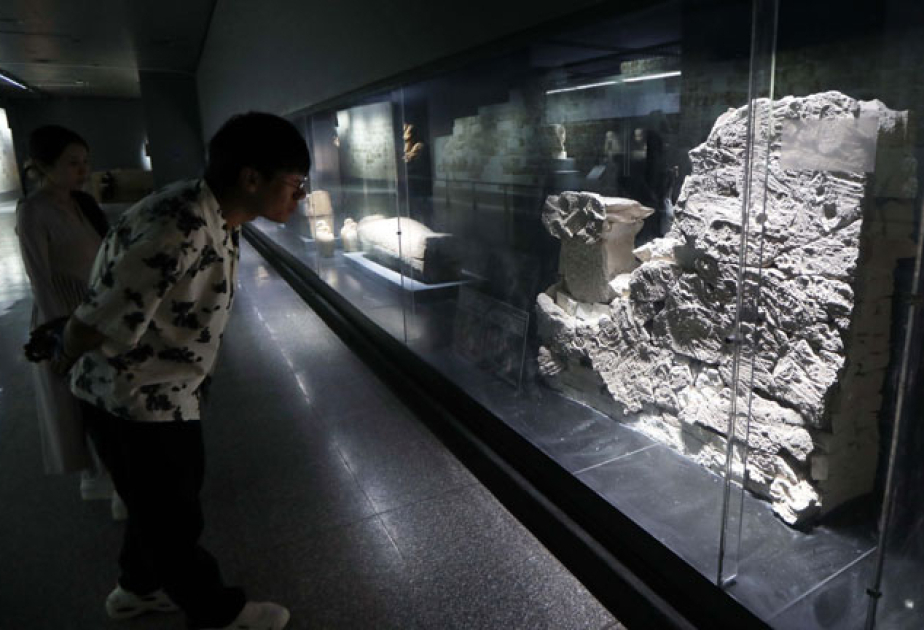
Baku, May 19, AZERTAC
More than one hundred years after the discovery of the tomb of King Tutankhamun, the original mud sealings that once secured the entrances to the boy king’s burial chambers are now being exhibited to the public for the first time at the Luxor Museum, according to AhramOnline.
Carefully restored and reconstructed by Egyptian conservators, the fragments offer a rare glimpse into the final moments of one of the most extraordinary royal burials in ancient history.
Among the thousands of treasures associated with the discovery of Tutankhamun’s tomb in 1922 by British archaeologist Howard Carter, few objects carry the same historical and symbolic significance as the original mud sealings used to close the burial chambers of the tomb known as KV62.
Bearing official impressions linked to royal funerary rituals and administrative authority during the New Kingdom, the sealings served as the final protective barrier guarding the king’s burial. Their survival provides archaeologists with invaluable evidence of ancient Egyptian tomb-sealing traditions and burial practices during the 18th Dynasty.
Hisham El-Leithy, Secretary General of the Supreme Council of Antiquities (SCA) explained that when Carter first entered the tomb, he broke the sealings apart during the excavation process, and later he stored them as fragmented pieces in wooden boxes without detailed records of their original placement. For decades, they remained largely overlooked despite their exceptional archaeological value.
In 2025, he continued, an Egyptian conservation team from the SCA launched a major scientific initiative to document, conserve, and digitally reconstruct the fragments. The project involved photographing and cataloguing the pieces, studying their materials and manufacturing techniques, and manually and digitally matching the fragments to recreate their original form.
Now displayed publicly for the first time at the Luxor Museum, the sealings offer visitors and researchers an unprecedented opportunity to encounter one of the few surviving original architectural elements directly connected to the discovery of Tutankhamun’s tomb.
The sealings were made from a local plaster material known in ancient Thebes as “Habiya”, a mixture of calcite, clay, sand, plant fibers, and gypsum. It is considered unique, with no comparable examples discovered in any other royal tomb in Egypt. Following the transfer of most of Tutankhamun’s treasures to the Grand Egyptian Museum (GEM), they also stand as the only original structural remnants still associated with the legendary tomb itself.
Other news in this section


