WUF13: Inclusive and climate-resilient housing in focus
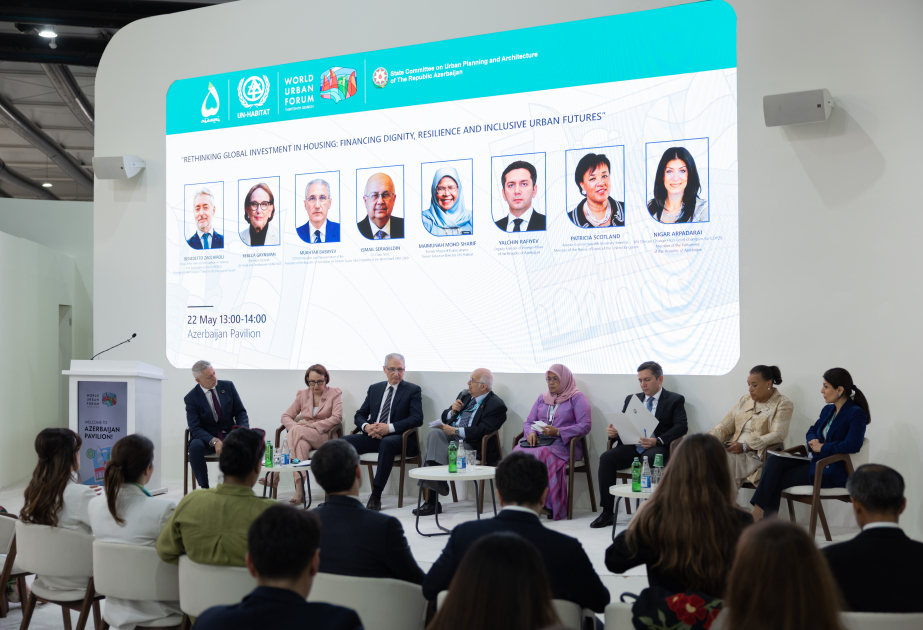
Baku, May 22, AZERTAC
On May 22, an event titled “Rethinking Global Investment in Housing: Financing Dignity, Resilience and Inclusive Urban Futures” was held as part of the 13th Session of the UN World Urban Forum (WUF13) in Baku.
The event, organized by the Nizami Ganjavi International Center, aimed to examine the global housing crisis through the lens of inequality, development, and social stability; to explore innovative financing mechanisms for accessible, inclusive, and climate-resilient housing; to discuss the role of multilateral institutions, development banks, sovereign funds, and private sector actors in mobilizing investments for sustainable urban development; and to highlight the interlinkages between housing, climate resilience, and the implementation of the Sustainable Development Goals.
Speakers at the event included Rebeca Grynspan, Secretary-General of the UN Conference on Trade and Development, Mukhtar Babayev, Azerbaijan’s Presidential Representative on Climate Issues, Ismail Serageldin, Co-Chair of the Board of Trustees of the Nizami Ganjavi International Center, Maimunah Mohd Sharif, former Executive Director of UN-Habitat, Yalchin Rafiyev, Deputy Minister of Foreign Affairs of Azerbaijan, Patricia Scotland, Member of the UK House of Lords and former Secretary-General of the Commonwealth, Nigar Arpadarai, High-Level Climate Change Champion for COP29 and Member of the Milli Majlis.
In their speeches, it was stated that the world is facing an unprecedented global housing crisis. Rising urbanization, widening inequality, climate vulnerability, forced displacement, demographic pressures, and increasing living costs are putting enormous strain on housing systems in both developed and developing countries. Today, billions of people lack adequate, accessible, and sustainable housing, while cities are struggling more and more to meet the social, economic, and ecological needs of a rapidly growing population.
It was noted that housing is no longer merely a social policy issue. It has become a critical challenge for global development, social stability, economic resilience, and lasting peace. The lack of affordable and safe housing fuels inequality, undermines trust in institutions, deepens intra-urban fragmentation, and exacerbates vulnerabilities related to climate change and migration.
The event continued with discussions.
Other news in this section


