Return is a question of rights, not of maps — Pakistani analyst
Baku, September 3, AZERTAC
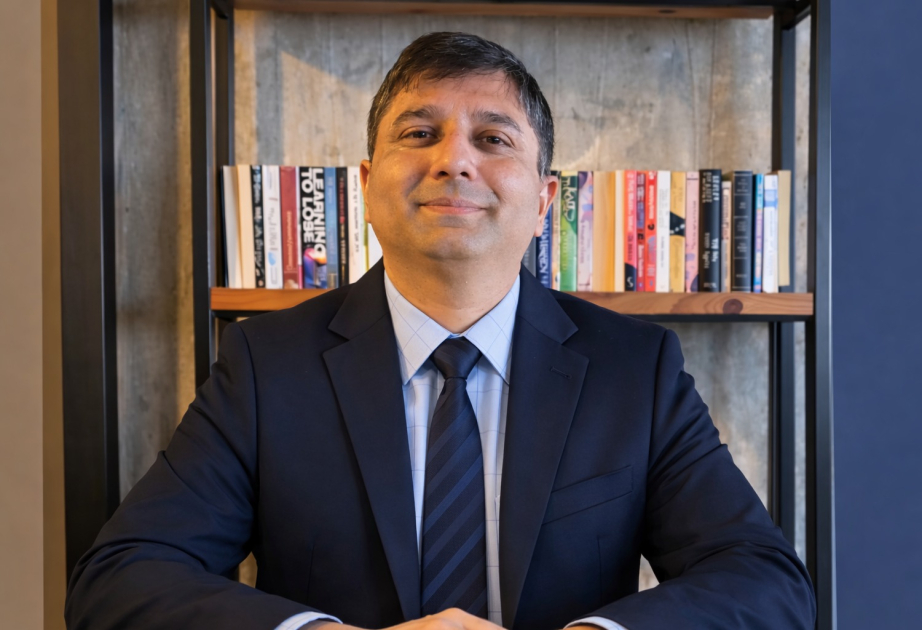
AZERTAC presents an interview with Muhammad Ali Pasha, Chairman of "The Gulf Observer Research Forum", Chairman of the Gulf Observer Research Forum, Patron-in-Chief and Owner of the Gulf Observer & the Europe Today.
Following the publication of his article "Return to Western Azerbaijan: On the Path to Peace and Justice" in The Gulf Observer, AZERTAC spoke to the author about the Washington Joint Declaration, the Concept of Return, the sequencing of the peace process, and the Azerbaijan–Pakistan partnership.
— Your article opens with the Joint Declaration of 8 August 2025, but you argue it did not, by itself, end the conflict. What, in your view, did it actually achieve?
- Peace is not made by a signature; it is made by what a signature makes possible. What Baku and Yerevan did in Washington was to establish a fact that had been doubted for three decades — that the South Caucasus does not have to be governed by force, and that its two principal adversaries are capable of imagining a shared future rather than only a shared grievance. Ten years ago, very few serious observers believed either capital would dare put its name to such a document. That is the achievement. The treaty itself is initialed, not signed. The work is not finished. But the ceiling has been lifted.
— You attribute much of this to what you call President Ilham Aliyev's "strategic patience." What do you mean by that?
- I mean the choices he did not make. In 2020, two easy paths were open to any victorious leader: maximalist consolidation, or drift. President Aliyev took neither. Victorious leaders very often dictate rather than negotiate, and what they dictate rarely survives them. He moved in the opposite direction. He brought the Minsk Group format to a close — a process that had produced thirty years of activity without peace — and did so without theatre. He accepted a bilateral track on the reasoning that two neighbours who cannot speak to each other directly will never live beside each other honestly. He committed Azerbaijan to delimiting a border that had never been properly drawn. And he kept the channel to Yerevan open through provocations that would have justified closing it. That is not softness. It is statecraft with a longer time horizon than a news cycle.
— Why, then, is the Western Azerbaijan question so frequently misread outside the region?
- Because it is read as a map question when it is a people question. The moment you say "Western Azerbaijan," a certain kind of reader hears a border claim and stops listening. But the subject is a population that farmed those valleys for centuries, built mosques in those villages, buried its dead in those cemeteries, and left behind a toponymy that survives in Soviet-era maps and archival registers. That population is gone. The question is what is owed to it. That is a question of rights, not of maps.
— Can you set out the historical record briefly, for readers unfamiliar with it?
- The disappearance was gradual, not sudden. In December 1947, the USSR Council of Ministers issued a decree providing for the transfer of the rural Azerbaijani population of the Armenian SSR to the Kur-Araz lowland of Soviet Azerbaijan. Between 1948 and 1953, roughly one hundred thousand people were moved — many from cool highland villages to a malarial plain to which they were entirely unaccustomed. Then, between 1988 and 1991, as the Garabagh conflict reached its peak, the remaining Azerbaijani population of Armenia, on the order of two hundred thousand people, left. None of them returned. By 1991 there was not a single Azerbaijani community left in the country.
— In your article you write that the remarkable thing is not the scale of the loss but "the silence after the loss."
- Yes, and I chose those words deliberately. Comparable displacements of the same period entered the international vocabulary. They acquired advocates, commissions, anniversaries, scholarship. This one did not. It was treated as a settled geographical fact rather than as a question of rights, and the people concerned appear in the diplomatic record only in passing. I am not asking anyone to rank suffering. I am asking why one displacement generated an entire legal literature and another generated a footnote.
— The Concept of Return is often described as a political document. How would you characterise it?
- I would ask people to read it before characterising it. In December 2022, President Aliyev asked the Western Azerbaijan Community to produce a clear statement of how this question could actually be answered, and the Concept of Return is the result. It is not built on historical sentiment. It is built on instruments Armenia has itself signed: the Universal Declaration of Human Rights, the International Covenant on Civil and Political Rights, and the Convention Relating to the Status of Refugees. What it seeks is an international agreement, with verification and guarantee mechanisms, permitting Azerbaijanis and their descendants to return voluntarily, safely and in dignity, and to exercise their individual and collective rights thereafter. Every one of those words carries weight. Voluntary means no one is compelled, in either direction. Safely means security guarantees, not assurances. In dignity means as citizens under the law, not as a demographic instrument. And an international agreement means something negotiated between two sovereign states under third-party supervision — not a unilateral act.
— Critics in Yerevan and some Western capitals argue that this is a territorial claim expressed in humanitarian language. What is your answer to them?
- Two clarifications, and I believe Baku's interest lies in repeating them plainly and often. First: a right of return is a claim against a state to admit people. It is not a claim to that state's territory. It would be exercised under Armenian sovereignty, under Armenian law, and before Armenian courts. Second: it is a right of individuals and families. It is not a mechanism for altering the political status of any district, and the Concept asserts nothing more than that. The clearer Azerbaijan is on both points, the faster the argument will travel in European and American capitals — and the harder it becomes to caricature.
I would add that this is the same legal language the international community used in Bosnia after Dayton, where Annex 7 established a right of return that proved slow and imperfect but was not therefore wrong. It is the language applied to Cyprus, to the displaced of Georgia, to Kosovo, to Cambodia. If the principle is sound in those cases, it does not become unsound because the claimants here are Azerbaijanis.
— Your article argues that Azerbaijan's own reconstruction effort is part of the argument. How so?
- Because the position is not rhetorical — it is being built in concrete, and anyone can go and look at it. Since 2021 Azerbaijan has carried out one of the largest post-conflict reconstruction programmes anywhere outside an active war zone: cities rebuilt at Aghdam, Fuzuli and Zangilan; the Fuzuli and Zangilan airports opened; smart village and smart city projects at Aghali and elsewhere; new substations, hospitals, schools and highways; and a demining effort that continues to take casualties among the people who carry it out. Tens of thousands of formerly displaced Azerbaijanis have gone home to lands their families left in the early 1990s.
That matters for the Western Azerbaijan file. Politics is cheap; return is expensive. A state that has spent a decade and a very large share of its revenues bringing its own displaced people home is making a statement about the nature of displacement itself — that it is a wrong time does not cure.
— You place considerable emphasis on sequencing. What order of steps do you recommend?
- Peace agreements fail when the parties load every historical grievance onto a single document. They also fail when the parties agree to forget a grievance that will not stay forgotten. The better route — and I believe it is the one that serves Azerbaijan's long-term interest — is to sign the peace treaty, open the borders, restore diplomatic relations, and establish a separate joint humanitarian mechanism on displacement: technical in character, internationally supervised, and insulated from the political agenda.
— What would such a mechanism actually do?
- The unglamorous work that has gone undone for thirty years. Property records and restitution. The preservation of cemeteries, mosques and other religious sites. Missing persons. And a serious examination of what the practical modalities of return would be, should anyone seek to exercise a right that at present does not exist in practice. It would move slowly. It would generate almost no headlines. It would be worth more than a hundred conferences.
— How do you assess the current state of the process?
- Unfinished, and requiring attention. The treaty is initialled but not signed. Baku's position remains that the constitutional reference in Armenia's basic law constitutes a residual territorial claim, and the referendum question in Yerevan is still open. Border delimitation continues. The route across southern Armenia linking Azerbaijan with Nakhchivan — the Trump Route for International Peace and Prosperity — awaits implementation. None of this is cause for pessimism, but all of it is cause for sustained engagement. Processes of this kind do not fail dramatically; they fail through inattention.
— You describe Azerbaijan's broader international position as unusual. Why?
- Because familiarity has dulled the world's sense of how unusual it is. When President Aliyev assumed office in 2003, Azerbaijan had roughly a million displaced people, a frozen conflict widely assumed to be permanent, and essentially one export. What has been built since is a middle power confident enough to set its own terms.
Consider the last four years alone. Azerbaijan became a critical energy supplier to a Europe urgently seeking alternatives, and is now moving beyond hydrocarbons toward a green energy corridor linking the Caspian to European markets. It has established itself as a central link in the Middle Corridor, the trans-Caspian route that has become the de facto land bridge between East and West. It hosted COP29 in November 2024 and pressed there for a climate finance outcome, along with the less fashionable proposition that environmental and peacebuilding agendas belong together. It hosted the 13th World Urban Forum in Baku this May. It signed a strategic partnership with the United States. And it brought the Minsk Group process to a close. These are the outcomes of a leadership that invested its political capital in institutions, corridors and agreements designed to outlast it.
— How should Pakistani readers understand this file?
- Through the relationship, which is not sentimental but structural. Azerbaijan was among the few countries that stood with Pakistan on Jammu and Kashmir, and for thirty years Pakistan withheld relations with Armenia in solidarity with Azerbaijan's position. President Aliyev's visit to Islamabad in July 2024, the Prime Minister's attendance at Azerbaijan's Independence Day celebrations, the trilateral arrangement with Türkiye, the preferential trade and transit arrangements, and Baku's support for Pakistan during the events of May 2025 are not separate episodes. They are the visible surface of a partnership that two leaderships have deliberately chosen to deepen.
Other news in this section


