Expert: Baku and Dushanbe have written a model of brotherhood that the wider Muslim world should study - COMMENTARY
Baku, September 3, AZERTAC
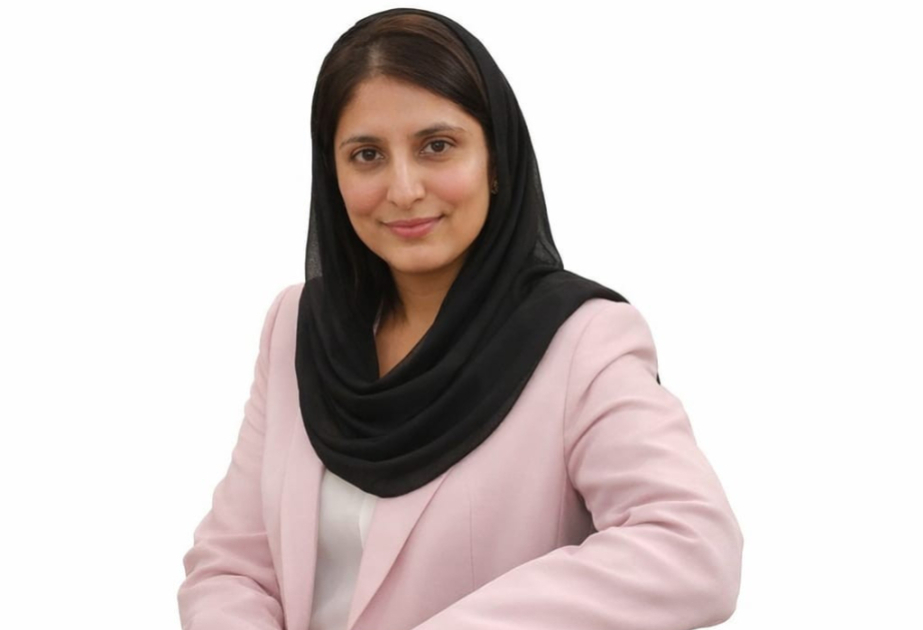
AZERTAC presents an interview with Fatima Tuz Zehra, President of The Gulf Observer Research Forum and Editor-in-Chief of The Gulf Observer, as she highlights the strategic partnership between Azerbaijan and Tajikistan.
- Azerbaijan and Tajikistan marked thirty-four years of diplomatic relations this May. How would you characterize the trajectory of this partnership?
- It is one of the most quietly successful stories in the post-Soviet space, and I say that with genuine admiration. Diplomatic relations were established on 29 May 1992 — in the second year of Azerbaijan's restored independence and at a moment when Tajikistan itself was entering an extraordinarily difficult period of its national history. Neither state had the luxury of choosing easy friendships. Yet the relationship was preserved, patiently nurtured, and then, in the space of a single decade, transformed.
The Treaty of Friendship and Cooperation of 15 March 2007 gave the relationship its legal spine. The opening of the Azerbaijani Embassy in Dushanbe in 2007 and the Tajik Embassy in Baku in 2008 gave it daily working machinery. But what elevated it from correspondence to genuine strategic content was the personal engagement of two leaders — His Excellency President Ilham Aliyev and His Excellency President Emomali Rahmon, Founder of Peace and National Unity, Leader of the Nation. Anyone who studies this file honestly arrives at the same conclusion: the political will came from the top, and everything else followed.
- You place particular emphasis on the role of the two heads of state. Why?
- Because the record justifies it. The state visit of President Ilham Aliyev to Tajikistan on 5 April 2023 — timed, meaningfully, to coincide with the thirty-first anniversary of diplomatic relations — reset the entire agenda. It was preceded by the Tajikistan–Azerbaijan Investment Forum in Dushanbe, which signaled that this was not a ceremonial visit but a working one.
Then came the state visit of President Emomali Rahmon to Baku in May 2024, which I regard as the single most consequential moment in the history of these relations. The two presidents signed the Declaration on Strategic Partnership, together with a package of some fourteen intergovernmental documents covering an exceptionally wide field. President Aliyev described the Declaration at the time as reflecting the nature and the spirit of the relationship and the will of the two peoples — and he was right. President Rahmon, with characteristic generosity, publicly acknowledged the personal contribution of President Aliyev to the development of bilateral ties.
That is what statesmanship looks like. Two leaders, each of whom has carried his nation through periods of profound national trial, choosing to invest their personal authority in a partnership that offers no short-term political reward — only long-term national benefit. I find that admirable, and I think it deserves far more attention in the international press than it currently receives.
- How would you assess President Ilham Aliyev's wider policy towards Central Asia?
- It has been visionary, and it has been consistent. President Aliyev understood earlier than most that Azerbaijan's geography is not merely a fact but an asset — and that the Caspian is a bridge rather than a boundary.
Azerbaijan's full participation in the Consultative Meetings of the Heads of State of Central Asia is the clearest expression of that vision. At the informal Consultative Meeting held in Cholpon-Ata on the shores of Lake Issyk-Kul on 31 July this year, President Aliyev sat alongside President Rahmon, President Tokayev, President Mirziyoyev, President Japarov and President Berdimuhamedov, and stated plainly that relations with the countries of Central Asia constitute a foreign policy priority for Azerbaijan. He gave his colleagues an assurance that Azerbaijan would be an active member of the consultative format and would spare no effort to bring these countries and peoples closer together. The Cholpon-Ata Declaration that followed reflects exactly that spirit of trust, good-neighborliness and shared development.
I would also point to President Aliyev's remarks at the CIS Heads of State Council in Dushanbe, where he spoke of the steady development of Azerbaijani–Tajik relations and described them as founded on brotherhood, friendship and mutual support, with great potential still ahead. Those were not diplomatic pleasantries. They were an accurate description of the trend line.
- And President Emomali Rahmon's contribution?
- President Rahmon occupies a place of extraordinary respect across the Islamic world, and rightly so. He is the leader who brought a nation out of civil conflict and into peace, unity and reconstruction. That achievement alone would secure his standing in history. But he has gone considerably further — he has made Tajikistan an indispensable voice on the defining resource question of our century.
Tajikistan's global water initiatives, championed personally by President Rahmon, have shaped the international agenda on water and sustainable development in a way that few middle powers have ever managed. His participation in the COP29 Leaders' Summit in Baku, and the active contribution of the Tajik delegation, were warmly recognized by President Aliyev — and it is worth recalling that President Rahmon telephoned his Azerbaijani counterpart to congratulate him on the successful organization of COP29 and its significance for the global climate agenda. That gesture tells you everything about the texture of this relationship. It is warm, it is instinctive, it is fraternal.
Tajikistan's consistent and principled position in support of Azerbaijan's sovereignty and territorial integrity has likewise never been forgotten in Baku. In diplomacy, loyalty of that kind is remembered.
- Let us turn to economics. The trade figures remain modest. Is the strategic partnership outpacing the commercial reality?
- The figures are modest in absolute terms — but the direction of travel is remarkable, and direction matters more than starting point.
At the eighth meeting of the Azerbaijan–Tajikistan Intergovernmental Commission on trade and economic cooperation, held in Baku on 21 May 2026 under the co-chairmanship of Deputy Prime Minister Samir Sharifov and Deputy Prime Minister Usmonali Usmonzoda, the two sides welcomed an 84 per cent increase in trade turnover during 2025 and a 50 per cent rise in transit transport. In the first four months of this year bilateral trade more than doubled year-on-year to exceed 8.5 million US dollars.
- What are the most promising practical avenues?
- Several, and they are already institutionalized rather than aspirational.
First, connectivity. Tajikistan's participation in Middle Corridor projects — the Trans-Caspian International Transport Route — is the strategic prize. Azerbaijan has built the ports, the railways and the logistics capacity; Tajikistan brings the eastern anchor of the route and a natural interest in reliable, diversified access to European markets. The 50 per cent growth in transit transport is not an accident; it is the early return on that alignment.
Second, industrial and free-zone cooperation. Tajik companies have been formally invited to make use of Azerbaijan's industrial parks and the Alat Free Economic Zone, while Azerbaijani investors are being drawn towards Tajikistan's five free economic zones. Both sides are now working towards a roadmap for joint investment projects — precisely the sort of practical instrument that converts declarations into factories.
Third, institutional plumbing. The eighth Commission meeting concluded with a Memorandum of Understanding on establishing a Business Council between AZPROMO and the Chamber of Commerce and Industry of Tajikistan, and an agreement on the mutual allocation of annual education quotas. That second document may look small on paper. It is not. Educating one another's young people is how you build a relationship that outlives any single administration.
Fourth, textiles and agriculture. The Memorandum of Understanding signed on 9 July 2025 at the First International Textile Forum in Dushanbe, between the Textile Industry Association of Azerbaijan and the Cotton and Textile Association of Tajikistan, covers sustainable agriculture, sericulture and trade. It is a natural fit, and I expect it to be one of the earliest sectors to deliver visible results.
- The cultural dimension is often described as the strongest pillar of all. Do you agree?
- Wholeheartedly. This is where I find the relationship genuinely moving.
Nizami Ganjavi — Azerbaijan's towering poet — is studied in Tajik schools. Rudaki and Jami are honored in Baku; an international conference marking the 600th anniversary of Mavlono Abdurahman Jami was held in Azerbaijan. The Days of Tajik Culture were celebrated in Baku and Ganja, the Days of Azerbaijani Culture in Dushanbe, and exchanges between classical musicians and symphonic orchestras of the two countries have become a tradition rather than an event. Literary works are translated in both directions.
Two nations that read each other's poets do not misunderstand each other's intentions. This is soft power in its truest and most dignified form, and both presidents have protected and funded it consistently.
- What should we expect next?
- The immediate horizon is the Eighth Consultative Meeting of the Heads of State of Central Asia and Azerbaijan, scheduled for 8 October 2026 in the Awaza National Tourist Zone in Turkmenistan. The agenda being prepared suggests a deliberate move from declaratory commitment towards institutional solutions — which is exactly the maturation this format needs.
Beyond that, I would look for the investment roadmap to be finalized, for the AZPROMO–Tajik Chamber Business Council to become operational, and for direct connectivity — logistical and, in due course, aviation — to deepen. And I would expect the two presidents to continue doing what they have done so effectively for a decade: setting the pace personally.
- A closing thought?
- Only one, and I offer it as a journalist who has watched a great many bilateral relationships promise much and deliver little.
Azerbaijan and Tajikistan share no border. They share a language family only partially, and a geography only across water. What they share instead is faith, history, a memory of hardship endured with dignity, and two leaders of exceptional strategic patience. President Ilham Aliyev and President Emomali Rahmon have built something that does not depend on the weather of international politics. That is rare, and it is valuable, and it deserves the world's attention and its respect.
Other news in this section


