British researcher: Baku stands as a model for its public spaces globally
Baku, May 20, AZERTAC
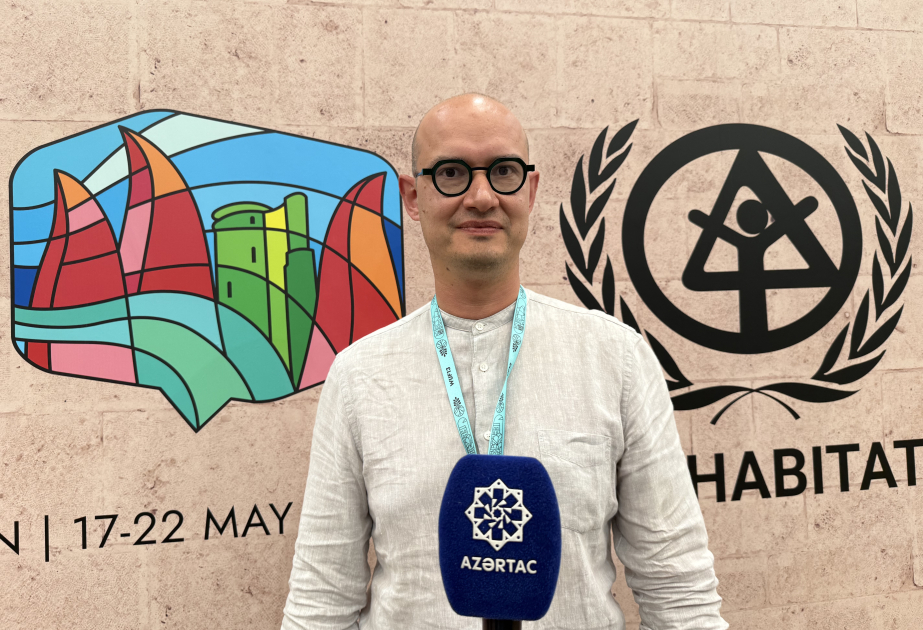
Deen Sharp, a researcher in Geography and the Environment at the London School of Economics (LSE) and a consultant with the United Nations Environment Programme (UNEP) on water responsive urbanism in Africa, noted that the 13th Session of the World Urban Forum (WUF13) serves as an important platform for addressing urban challenges at the global level.
In an interview with AZERTAC, the researcher highlighted the importance of WUF in connecting regions, noting that urban solutions cannot be directly transferred between countries without adaptation. He also stressed the need for stronger collaboration between scientists and policymakers, pointing out that urbanism lacks a dedicated science–policy platform.
Deen Sharp commended Baku’s public spaces, describing the city as a strong example in this field. He said the spaces are well maintained, child-friendly, and thoughtfully designed in terms of accessibility.
Sharing his views on “smart city” and “smart village” projects, Deen Sharp highlighted that technology is only valuable when it improves people’s lives, stressing that smart cities must be human-centered and cost-efficient. He added that expensive large-scale technologies do not always deliver good value for taxpayers, noting that Azerbaijan could show how smart cities can be developed in a cost-effective and people-focused way.
Other news in this section


