Colombian Deputy Minister: Projects implemented by Azerbaijan seem extremely interesting to me – EXCLUSIVE INTERVIEW
Baku, May 20, AZERTAC
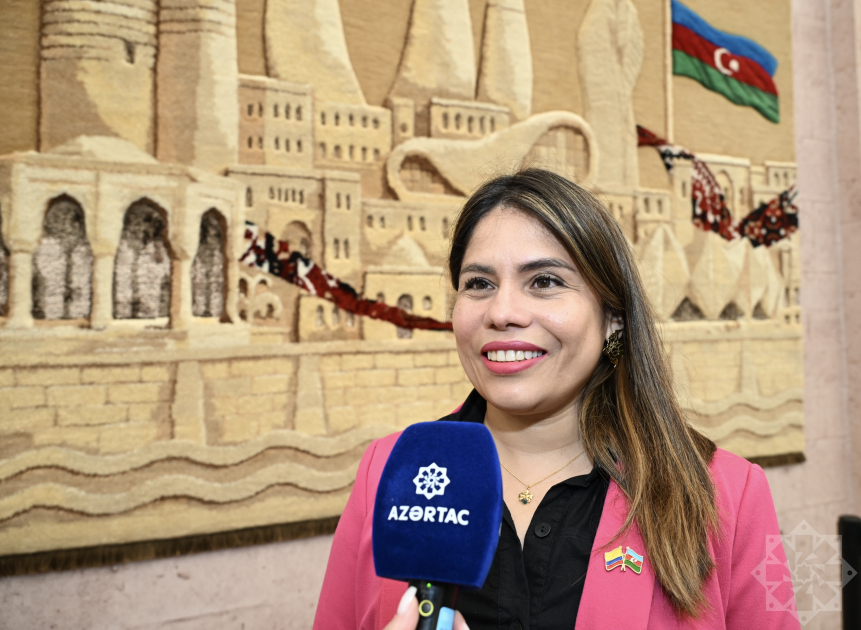
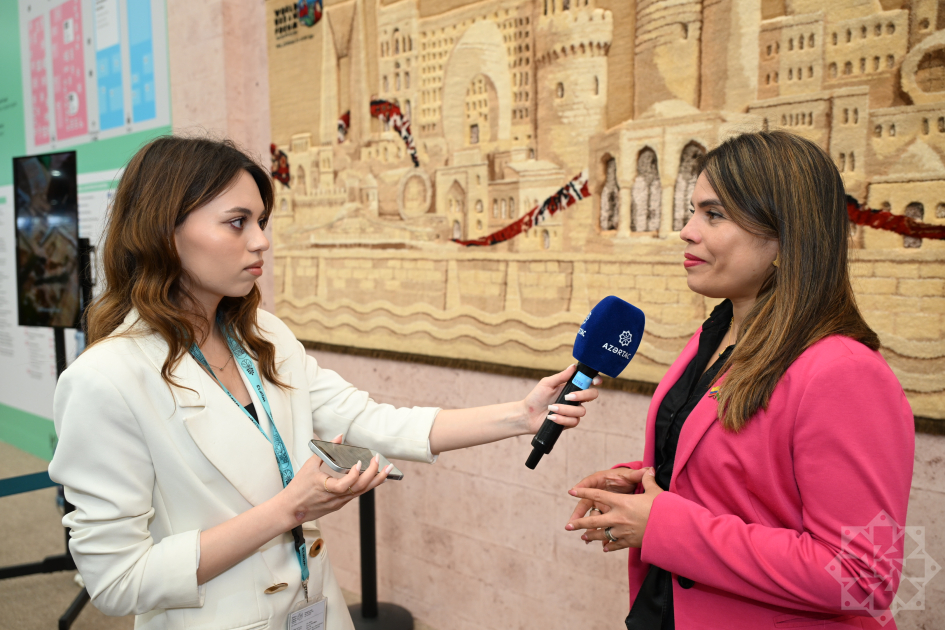
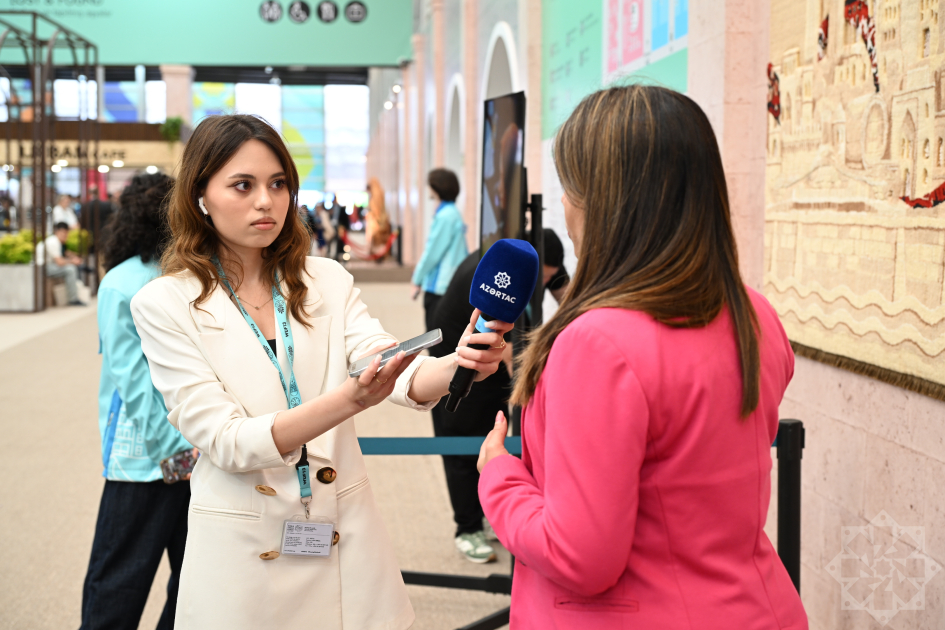
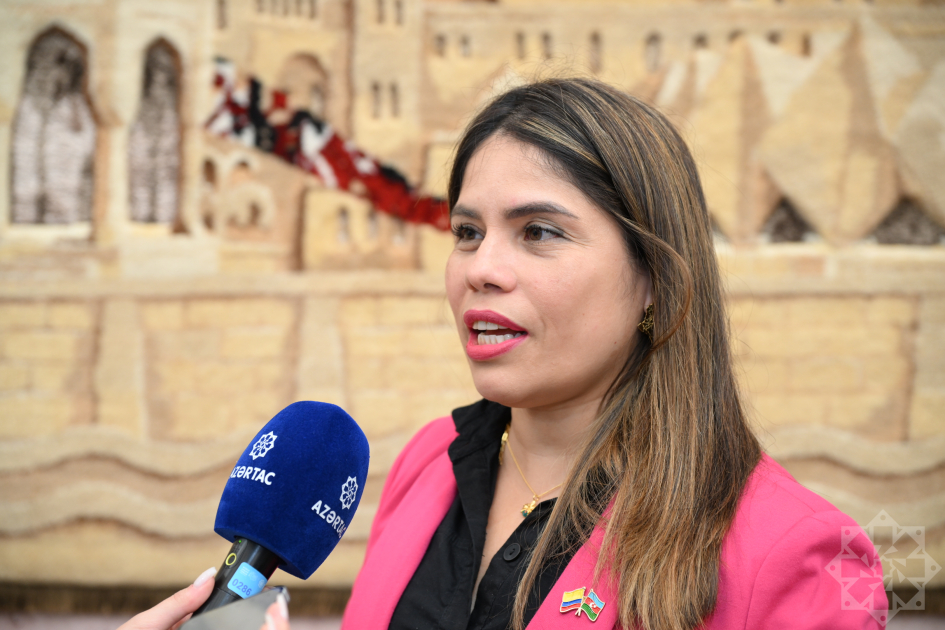
Aydee Marsiglia Bello, Deputy Minister of Housing, City, and Territory of Colombia, who is participating in the 13th Session of the UN World Urban Forum (WUF13), has given an exclusive interview to AZERTAC.
- How do you assess the organization of WUF13 by Azerbaijan?
- First of all, I would like to express my gratitude to this magnificent country and this beautiful city for welcoming us. It is very important for countries that are not widely known in our geography to host such international events, because it creates an opportunity to learn from the experiences of different nations. We see that we actually share many commonalities with countries that, at first glance, seem far removed from our reality. It is precisely these kinds of events that allow us to come from other geographies and exchange experiences and ideas with you.
- Within the framework of WUF13, Azerbaijan presented "smart city" and renewable energy projects in Garabagh and East Zangezur. Large-scale restoration and reconstruction work has been carried out in these areas post-conflict. In your view, how can these projects contribute to global urban innovations?
- The projects Azerbaijan is implementing here seem extremely interesting to me. This is because it involves planning built from scratch, while simultaneously being based on clean, renewable energy. For our country, for instance, this is a very interesting experience because we currently want to discuss the issue of energy transition in Colombia. We want to move away from fossil fuels and transition to clean and renewable energy sources. From this perspective, the practices implemented here can give us new ideas. Unfortunately, Colombia does not possess sufficient resources to undertake the kinds of investments you are making. However, it is very interesting that these projects are directed toward conflict victims. We, too, have emerged from a war that lasted for many years and signed a peace agreement in 2016. There is a similar experience regarding the housing issues of individuals who signed the peace accord. Namely, former guerrilla fighters (insurgent groups in Colombia – ed.) had agreed to relocate to special zones within the framework of the peace agreement. These experiences can offer certain ideas to us as well, and it is possible to conduct mutual exchanges of experience in the future. We believe that the core issue here is not just urbanism, but a comprehensive approach – meaning it is not just about residential houses.
I think these projects are highly intriguing. We will continue to follow their implementation process, and it would be very interesting to exchange experiences in the future.
- What are the main challenges today in ensuring that cities are inclusive, safe, resilient, and sustainable, and in building them this way?
In Latin America, we have extensive experience with cities growing rapidly and without planning. For many years, we tried to fit everything into a formal planning framework. However, this surpasses the capacities of the agencies that determine state policy, because people are forced to migrate to cities as a result of conflicts. I think the key issue here is supporting those families. We operate under conditions of limited resources. In Colombia, we promote a land-use planning approach centered around water resources. That is, it is vital to consider how cities can be planned based on water basins—where the water is sourced and where it is directed through basic sanitation and sewerage systems. Urban planning must be carried out taking into account the natural flow of rivers. This approach, combined with technical support, can help families coming from informal settlements settle in more formal and safer areas. Consequently, the impacts of potential natural disasters can be reduced to some extent.
- Against the backdrop of the rapid development of Latin American cities, what should be the core urban planning priorities for Colombia in the coming years?
As I mentioned, the concept of land-use planning around water has been put forward by our president for about ten years, and I believe this is the correct direction. Recently, a serious natural disaster occurred in Colombia due to a river overflowing. This tragic event showed us that proper planning of cities around rivers can help prevent similar disasters in major cities in the future. I believe this should be the future direction of urban planning in Latin America and across the world in general.
Other news in this section


