WUF13: Structural transformation of informal settlements discussed at global forum
Baku, May 20, AZERTAC
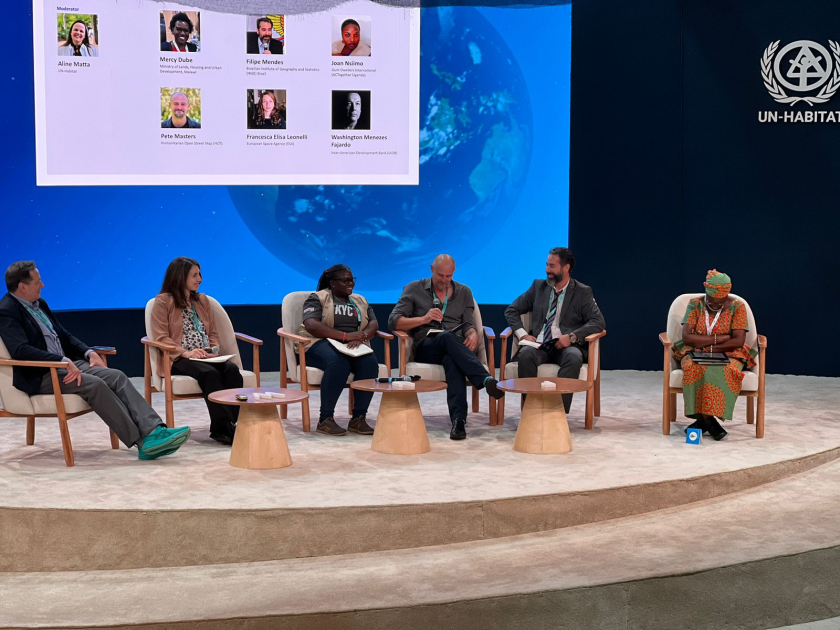
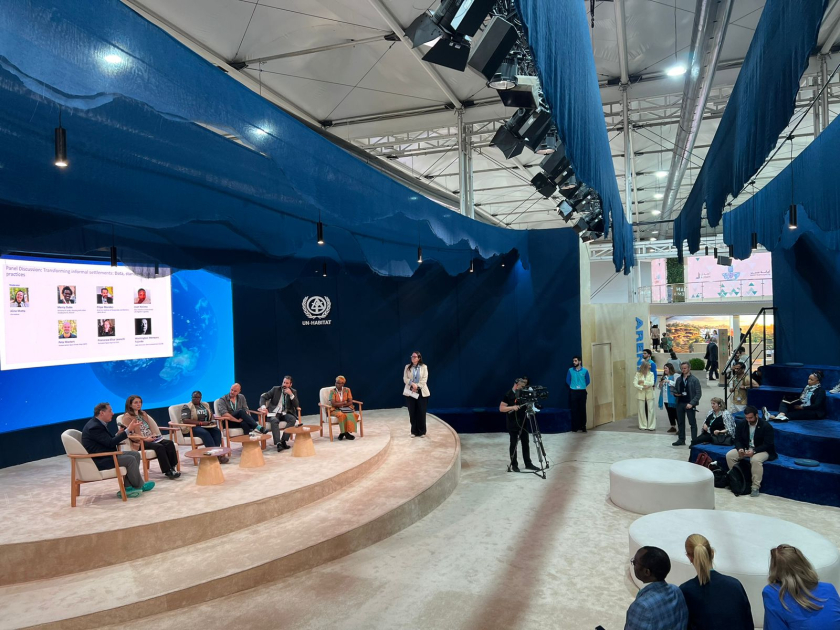
A specialized technical session titled " Transforming informal settlements: Data, standards, and practice" was convened today at the UN-Habitat Arena within the "Urban Expo" exhibition, held as part of the 13th Session of the United Nations World Urban Forum (WUF13) in Baku.
The panel gathered international geodata experts, spatial researchers, and housing ministry officials to address macro-level data collection, geospatial mapping, and scalable policy responses to unregulated urban expansion.
Robert Ndugwa, representing UN-Habitat, emphasized that understanding the heterogeneous nature of informal settlements requires a multi-tiered, highly adaptable analytical framework.
Monika Kuffer, a professor at the University of Twente, detailed how advanced cloud computing architectures are being leveraged to incrementally optimize predictive urban growth models.
Sophie Naue, representing the United Nations Innovation Technology Accelerator for Cities (UNITAC), outlined how machine-learning tools are utilized to decode the density patterns and developmental trajectories of informal housing.
The expert delegates highlighted a critical macroeconomic indicator, noting that the aggregate global population residing in slums and informal housing arrangements has climbed continuously since 2000. Panelists agreed that informal settlements have effectively become the default, critical housing segment for billions of people, requiring rapid institutional regularization rather than administrative neglect. The session concluded with an interactive question-and-answer period addressing the alignment of spatial data with local municipal budgets.
Other news in this section


