Conflict between Armenian authorities and Apostolic Church fuels social discontent - COMMENTARY
Baku, December 4, AZERTAC
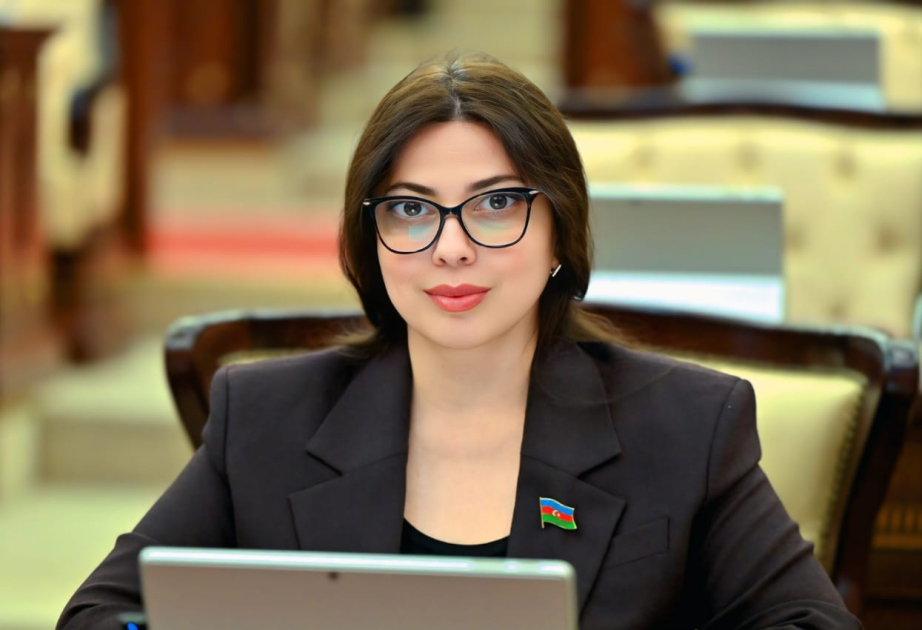
Recent developments in Armenia’s political landscape have raised serious concerns over the erosion of democratic institutions, restrictions on human rights, and the consolidation of authoritarian practices. Although these issues have been highlighted by local society, opposition groups, and international human rights organizations, the silence of the West—particularly the European Union—regarding these developments is striking, Member of the Milli Majlis Sabina Salmanova told AZERTAC.
According to her, the gradual hardening of the Armenian authorities is most evident in the pressure directed at political opponents: “Opposition forces have long noted an increase in politically motivated persecutions, arrests, judicial pressure, and administrative obstacles. The targeting of leaders and activists from different political camps by the law enforcement system demonstrates the complete weakening of political competition. The Armenian government narrows opportunities for political participation to prevent the expansion of public discontent, hindering the formation of real political alternatives. This process leads to the undermining of mechanisms of democratic legitimacy.”
Salmanova stated that another striking issue in Armenia is the hardening attitude towards the Apostolic Church: “Amid critical statements by the religious institution on certain political issues, the government is accused of interfering in the Church’s activities and attempting to bring religious structures under political influence. The increase in pressure incidents surrounding the Church indicates a deepening tension in state-religion relations. For a large part of Armenian society, the conflict with the Apostolic Church—which holds a historically and identity-wise important place—further increases social discontent. Against the backdrop of all these developments, the European Union and other Western institutions remain silent.”
The Milli Majlis deputy emphasized that the failure of these institutions, which speak of universal values such as democracy, human rights, and the rule of law, to react to the overt anti-democratic processes in Armenia demonstrates the systematic and deliberate application of double standards: “Yet, some Western institutions and organizations have periodically conducted unfounded criticism, slander, and smear campaigns against Azerbaijan. Azerbaijan’s governance model built on the rule of law, its sustainable political stability, and socio-economic development seem invisible to certain forces. The reforms carried out in our country, the modernization of political institutions, and constructive inter-party dialogue are ignored because they do not serve their interests. Why are they silent regarding Armenia? Why do they remain mute in the face of clearly observable human rights violations and authoritarian tendencies? All this once again shows that the essence of those Western institutions and organizations consists of malice, slander, and prejudice, and their approach is openly governed by double standards. Azerbaijan, regardless of such biased and selective attitudes, will continue to protect the rule of law, state stability, and development.”
Other news in this section


