Michał Rynkowski: Starting almost from scratch, Azerbaijan has become an important anti-doping hub in the region - EXCLUSIVE INTERVIEW
Baku, July 4, AZERTAC
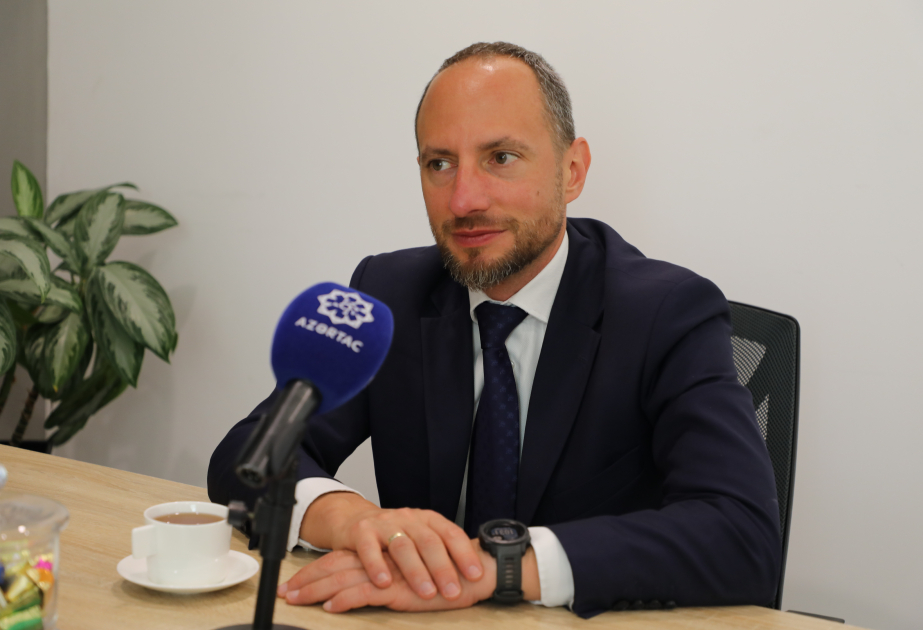
Michał Rynkowski, Director of the Polish Anti-Doping Agency (POLADA) and Chair of the Monitoring Group of the Council of Europe Anti-Doping Convention, gave an exclusive interview to AZERTAC.
- Let me begin by welcoming you to Azerbaijan. How does it feel to visit Baku again? What would you like to say about it?
- This is not my first time in Baku. I’m not exactly sure, but I believe it’s my fifth or sixth visit. I must say that Baku is truly an extraordinary city. It’s a very modern place, and its people are incredibly friendly. At the same time, I really love Azerbaijani cuisine. So, there are many reasons why this city feels special to me.
- How would you evaluate the development of anti-doping policy in Azerbaijan?
- Overall, we have been cooperating with AMADA for a long time. Recently, we signed a new Memorandum of Understanding as well. Over the past years, I’ve observed significant progress in the development of anti-doping programs in Azerbaijan. Starting almost from scratch, you have become an important anti-doping hub in the region. This system can serve as a model for others in the region.
- In March this year, a Memorandum of Understanding was signed between AMADA and POLADA. What kind of activities are being carried out within this cooperation? How do you see the future prospects of this partnership?
- My current visit to Azerbaijan is related to a training on results management. In simple terms, it’s about preparing lawyers for legal disciplinary proceedings in anti-doping cases. This training was made possible thanks to the memorandum signed with AMADA in March. The session we held lays a foundation for our cooperation. I am confident this won’t be our only joint activity. We are also working together in the field of international relations and cooperation. I believe our partnership will be long-term and sustainable.

- How sufficient are the current World Anti-Doping Agency (WADA) standards in ensuring fair decisions for athletes, and in which areas is further improvement needed?
- The current World Anti-Doping Code is now undergoing a review process. This process was initiated by WADA. The final version of the Code and International Standards is expected to be presented in November and approved in December. Of course, there are certain limitations and provisions that need to be revised—for instance, the rules on provisional suspensions. Additionally, lessons learned from the recent doping case involving Chinese swimmers must also be taken into account. Progress in this area is moving in the right direction.
- How can Poland’s anti-doping experience serve as a model for other countries, and do these approaches have the potential for regional or global implementation?
- Our experience in the field of anti-doping in Poland dates back to 1988. But I believe the most significant innovation is our close cooperation with law enforcement agencies. This collaboration has yielded successful results for both the local authorities and the anti-doping agency. Through this partnership, we can gather information on potential violations, while law enforcement bodies become aware of possible breaches of criminal law. This type of cooperation is rare—even within Europe—and very strong. We’ve carried out many joint operations, especially against organized criminal groups involved in the production of illegal substances.

- The “Enhanced Games” scheduled to be held in the USA next year—what kind of threats do they pose to clean sport values?
- This issue is very unfortunate. To put it diplomatically, the idea behind the “Enhanced Games” is completely contrary to Olympic values. It goes against the principle of fair play. This will be the first time such an event openly promotes doping on a global scale. I believe it’s harmful for sport and a very dangerous example for the younger generation. It promotes the illusion of a “shortcut” to fame. In the long run, I hope this project will fail.
- What legal, educational, and awareness tools are considered essential at the international level to strengthen clean sport values among the next generation of athletes?
- The key word here is cooperation. International cooperation is crucial. Governments and anti-doping agencies must work together to address these issues. At the same time, awareness campaigns should be organized with a unified approach that takes public needs into account. For example, in February this year, we carried out a campaign in Poland against counterfeit pharmaceutical products. It was conducted in collaboration with Poland’s pharmaceutical regulatory authority and was a successful initiative. However, that was on a national level. The main goal is to implement the same vision and approach at the international level, working together.
Other news in this section


