WUF13: Global solid waste governance and circular economy frameworks reviewed
Baku, May 20, AZERTAC
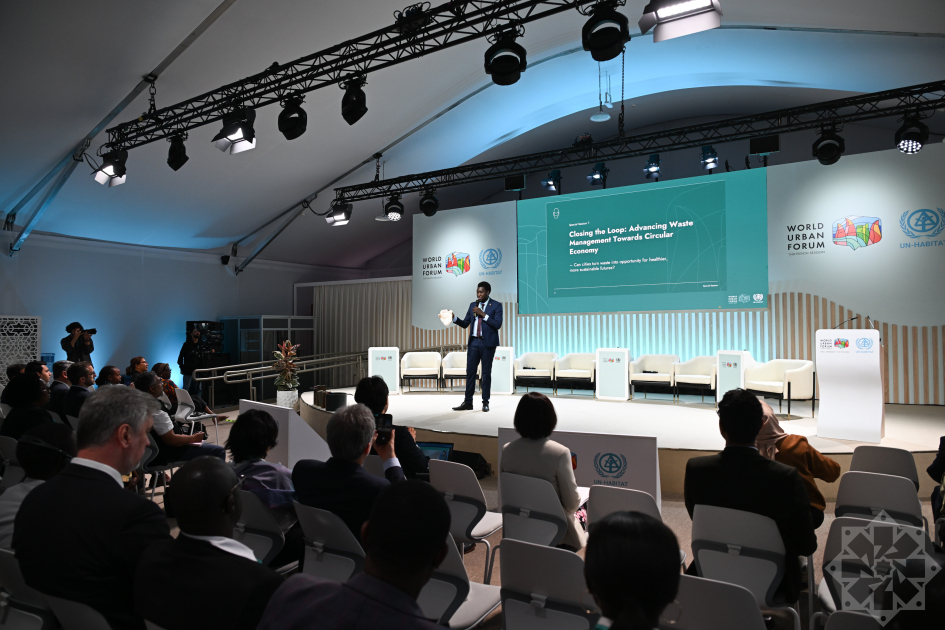
Global municipal waste management systems and the structural transition toward a circular economy were evaluated today at a specialized workshop held as part of the 13th Session of the United Nations World Urban Forum (WUF13) in Baku.
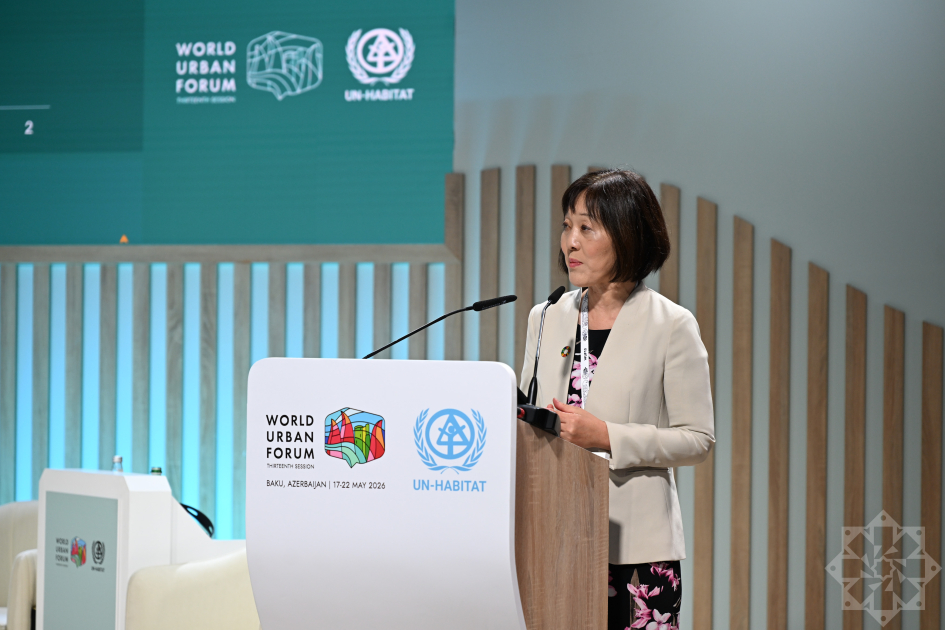
The event, titled " Closing the Loop: Advancing Waste Management Towards Circular Economy," focused on scalable, localized innovations designed to systematically eliminate industrial and municipal waste streams.
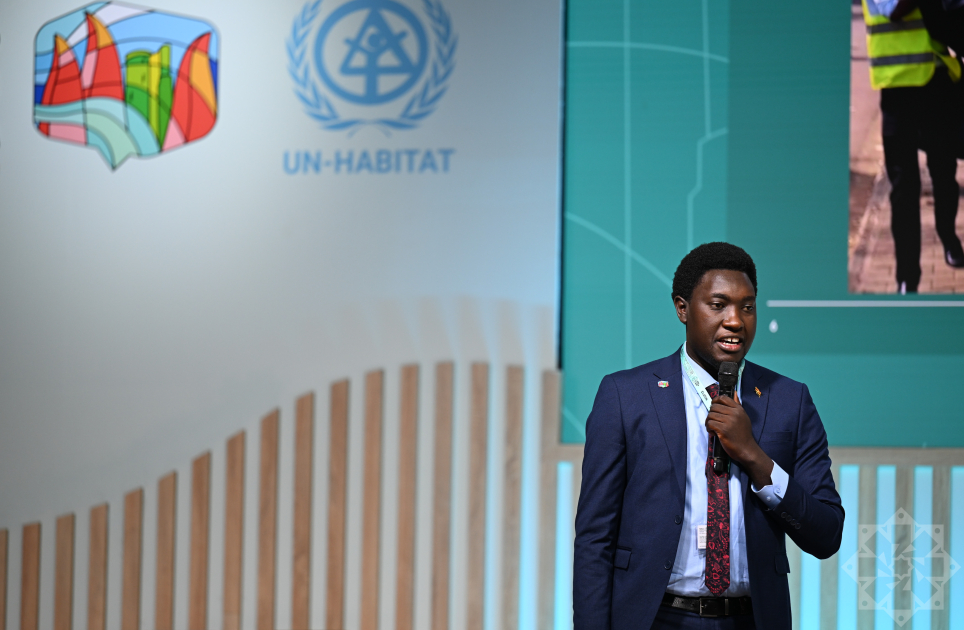
Sinan Kitagenda, CEO and co-founder of Waste Plus based in Kampala, Uganda, presented insights into the operations of his youth-led social enterprise. The company mitigates environmental degradation and generates sustainable "green revenue" by upcycling post-consumer plastic waste into high-density structural materials, including fencing posts, synthetic lumber, and drainage conduits.
Reflecting on his early influences, Kitagenda shared how constructing makeshift footballs from discarded polyethylene bags as a child, combined with observing his mother—a seamstress—repurpose textile remnants at home, catalyzed his long-term dedication to ecological innovation. He detailed how these early models of local resourcefulness have been successfully commercialized into modern, industrial-scale recycling loops.
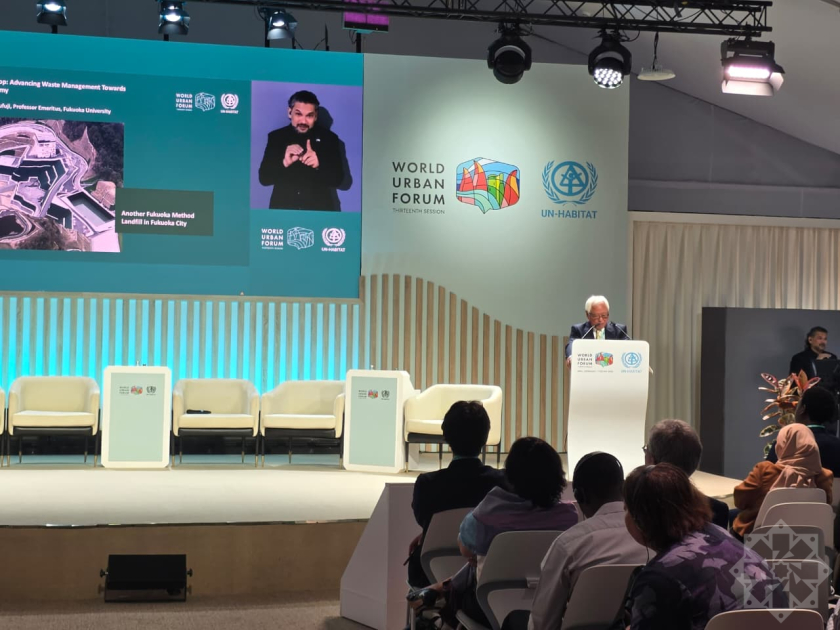
Yasushi Matsufuji, Professor at the Faculty of Engineering, Fukuoka University, Japan, delivered a keynote analysis contrasting the historical trajectory of waste management with future systemic demands. Professor Matsufuji recounted beginning his research tenure in the 1970s, a decade marked by hyper-urbanization, rapid population growth, and intensive industrialization across Japan.
He noted that municipal infrastructure at the time failed to keep pace with waste generation, leading to rudimentary open-air dumps that caused severe environmental crises, including pervasive odors, hazardous leachate runoff, subterranean groundwater contamination, and spontaneous methane-fueled landfill fires.
Professor Matsufuji emphasized that the systemic ecological bottlenecks Japan confronted half a century ago closely mirror the structural challenges currently plaguing rapidly expanding cities across Africa, Asia, and Latin America.
The forum concluded by emphasizing that cross-border technology transfers, open-source engineering standards, and institutional frameworks are critical to achieving authentic global circularity. The delegates affirmed that modern waste management must transcend simple disposal protocols and pivot completely toward systematic resource recovery.
Other news in this section


