Chair’s Summary of the Ministerial Meeting on the New Urban Agenda
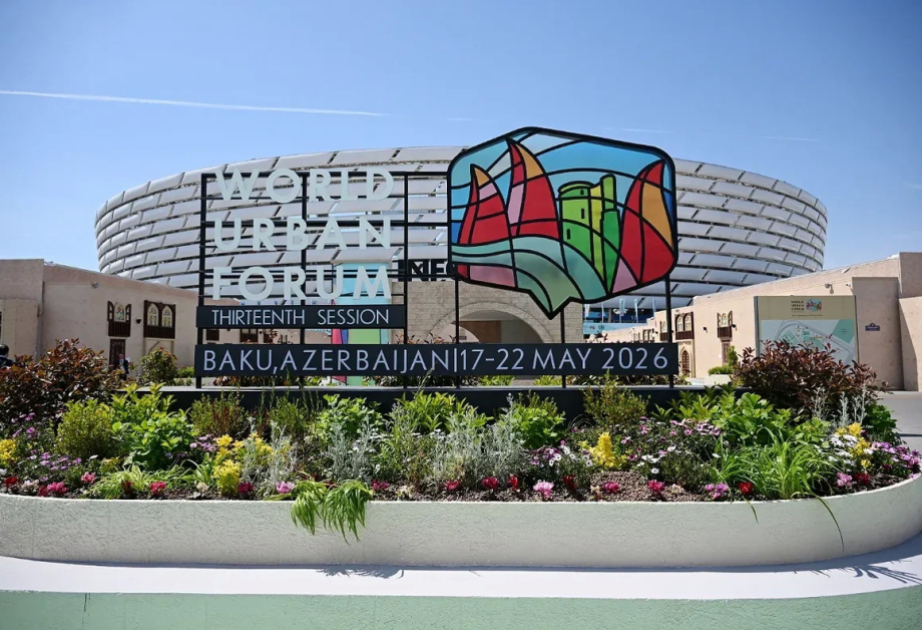
Thirteenth session of the World Urban Forum (WUF13)
17 May 2026, Baku, the Republic of Azerbaijan
Opening
Excellencies, distinguished ministers, representatives of Member States, colleagues from the United Nations system, local and regional governments, civil society, academia and other partners,
As Chair, it is my honour to offer this summary of the key issues raised during today’s Ministerial Meeting on the New Urban Agenda.
Let me begin by expressing appreciation to all ministers, heads of delegation, panellists and participants who contributed to today’s discussions.
I also thank the delegations expressing appreciation to the Government and people of Azerbaijan for their warm hospitality and for the successful organization of WUF13 in Baku, which has brought together more than 57,000 participants from 176 countries, making it the largest session of the World Urban Forum to date.
I take note as well of ministers’ welcoming of the innovative approaches introduced in the preparations for WUF13, including the inaugural Leaders’ Statements Segment, which lends greater weight to urban discussions, as well as the joint intention of Azerbaijan and UN-Habitat to collaborate on operational guidelines for hosting future sessions of the World Urban Forum.
We also recognize the visionary leadership of H.E. President Ilham Aliyev, as well as the efforts of UN-Habitat and Executive Director Anacláudia Rossbach, in providing this important platform for international cooperation on adequate housing and sustainable urbanization.
Key overall message
Today’s meeting took place at an important moment. 2026 marks the midpoint of the New Urban Agenda’s 20-year implementation horizon. Ten years after its adoption in Quito, the New Urban Agenda remains a vital framework for advancing adequate housing and inclusive, safe, resilient and sustainable cities and human settlements. At the same time, today’s discussions made clear that the second decade must be defined not by renewed ambition alone, but by accelerated implementation, stronger partnerships and measurable progress in people’s lives.
A central message emerged throughout the day: housing is far more than shelter. It is a human right, a foundation for dignity and social inclusion, a driver of opportunity, and a practical pathway for climate resilience and sustainable urban development. As reflected in the theme of WUF13, “Housing the world: Safe and resilient cities and communities,” adequate housing is one of the clearest and most urgent entry points for delivering the New Urban Agenda in people’s daily lives.
Highlights from national statements
During the morning session, ministers and heads of delegation shared national experiences from the first decade of implementation.
Many speakers highlighted progress in strengthening national policy, legal and planning frameworks for sustainable urbanization, including national development plans, housing policies, spatial planning laws, land policies, integrated territorial frameworks, SDG-aligned strategies and national reporting processes. Several delegations also reported large-scale housing programmes, affordable housing finance measures, infrastructure investments, urban regeneration, informal settlement upgrading, land regularization, climate-responsive planning, digital tools and stronger local governance systems.
At the same time, the national statements underlined the scale of the challenges that remain. Speakers referred to rapid urbanization that continues to outpace planning, infrastructure, housing supply and service delivery. Housing affordability and shortages were identified as widespread concerns, affecting low-income households, middle-income groups, youth, first-time homebuyers, informal workers, migrants, displaced populations and vulnerable communities. Several statements also highlighted the persistence of slums, insecure tenure, inadequate basic services, climate and disaster risks, financing constraints, data gaps and uneven institutional capacity.
Across the three transformative commitments of the New Urban Agenda, the strongest emphasis was placed on sustainable urban development for social inclusion and ending poverty. Speakers repeatedly linked housing with poverty reduction, inclusion, stability, dignity and access to opportunity. Many emphasized that housing policies must reach those most at risk of being left behind, including low-income households, women, youth, older persons, persons with disabilities, migrants, informal workers, displaced populations, slum residents and communities affected by crisis or climate risk. Homelessness was also highlighted as an issue requiring continued attention, with several delegations sharing national efforts to expand access to adequate housing.
Environmentally sustainable and resilient urban development was also a major theme. Many delegations stressed the strong interlinkages between housing, urban planning, climate action and sustainable development. This was especially clear for Small Island Developing States, where housing systems are increasingly vulnerable to rising sea levels, extreme weather events and limited access to climate finance. Ministers also underlined that clean air is not only an environmental issue, but also a matter of public health, quality of life and sustainable urban planning.
Sustainable and inclusive urban prosperity and opportunities was also recognized, though less frequently than the other two commitments. Several speakers noted that housing shapes access to jobs, livelihoods, productivity, mobility and local economic development. However, the economic role of housing received less attention and may need to be more fully addressed in the next phase of New Urban Agenda implementation.
Several housing themes stood out across national statements. Affordability, sustainability, informal settlements and the climate-housing nexus were among the most frequently raised issues, while speakers also highlighted tenure security, access to basic services, public and social housing, and habitability. Other dimensions of adequate housing, including location, accessibility and cultural adequacy, were mentioned less often, suggesting areas where future discussion and implementation could go deeper.
A recurring message was that housing cannot be addressed in isolation. Speakers called for integrated and place-based approaches that connect housing with land, infrastructure, transport, services, jobs, social protection, public spaces, climate action and local economic development. Several also emphasized secondary cities, smaller towns, urban-rural linkages and balanced territorial development. In this context, speakers also underscored that sustainable and inclusive urban development should consider the protection of the historical and cultural heritage of cities.
National and regional urban forums were recognized as important platforms for exchanging good practices, strengthening partnerships and identifying solutions that can be adapted and scaled across contexts. Speakers also underscored the need to strengthen partnerships across government, academia, civil society, non-governmental organizations, communities and the private sector.
Several speakers highlighted the impact of wars, conflicts and disasters on cities, housing, infrastructure and basic services, as well as the displacement and humanitarian challenges that follow. Delegations also referred to the importance of post-conflict reconstruction and recovery. In this context, they welcomed Azerbaijan’s experience in post-conflict reconstruction, including as a source of lessons that may be relevant in similar contexts, and expressed solidarity with Azerbaijan in this undertaking.
Ministers also welcomed the planned launch at WUF13 of the “Smart, Sustainable Settlements for Safe Return Package (4SRP)” initiative, developed by Azerbaijan in collaboration with UN-Habitat, the International Organization for Migration and the Baku Climate and Peace Hub, as a vital step towards integrated solutions for climate-resilient, environmentally sustainable, peace-positive and people-centred urban recovery, particularly in fragile and post-conflict settings. Support was expressed for the planned establishment of a dedicated working group at WUF13 tasked with developing the 4SRP guidelines and criteria, which aim to set internationally recognized standards for sustainable recovery and facilitate greater access for vulnerable countries to international development and climate finance.
Among the drivers of effective implementation, governance, planning and financing were mentioned most frequently. Delegations called for better multilevel coordination, empowered local governments, stronger planning systems and more predictable financing. Capacity-building was also repeatedly emphasized, including support for project preparation, implementation and urban monitoring. Digital technologies were mentioned less frequently than other implementation drivers, suggesting an area where further exchange, practical guidance and capacity development may be useful.
National statements stressed that the next decade must move from commitments to delivery at scale. This will require stronger finance, stronger institutions and stronger partnerships. It will also require practical tools, local capacity, data systems and accountability mechanisms that help turn national commitments into visible improvements in people's lives.
Highlights from the three panel discussions
The afternoon panels deepened these discussions through the lens of the three transformative commitments of the New Urban Agenda.
The first panel, on housing for social inclusion and ending poverty, emphasized that land and housing should be recognized as human rights and as pillars of social and urban justice. Speakers stressed that the discussion must go beyond the number of housing units delivered to address the quality of housing, the strength of communities, and the social infrastructure that connects people to jobs, education, services and opportunity.
The panel highlighted the need to upgrade informal settlements through integrated approaches that combine housing, infrastructure, poverty reduction and resilience. Speakers also underlined that private investment has an important role to play, but must be aligned with the public interest and must not lead to gentrification or displacement.
The second panel, on housing for urban prosperity and opportunities for all, highlighted housing as foundational economic and social infrastructure. Speakers emphasized that housing policy should be people-centred and demand-driven, and connected to jobs, education, health, transport, safety, services and local livelihoods. The panel stressed that housing delivery must move from isolated projects to scaled, coordinated citywide and nationwide systems.
Participants also highlighted the need to unlock well-located land, strengthen inclusive and flexible financing systems, recognize the economic role of informal settlements, and ensure that housing interventions reach those most excluded from formal markets. A recurring message was that a city that works for its poorest residents works better for everyone.
The third panel, on housing for environmentally sustainable and resilient urban development, underscored that the climate crisis is also a housing crisis. Speakers noted that more than one billion people living in informal settlements are highly exposed to extreme weather events and often lack access to basic services. The panel emphasized that decisions on how homes and infrastructure are planned, built, upgraded and retrofitted can reduce emissions, strengthen resilience and improve quality of life at the same time.
Participants called for stronger alignment between housing policies and climate policies, including national climate strategies, NDCs, National Adaptation Plans and long-term strategies. They also stressed the need for more climate finance, stronger local capacity, better project preparation, multilevel governance and partnerships with communities, local governments, development banks, housing associations and the private sector.
Priorities for the next decade
Across the full day of discussions, several priorities emerged for the remaining decade of New Urban Agenda implementation.
First, adequate, affordable, safe and climate-resilient housing must be placed at the centre of national and local development strategies, including through social housing, rental housing, public housing, community-led approaches and support for low- and middle-income households.
Second, commitments must be matched by delivery systems. This requires clearer accountability, technical support, project preparation, data systems and measurable follow-up.
Third, urban finance must be strengthened, including affordable housing finance, municipal finance, climate and development finance, concessional finance, blended finance, private-sector partnerships and predictable support for vulnerable countries and regions.
Fourth, housing must be integrated with broader urban and territorial planning, linking it with land, infrastructure, services, mobility, jobs, public spaces, social policy, climate resilience and local economic development.
Fifth, cities and communities need greater investment in resilient, green and low-carbon infrastructure, including energy-efficient buildings, water and sanitation, sustainable mobility, clean energy, flood management, coastal resilience, disaster risk reduction and risk-informed relocation.
Sixth, local governments must be empowered through stronger multilevel governance, municipal capacity, fiscal decentralization, participatory planning and clearer roles for cities and regions in decision-making.
Finally, implementation must remain people-centred and inclusive, with particular attention to women, youth, older persons, persons with disabilities, migrants, displaced populations, informal workers, low-income households, slum residents, landless communities and communities affected by crisis or climate risk.
Closing
Excellencies, colleagues,
Today's discussions reaffirmed that the New Urban Agenda remains not only relevant, but indispensable. The first decade of implementation has generated important experiences, lessons and partnerships. The second decade must now be defined by delivery at scale.
The messages emerging from this Ministerial Meeting will inform the wider deliberations of WUF13, the Baku Call to Action, and preparations for the High-level Meeting of the General Assembly on the midterm review of the New Urban Agenda happening on 16 and 17 July 2026 in New York.
As Chair, I hear a clear call from today's meeting to use this midterm moment not only to take stock, but to renew political commitment, strengthen implementation and place adequate housing at the centre of sustainable urban development.
Let us carry this momentum forward from Baku to New York, and from commitment to action, as we work together to make cities and human settlements inclusive, safe, resilient and sustainable by 2036.
Thank you.
Other news in this section


