Tajik President unveils a series of international water initiatives
Baku, May 26, AZERTAC
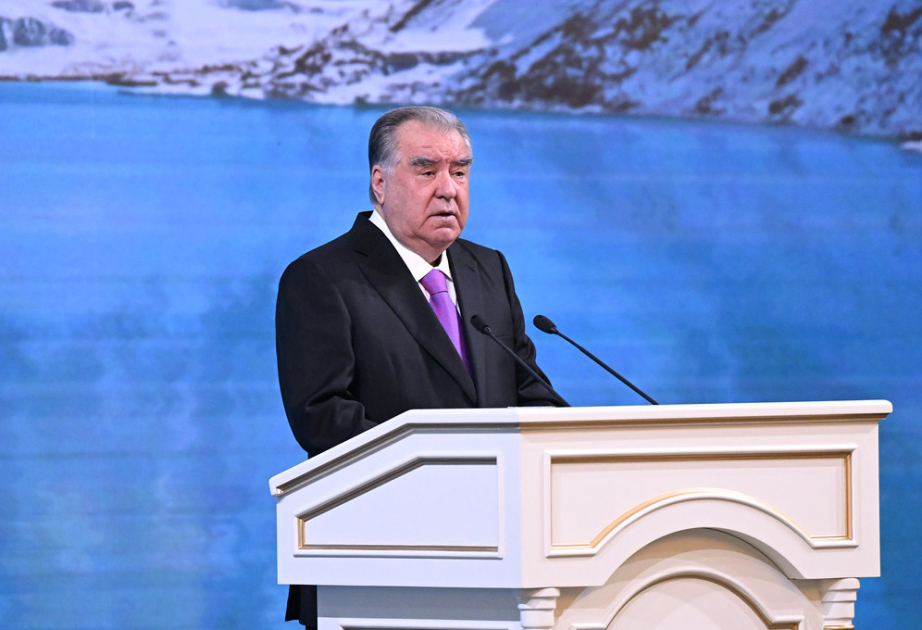
At the opening of the 4th High-Level International Conference on the International Decade for Action "Water for Sustainable Development," President of Tajikistan Emomali Rahmon proposed a series of practical measures to elevate water issues to the forefront of the international sustainable development agenda, according to Qazinform.
Emomali Rahmon noted that within the framework of the Dushanbe Water Process, Tajikistan continues its efforts to create an inclusive and transparent international platform.
He stated that the country intends to achieve full implementation of integrated water resource management at the national and district levels by 2030. Tajikistan also plans to expand the use of water-saving technologies by more than 40-fold and make efficient water use a key tool for climate change adaptation.
In the context of developing transboundary water cooperation, the Tajik leader called for further strengthening trust, partnership, and constructive dialogue in Central Asia.
"Tajikistan views the International Fund for Saving the Aral Sea as a vital regional platform for discussing and addressing the complex of water issues in the interest of sustainable development and considers it necessary to establish a Central Asian Interstate Energy Commission within its framework," Rahmon said.
To transition to a new phase of global cooperation, he proposed creating a Dushanbe Framework Program on Water Issues.
"This framework program could strengthen current processes in the water sector and create a favorable foundation for coordinating and pooling efforts to achieve practical results," the President of Tajikistan emphasized.
Concluding his speech, Emomali Rahmon announced the establishment of the International Water Resources Prize of the President of Tajikistan to promote water diplomacy and bring together the efforts of the international community.
The 4th High-Level International Conference will run until May 28. The event has brought together 2,500 participants from 110 countries, including representatives of 75 international and regional organizations, as well as experts from 170 research institutions worldwide. Over 300 foreign and local journalists are covering the forum.
Other news in this section


