Birgit Pickel: Over half of persons with disabilities live in cities
Baku, May 20, AZERTAC
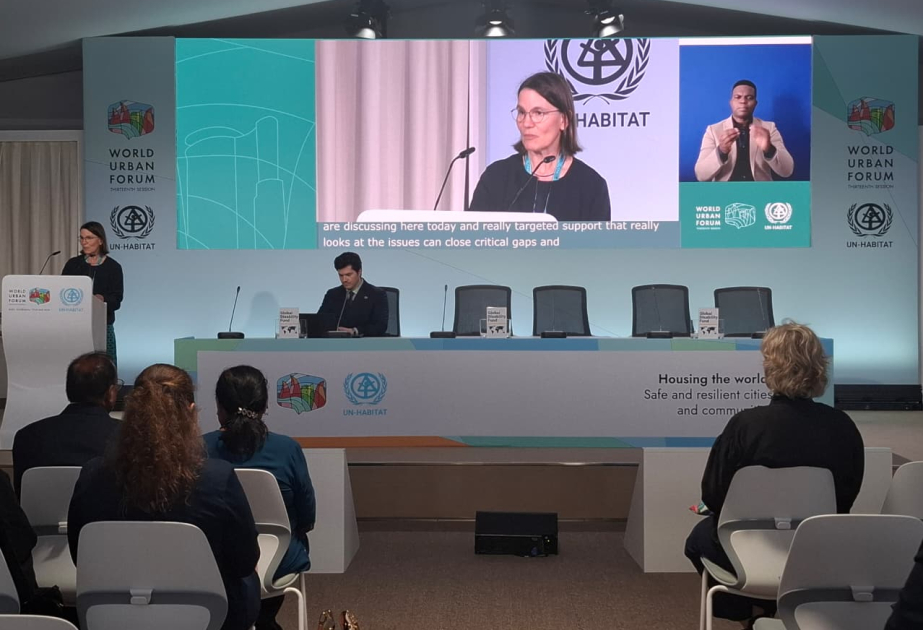
More than half of the world’s 1.3 billion persons with disabilities live in cities. Inaccessible infrastructure, social exclusion, and weak representation in urban governance mean they are often left behind in urban development. Experts say these issues must be addressed from the planning stage, said Birgit Pickel, Director-General for Sustainable Development and Climate at Germany's Federal Ministry for Economic Cooperation and Development (BMZ), in her remarks at a panel session titled “Catalytic funding and support for building safe, resilient and inclusive cities” jointly organized by the United Nations Global Disability Fund (UNGDF) and the German Government as part of the WUF13.
She emphasized that it is important to discuss catalytic financing, which supports inclusive, safe, and resilient cities. She noted that persons with disabilities and their representative organizations are often overlooked, stressing the need to highlight inclusivity in urban development.
The Director-General highlighted that about 45% of the world’s population lives in cities, which are key spaces for addressing poverty, inequality, climate change, and inclusion, as well as driving innovation and progress. She noted that cities face major challenges such as rapid unplanned growth, informal settlements, housing shortages, and deep inequalities, which most severely affect vulnerable groups, especially persons with disabilities.
Other news in this section


