bp announces last year’s oil output from Azeri-Chirag-Gunashli
Baku, February 12, AZERTAC
In 2025, bp and its co-venturers spent about $564 million in operating expenditure and about $1,288 million in capital expenditure on ACG activities.
According to bp Azerbaijan, during the year, the 4D high-definition ocean bottom node seismic programme on ACG successfully completed processing of the data acquired in 2024 and concluded data acquisition for the second year of the programme.
In addition, ACG has launched a multi-well subsea intervention campaign in the Deepwater Gunashli (DWG) area. For the first time in bp’s Caspian operations, the campaign is deploying riserless light well intervention (RLWI) technology – a subsea mechanical wireline intervention system known as the Blue Ocean Riserless Intervention System (BORIS), provided by Oceaneering International. This innovative approach will enable efficient surveillance and early identification of opportunities for pressure management and production rate enhancement, unlocking further potential in the field.
To reduce reliance on semisubmersible drilling rigs and enable earlier subsea interventions, the campaign utilizes a vessel-based intervention method – another first for the Caspian. The RLWI system has been integrated onto the Khankendi subsea construction vessel, from which all interventions are being conducted.
Offshore operations as part of the campaign are expected to be completed by the end of 2026.
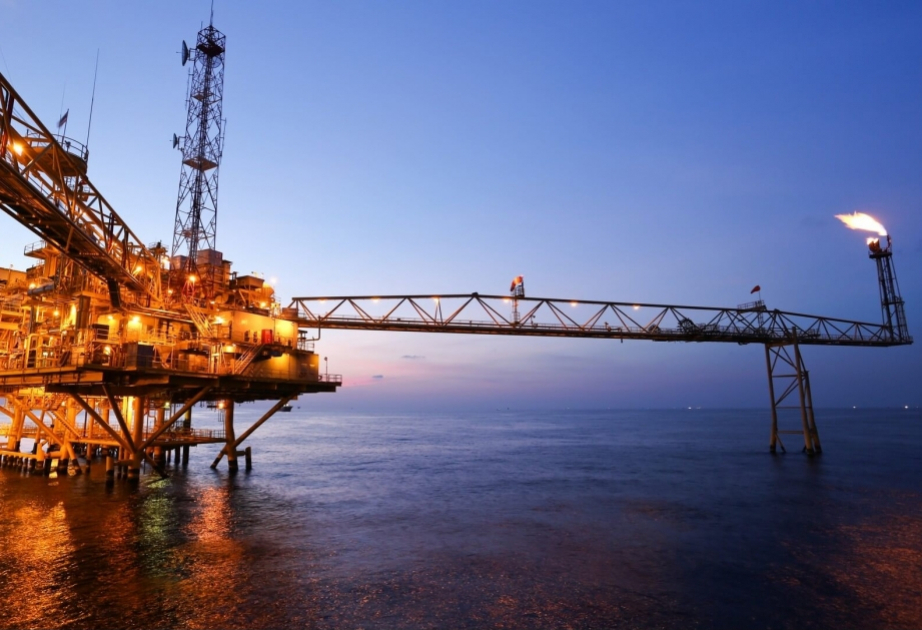
During the year, ACG continued to safely and reliably deliver stable production. Total ACG production for the full year was on average about 330,000 barrels per day (b/d) (about 120 million barrels or 16 million tonnes in total) from the Chirag (21,000 b/d), Central Azeri (90,000 b/d), West Azeri (76,000 b/d), East Azeri (43,000 b/d), Deepwater Gunashli (51,000 b/d), West Chirag (24,000 b/d) and ACE (25,000 b/d) platforms.
In 2025, ACG marked two major production milestones. On 18 February, the Central Azeri platform celebrated the 20th anniversary of first oil production. The platform remains the leading ACG production facility having produced a total of 1.2 billion barrels (157 million tonnes) of oil to date. Later in the year, on 30 December, the West Azeri platform also marked 20 years since first oil, with total cumulative production exceeding 1 billion barrels (142 million tonnes).
At the end of 2025, 147 oil wells were producing, while 49 were used for water and 10 for gas injection.
In 2025, ACG drilled and completed 10 oil producer, five water injector, one gas injector and one cuttings re-injector wells.
During the year, ACG delivered an average of around 8 million cubic metres per day of ACG associated gas to the state of Azerbaijan (2.7 billion cubic metres in total), primarily at the Sangachal terminal but also to SOCAR’s Oil Rocks facility. The remainder of the associated gas produced was re-injected for reservoir pressure maintenance.
Following the signing of the ACG NAG Addendum in 2024, an initial production well was planned and safely drilled from ACG’s existing West Chirag platform. The well also represents a significant appraisal milestone, as the data obtained will help build future plans for ACG’s NAG development.
In 2025, the well was successfully delivered, providing access to two priority NAG deep reservoirs - the shallower NKP and the deeper PK reservoirs - both located beneath the currently producing oil reservoirs.
The well confirmed the presence of gas resources in the NKP reservoir, which is the main target reservoir for first NAG production, starting second half this year.
Additionally, the well encountered high pressure gas in the PK reservoir. There are also plans to produce from this reservoir in the first half of 2026, however, production from PK will be short-term and undertaken solely for testing purposes, before we move to the NKP reservoir.
Other news in this section


