IMF confirms Albania’s economic growth backed by a stable banking system
Baku, June 3, AZERTAC
Sustained economic activity, a strong labor market, and supportive financial conditions continue to drive Albania’s economic stability and growth, appreciated the International Monetary Fund (IMF) mission, led by the Chief of Mission for Albania Diego Cerdeiro, according to Albanian News Agency (ATA).
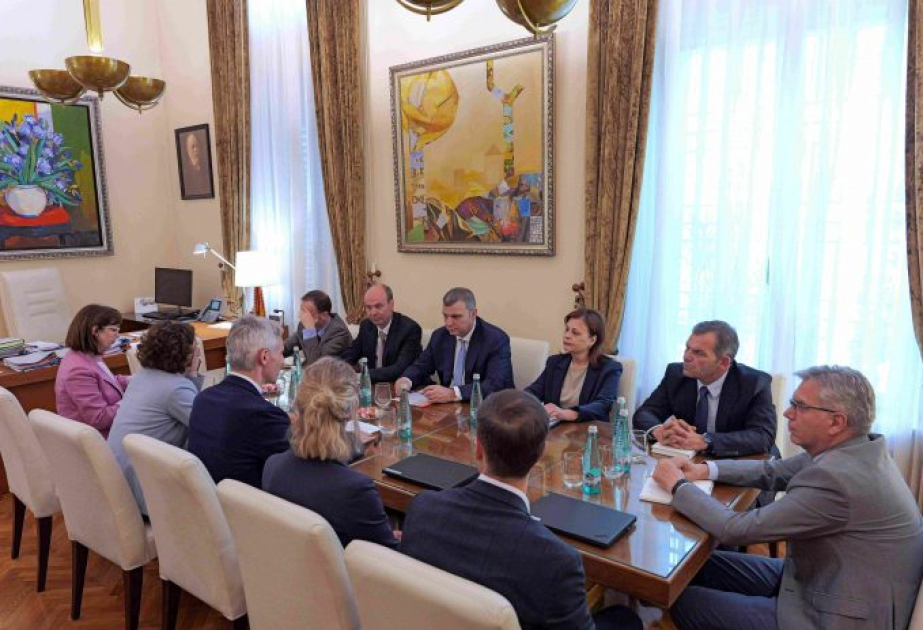
During their stay in Tirana from May 28 to June 2, IMF representatives held meetings with leaders and experts of the Bank of Albania, as well as a closing meeting with Governor Gent Sejko.
The discussions focused on current macroeconomic developments, monetary policy, financial stability, and the prospects of the Albanian economy.
In his presentation, Governor Sejko emphasized that the Albanian economy has maintained positive performance despite external challenges, generating employment and wage growth.
He underlined that the main economic and financial indicators have improved, including inflation, public and external debt, the level of non-performing loans and banking sector indicators.
On their part, the IMF representatives assessed that the Albanian economy continues to remain resilient to external shocks, while the economic outlook appears generally favorable.
However, they warned about the need of continuous monitoring of uncertainties related to international developments and geopolitical tensions.
Regarding inflation, the mission highlighted the impact of rising energy prices and the significance of monitoring inflationary expectations.
In this context, the IMF positively assessed the analyses and forecasts of the Bank of Albania, considering the monetary policy pursued as appropriate and oriented towards maintaining price stability.
Exchange rates and foreign exchange reserves were another key topic. IMF representatives examined the central bank’s operations and agreed that the stronger lek reflects positive, structural changes in the economy. They highlighted that maintaining a free-floating exchange rate is a key tool for keeping Albania’s economy stable and adaptable.
The meetings also addressed long-term structural constraints on the Albanian economy, notably demographic shifts, sluggish productivity, and the transformative impact of European integration.
During the meetings, the long-term challenges of the Albanian economy were also discussed, including demographic developments, productivity growth and the impact of the European integration process on the country’s economic prospects.
Other news in this section


