Massive icebergs once roamed off coast of UK
Baku, April 24, AZERTAC
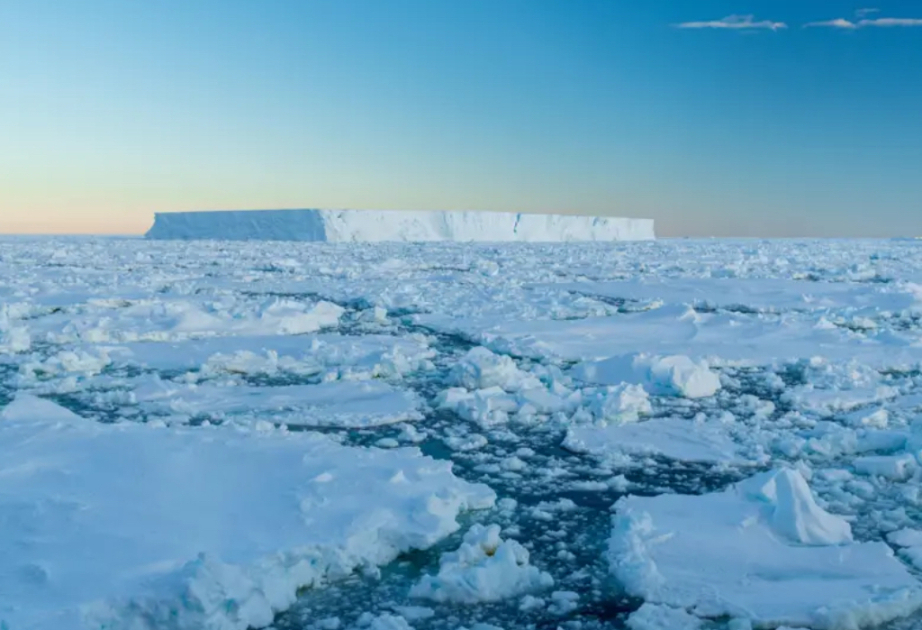
A new study reveals there was a time when massive icebergs, like the ones we see in Antarctica today, were drifting less than 90 miles off the UK coastline, according to British Antarctic Survey.
Scientists have for the first time discovered the distinctive plough-marks these spectacular giants carved as their undersides dragged across the floor of the North Sea, located off the east coast of the UK, some 18,000 to 20,000 years ago.
This was during the last ice age, a period when an ice sheet covering much of the British and Irish Isles was retreating due to a warming climate. The new research is published in the journal Nature Communications.
Deep, comb-like grooves — hundreds of metres wide — have been preserved in the sediments buried beneath the present-day seafloor. They are visible in seismic survey data that was used to locate sites for drilling platforms in the Witch Ground Basin, situated between Scotland and Norway.
From the size of the parallel grooves, researchers can estimate the dimensions of the icebergs responsible.
Single grooves made by the narrow keels of small bergs have been observed before, but the broad Witch Ground tramlines are the first clear evidence that monster blocks of ice were also roaming across the North Sea.
In Antarctica, tabular bergs are discharged from ice shelves – the floating fronts of glaciers that have flowed off the land into the ocean.
Seventy-five percent of the white continent is surrounded by these buoyant platforms and the recognition that epic flat-topped bergs existed in the North Sea indicates the British and Irish Ice Sheet had ice shelves, too.
Such structures are important for ice sheet stability. Their presence buttresses and holds back glacial ice, which would otherwise drain much faster into the ocean.
The regular breakaway of tabular bergs at the leading edge of shelves, occurring sometimes only every few decades, helps to maintain the glaciers to their rear in a steady-state or equilibrium.
How this could change in Antarctica as the world gets ever warmer is uncertain, but researchers suggest the ancient North Sea plough-marks could offer valuable insights.
There are currently very few examples of this transition behaviour in Antarctica. But perhaps the best is what happened to the Larsen B ice shelf.
In 2002, warming produced abundant ponds of meltwater at its surface which then trickled down through the platform, shattering the ice into countless small bergs over the course of just a week. After the ice shelf collapsed, the glaciers previously held back behind it sped up by several times their former speed, accelerating their contribution to sea-level rise.
This phenomenon seems to have occurred on a much larger scale in the North Sea during a period when the British and Irish Ice Sheet was shrinking rapidly by 200-300 metres per year at its edges.
Other news in this section


