AIR Center hosts panel on urbicide and its consequences at WUF13
Baku, May 20, AZERTAC
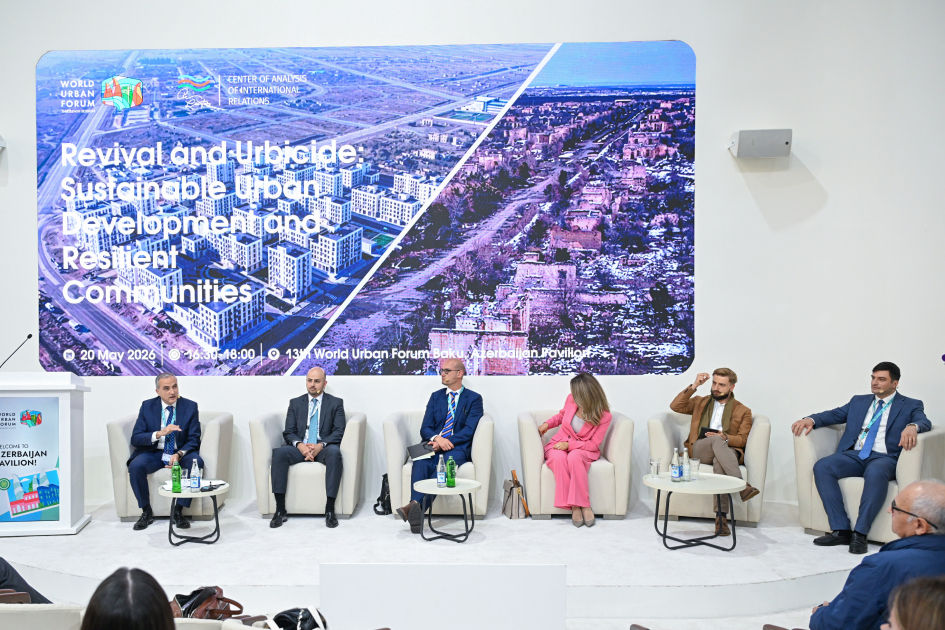
The Center of Analysis of International Relations (AIR Center) organized an international conference titled “Revival and Urbicide: Sustainable Urban Development and Resilient Communities” on the sidelines of the WUF13.
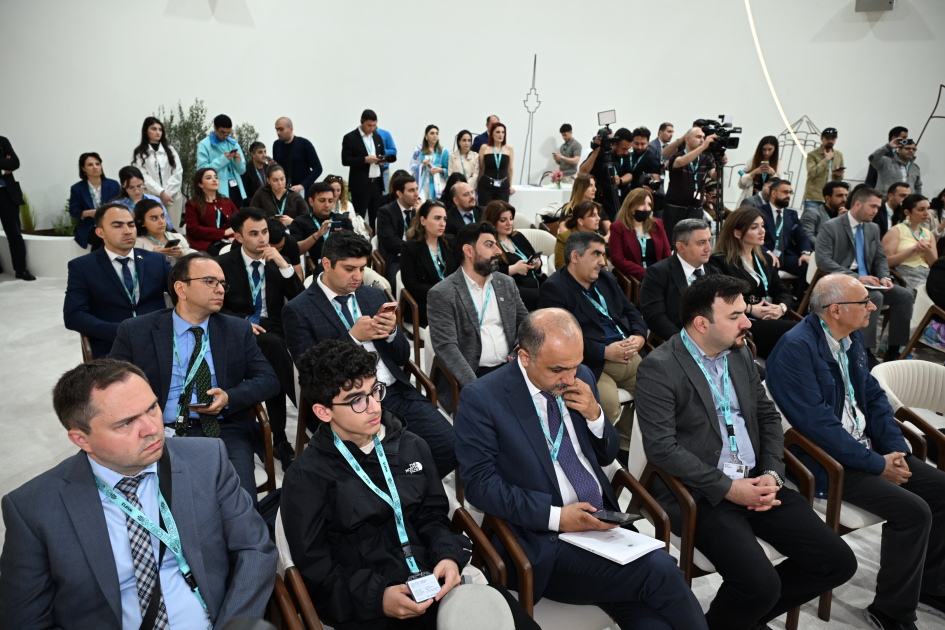
The panel brought together government and state representatives, as well as experts, ambassadors accredited to Azerbaijan from foreign countries, and specialized professionals from leading universities and companies around the world in this field.
The discussions served as an important platform for the international examination of urbicide, post-conflict urban reconstruction, and Azerbaijan’s reconstruction experience. The panel made a significant thematic contribution to the agenda of WUF13 by fostering a multidisciplinary dialogue on contemporary urban planning challenges.
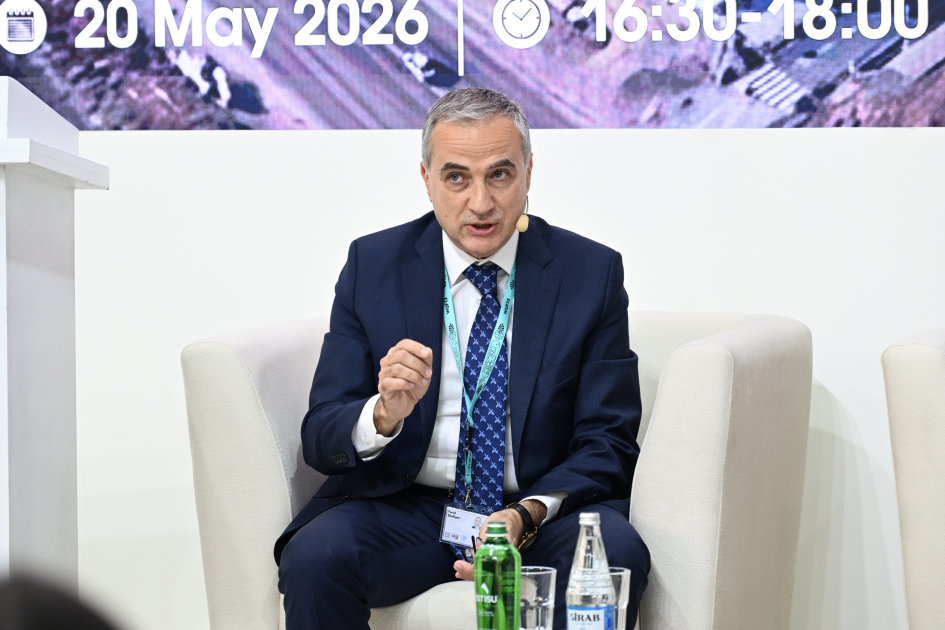
Addressing the event, Farid Shafiyev, Chairman of the Board of the Center of Analysis of International Relations (AIR Center), emphasized the importance of broader international recognition of the concept of urbicide within the context of international law and security. He characterized urbicide as the deliberate destruction of cities and human settlements in times of war, the erasure of their socio-cultural identity, and the elimination of conditions for the return of displaced populations.
He noted that while the concept of urbicide was initially studied in the context of urban planning, subsequent research, particularly in light of the Balkan wars, the siege of Sarajevo, and the cases of Mariupol and Aleppo, has examined it as a key element of armed conflicts.
Farid Shafiyev stressed that urbicide in Garabagh differs from other cases in that it was carried out systematically after military operations, with the objective not only of destroying cities but also of preventing the return of the Azerbaijani population, as well as erasing the region’s cultural memory and historical identity. He referred to the 2005 OSCE Fact-Finding Mission report, noting that the districts of Aghdam, Jabrayil, Fuzuli, Zangilan, and others were completely destroyed, settlements were looted, and even building materials were dismantled and removed.
Shafiyev stated that the main indicators of urbicide include physical destruction, ethnic cleansing, and the transformation of the cultural identity of cities, highlighting in particular that Lachin and Kalbajar held strategic importance for Armenia and that settlement policies were implemented in these areas.
The AIR Center Chairman also underscored that urbicide is not merely “collateral damage” but rather a governance strategy implemented for political and ideological purposes, where the destruction of urban space serves the establishment of new forms of control and power.
Speaking at the event, Vahid Hajiyev, the Special Representative of the President in the Jabrayil, Gubadli, and Zangilan districts, highlighted the large-scale restoration and reconstruction efforts that had been carried out in Jabrayil, Gubadli and Zangilan regions over the recent years.
He emphasized that the mine threat remains the primary obstacle to the reconstruction efforts in the liberated territories.
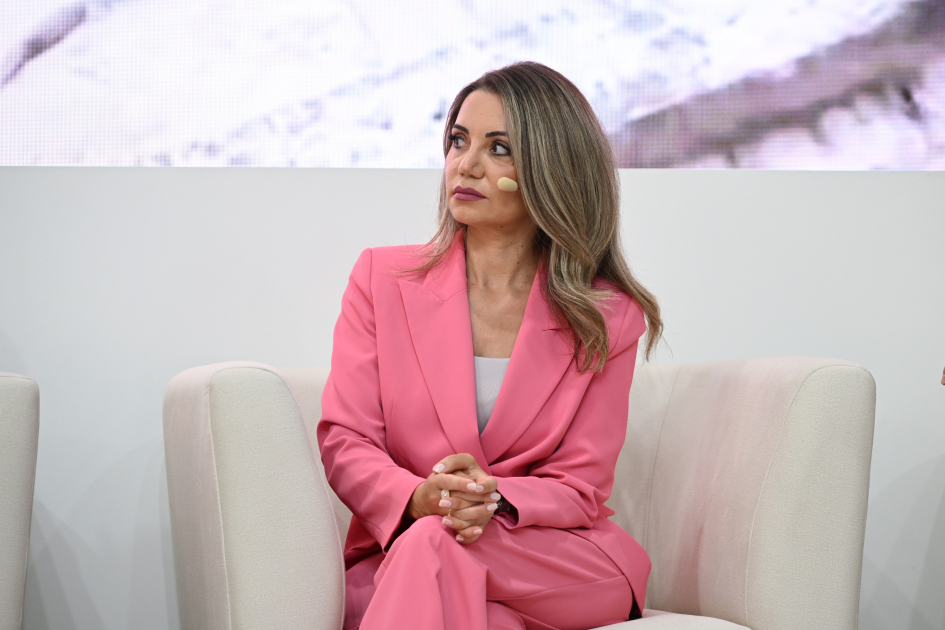
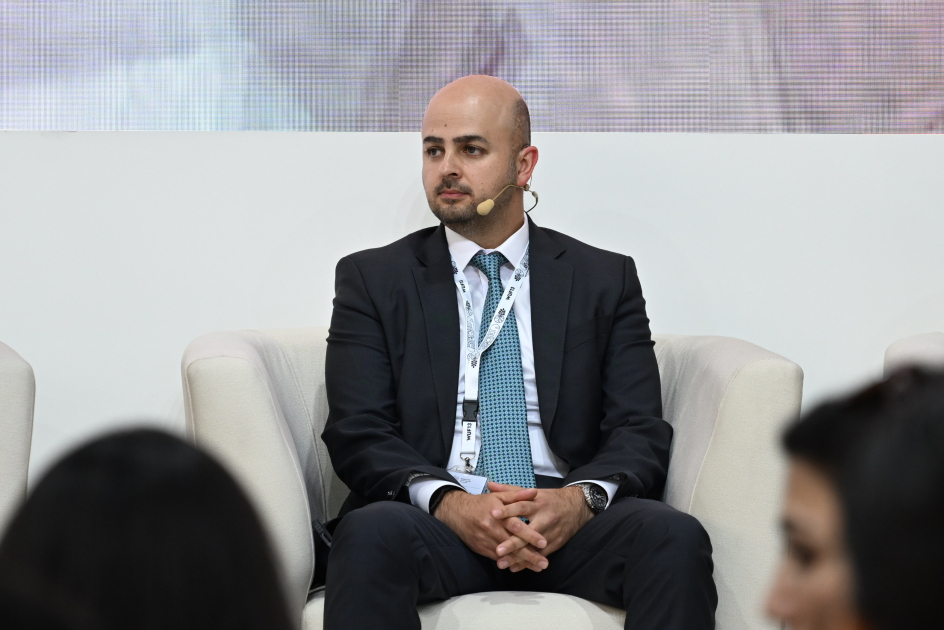
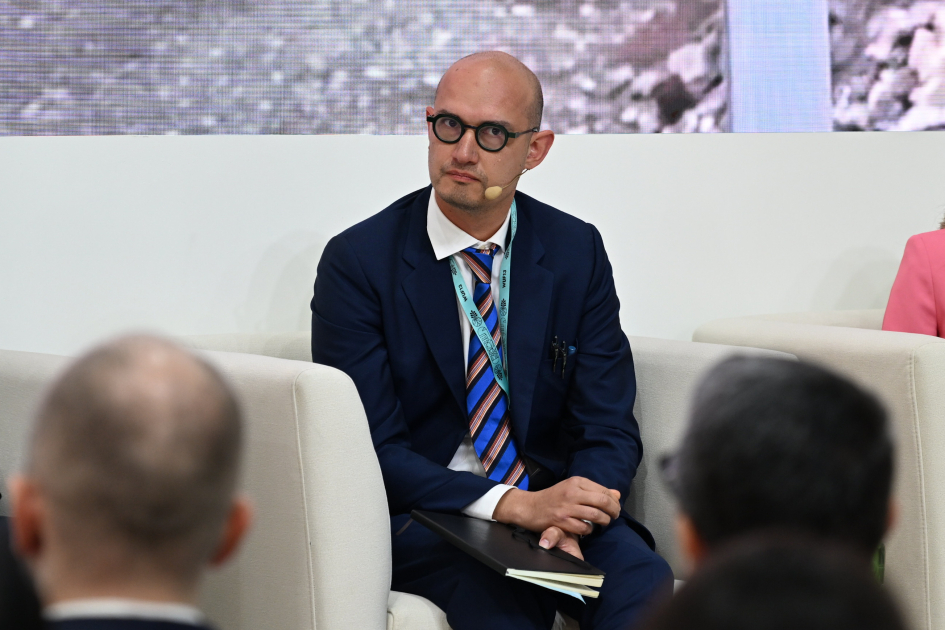
Other speakers at the event included Deen Sharp, Visiting LSE Fellow in Geography and the Environment at the London School of Economics (LSE), Alexandre Hedjazi, Associate Professor at the University of Geneva, Urban Futures Lab, | Switzerland, Ramil Jahangirov, Representative of the State Committee on Urban Planning and Architecture of the Republic of Azerbaijan, Haris Piplas, Director-Integrated Urban Solutions at Drees&Sommer | Switzerland, and Dalya Altuntepe, Heritage Strategist and Cultural Tourism Expert.
The conference discussions focused on the themes such as urbicide as a tool of warfare and its implications for sustainable development, destruction of cities, infrastructure, and cultural heritage in Garabagh, and surrounding regions, environmental damage, landmine contamination, and long-term urban uninhabitability, comparative international perspectives on urbicide and post-conflict devastation, sustainable urban planning and resilient infrastructure in post-conflict settings, climate-adaptive reconstruction and green urban solutions, community-centered planning and social cohesion, international case studies applicable to Azerbaijan’s reconstruction efforts, strategic planning and spatial vision for Garabagh and surrounding regions, smart cities, renewable energy zones, and digital infrastructure.
Other news in this section


