Expert: ECO platform has significant potential for regional cooperation – INTERVIEW
Baku, July 16, AZERTAC
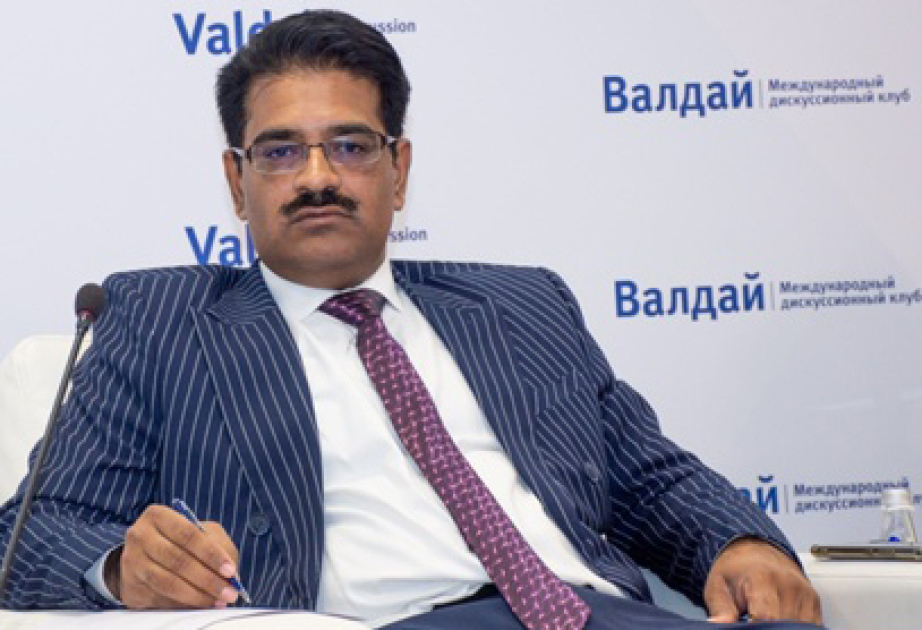
AZERTAC presents an interview with Almas Haider Naqvi, a Pakistani expert on international relations and Executive Director of the analytical platform and information and research center “Regional Rapport” (Islamabad).
– Azerbaijan and Pakistan have traditionally maintained close political ties. What steps, in your opinion, could give additional impetus to economic cooperation between the two countries within the ECO?
Pakistan and Azerbaijan enjoy traditional political and cultural relations, reflected in their mutual support on core issues – Kashmir for Pakistan and Nagorno-Karabakh for Azerbaijan. However, such close political proximity requires concrete bilateral economic ties, including within the ECO framework. Translating political affinity into robust economic cooperation requires specific practical steps within ECO, such as trade facilitation and preferential agreements, sector-specific cooperation, business councils and regular forums, transport and logistics collaboration, and energy cooperation.
For trade facilitation, it is imperative to negotiate bilateral or broader preferential agreements aimed at reducing tariffs and removing non-tariff barriers on key export items from both sides. Sector-specific cooperation should focus on areas where both countries have comparative advantages, such as textiles, pharmaceuticals, energy, and agro-processing.
Establishing and enhancing the Pakistan-Azerbaijan Business Council under the ECO umbrella would help increase B2B partnerships. Joint investments in transport and logistics would improve connectivity between South Asia and the Caspian region. The energy sector is particularly promising, with potential for collaboration on joint projects such as LNG supply chains and oil and gas exploration.
ECO member states could expedite broader economic integration goals to unlock untapped trade and investment potential.
– In recent years, Azerbaijan has been promoting the ideas of sustainable logistics, green economy, and digitalization. To what extent can these areas become points of contact between Baku and Islamabad in regional projects?
Both countries share similar views on regional connectivity. In terms of sustainable logistics, green economy, and digitalization, there are highly promising points of convergence.
For sustainable logistics, both countries have ample potential for cooperation in modernizing transport corridors, port operations, adopting eco-friendly freight standards, and investing in intermodal hubs to reduce carbon footprints.
They can also collaborate on green economy initiatives, given their shared renewable energy ambitions. Joint initiatives, technology transfer, and knowledge sharing could enhance regional green energy projects.
Digitalization is another important sector where cooperation is possible, including e-commerce platforms, digital trade facilitation, smart customs, and blockchain-based systems.
– What is the role of the Trans-Caspian route (Middle Corridor) in the context of cooperation between the ECO countries, and how could Pakistan and Azerbaijan jointly use its potential?
The Middle Corridor acts as a strategic bridge connecting South Asia with Central Asia, the Caucasus, and Europe. For Pakistan and Azerbaijan, it could serve as a gateway, enabling joint logistics investments, integrated supply chains, and trade diversification. Azerbaijan is a natural gateway to European and Black Sea markets for Pakistani exports, while Pakistan provides access to the Arabian Sea for Azerbaijan’s trade.
– Do you think it is possible to create joint investment platforms or funds within the ECO, in which Pakistan and Azerbaijan could act as initiators?
Yes, it is not only possible but highly desirable. Pakistan and Azerbaijan, as active ECO members, could jointly propose an ECO Infrastructure and Connectivity Fund, focusing on logistics, energy, and digital infrastructure; a Green Energy Fund, co-financed by development banks; and an SME and Innovation Fund to accelerate startups, IT ventures, and agro-industrial projects across ECO countries.
– What challenges do you think the ECO as a regional platform faces today, and how could the participating countries, including Azerbaijan and Pakistan, overcome these barriers?
The ECO platform has huge potential, but certain limitations have prevented its full realization. Key challenges include low intra-ECO trade, political and policy divergences, and underdeveloped transport infrastructure.
Constrained connectivity, tariff and non-tariff barriers, and differences in economic policies and regulatory frameworks among member states have hindered progress.
To overcome these challenges, regulations and customs procedures should be harmonized to lower trade costs. Cross-border infrastructure development should be prioritized, and private sector engagement enhanced through joint chambers, forums, and digital trade platforms.
– How do you assess the future of bilateral economic relations between Pakistan and Azerbaijan in the context of the new geo-economic reality? Which sectors do you consider the most promising?
The outlook is very positive, especially with shifting global supply chains and the growing importance of Eurasia. In my view, energy, agriculture and agro-processing, textiles and leather, tourism and culture, ICT, and fintech are promising sectors for advancing regional cooperation and unlocking the potential of bilateral relations.
Other news in this section


