Baku: The new hub of the global urban agenda and Azerbaijan’s sustainable development model
Baku, May 17, AZERTAC
From May 17 to 22, Baku will host the 13th Session of the World Urban Forum (WUF13), one of the United Nations' most prestigious global platforms for urbanization. Dedicated to the theme “Housing the world: Safe and resilient cities and communities,” this major international event is organized by the United Nations Human Settlements Programme (UN-Habitat) and serves as a vital platform for discussing issues of global significance, including urban planning, sustainable development, and inclusive living environments.
Hosting WUF13 in Azerbaijan reflects the country’s growing international prestige, its active engagement in global processes, and the international community's high regard for its urban development and sustainability policies. As the first time this forum is being held in the region, its organization in Azerbaijan is a significant indicator of the country's expanding role in international cooperation and the contemporary urban agenda.
AZERTAC highlights that cooperation between Azerbaijan and UN-Habitat has entered a new phase of development, analyzing the role of UN-Habitat as a leading international platform coordinating sustainable urban growth, and evaluating the significance of hosting WUF13 – one of the world’s most influential urban forums – in Baku.
UN-Habitat: The core international platform for sustainable urban growth
UN-Habitat serves as the focal point within the UN system for urban planning and human settlements. The organization was established following a UN General Assembly resolution on December 19, 1977. Later, on December 21, 2001, the General Assembly expanded its institutional status, transforming it into a full Programme.
The primary objectives of UN-Habitat include: promoting socially and environmentally sustainable human settlements and cities globally, fostering the creation of inclusive, safe, and resilient urban communities to reduce poverty, discrimination, and inequality, shaping the international agenda regarding urbanization and human habitat through initiatives like the World Urban Forum and World Habitat Day.
WUF: The most influential global forum in urban planning
Established by the UN in 2001, the World Urban Forum examines the impacts of rapid urbanization on cities, promotes sustainable urban policies, and facilitates the exchange of successful state practices through open debates and knowledge sharing.
In terms of scale, content, and participation, WUF is widely considered the UN’s second most important international event, superseded only by the Conference of the Parties (COP) to the UN Framework Convention on Climate Change. The platform addresses pressing global urbanization challenges, focusing heavily on: the future of cities and smart city technologies, climate change adaptation and environmental sustainability, social inclusivity and affordable housing solutions.
A new era in Azerbaijan–UN-Habitat cooperation
Cooperation between Azerbaijan and UN-Habitat has entered a new stage of development, particularly following the restoration and reconstruction work carried out in the liberated territories.
The first high-level UN representative to visit Azerbaijan’s liberated territories was none other than the Executive Director of UN-Habitat at the time, Ms. Maimunah Mohd Sharif. This visit drew international attention to the large-scale reconstruction and urban planning activities undertaken by Azerbaijan in the post-conflict period.
In recent years, Azerbaijan and UN-Habitat have jointly implemented a number of important initiatives. Notably, the 1st National Urban Forum was organized in Baku and Aghdam in 2022. In 2023, the 2nd National Urban Forum and World Habitat Day were held in Baku and Zangilan. In 2025, the 3rd National Urban Forum was organized in Khankendi and Baku. These events have become crucial platforms for the international presentation of the experience accumulated by Azerbaijan in the field of urban planning, its innovative approaches, and its sustainable development model. Organized for the first time in the region, these forums have served as an international platform where the most comprehensive and extensive discussions on urban planning have taken place.
Azerbaijan participates in creating the people-centered smart city model
Azerbaijan is currently implementing an extensive joint action program with UN-Habitat. A vital area of this cooperation involves developing the concept of people-centered "smart cities."
During the second session of the UN-Habitat Assembly held on June 5–8, 2023, a resolution was adopted to draft the "UN International Guidelines on People-Centered Smart Cities." Following the resolution, an appeal was made to member states to contribute experts to this initiative.
The international expert group established to draft these guidelines comprised 31 experts from 24 countries, including two representatives from Azerbaijan. One of these experts represents the State Committee on Urban Planning and Architecture, while the other is a professor at ADA University.
As a result of the expert group's collaborative efforts, the draft of the International Guidelines on People-Centered Smart Cities has already been presented to member states at a UN-Habitat Assembly meeting held in Nairobi, Kenya. This achievement highlights Azerbaijan's active role in shaping global urban development policy.
Another significant indicator of Azerbaijan's growing influence on the international urban planning agenda was its election to the UN-Habitat Executive Board for the first time in May 2025. This membership, spanning 2025–2029, grants Azerbaijan the opportunity to participate even more actively in defining international urban development policy and making global decisions regarding sustainable development.
Azerbaijan's representation on the Executive Board, which acts as the main decision-making body of the UN-Habitat Assembly during intersessional periods, is viewed as a major indicator of the high level of trust and growing prestige the country commands within the international community.
Azerbaijan's contribution to global housing policy
On October 23 last year, the second session of the Open-ended Intergovernmental Working Group, established under UN-Habitat's "Adequate Housing for All" resolution, was held at the organization's headquarters in Nairobi, Kenya.
During this session, Azerbaijan was elected as the co-chair of the Working Group's bureau for the 2025–2026 term, alongside Somalia as the other co-chair.
This Intergovernmental Working Group works to promote safe, sustainable, and affordable housing policies on a global scale. The group also functions as a secretariat for the UN-Habitat Assembly, formulating recommendations and coordinating the efforts of member states. Azerbaijan's election as co-chair on this platform stands as another testament to the prestige the nation has achieved in sustainable urban planning and social development.
Urban planning and climate agendas
A new international initiative in Baku
To forge a stronger synergy between COP summits and the World Urban Forums, a new initiative called the "Baku Continuity Coalition" has been established. Under this initiative, a corresponding letter of intent was signed between Azerbaijan, Egypt, the United Arab Emirates, Brazil, and UN-Habitat. The document confirms the parties' shared commitment to shaping a sustainable future for cities—with a special focus on innovation, international cooperation, and strengthening climate action—and sends a powerful signal regarding the deepening of global partnerships in this arena.
WUF13, to be held in Baku, is also highly symbolic as it coincides with several major international milestones. The year 2026 marks the: 50th anniversary of the Habitat I conference (held in 1976), which laid the foundation for the creation of UN-Habitat, 30th anniversary of the Habitat II conference held in Istanbul in 1996, 10th anniversary of the adoption of the New Urban Agenda.
Against this backdrop, the Baku forum is not merely another international event, but a crucial platform where the future directions of global urban planning policy will be defined.
On December 22, 2023, the Government of Azerbaijan and the United Nations signed an agreement for Baku to host WUF13 in 2026. This decision stands as a further testament to Azerbaijan's rising international prestige, its active involvement in global initiatives, and the international community's high appreciation of its urban development policies.
Having already successfully hosted the prestigious COP29 summit, the consecutive staging of such monumental events in the country demonstrates that Azerbaijan is a reliable international partner and a prime venue for global dialogue and cooperation. Leveraging its vast expertise in executing high-level international summits, Azerbaijan is fully prepared to deliver WUF13 to the highest global standards.
Azerbaijan introduces its sustainable urban planning model to the world
Urban development in Azerbaijan has been established as a primary strategic direction for sustainable growth under the "Azerbaijan 2030: National Priorities for Socio-Economic Development," approved by President Ilham Aliyev's decree on February 2, 2021. Consistent and targeted steps are currently being taken to implement modern urban planning standards, with projects in Baku and other cities playing a fundamental role in the nation's socio-economic advancement.
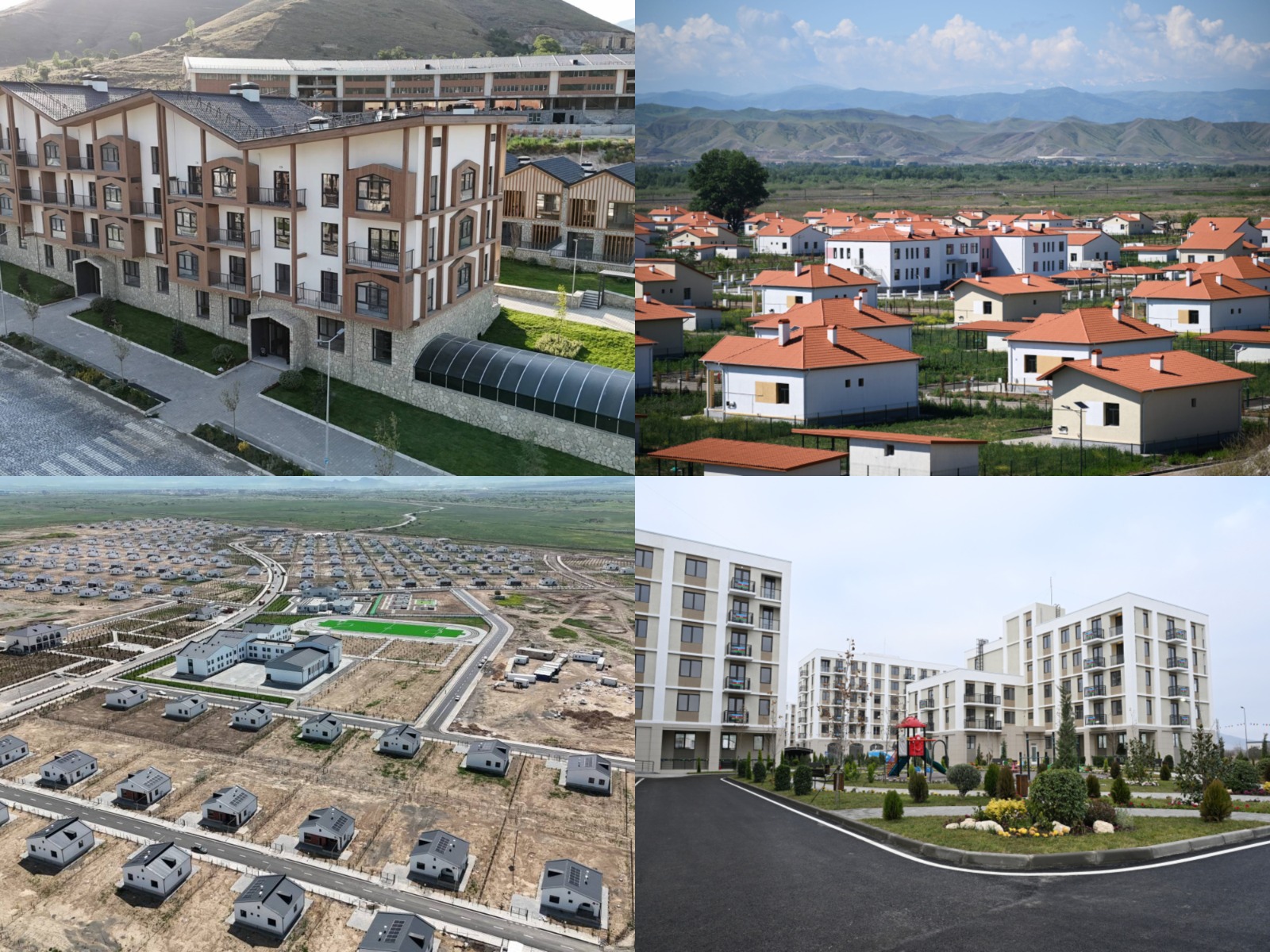
Today, Azerbaijan's most notable urban development projects are being executed in the liberated Garabagh and East Zangezur economic regions. The country is carrying out comprehensive reconstruction work in these territories that is considered unprecedented globally in terms of scale, quality, and speed of execution, thereby presenting a new blueprint for sustainable urban culture in the region.
The new regional urban model centers on: human settlements built according to modern town-planning standards, "Smart City" and "Smart Village" concepts, green energy frameworks and ecological sustainability principles, innovative infrastructural solutions.
Azerbaijan's modern urban development experience has been extensively showcased to the international community during the National Urban Forums held in 2022, 2023, and 2025, as well as on World Habitat Day. These events, organized for the first time in the region, established a high-level international platform for comprehensive urban planning discourse.
Baku: The epicenter of the global urban agenda
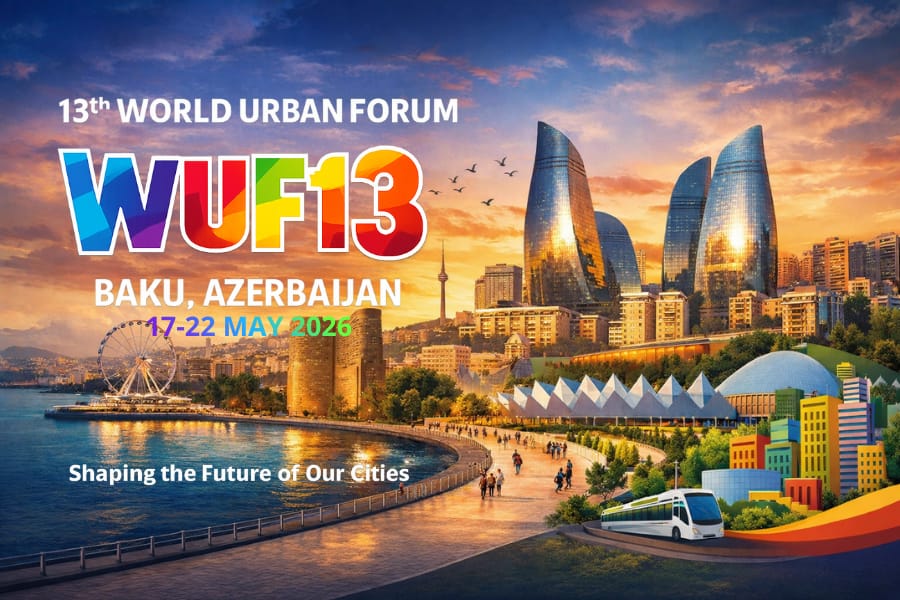
Baku will not merely host another international event; it will transform into the primary discussion hub for the global urban agenda. Within the framework of WUF13, critical topics will be widely debated, including: the future of sustainable cities, challenges posed by climate change, inclusive, safe, and resilient urbanization, modern urban governance and the development of human settlements. These discussions are poised to shape the future directions of global urban planning policy.
Furthermore, this session holds immense significance for strengthening Azerbaijan's international standing, presenting its architectural and planning milestones to the global community, and demonstrating the country's concrete contributions to the sustainable development agenda.
Other news in this section


