The Azerbaijan State News Agency

Expert: Reconstruction of territories such as Garabagh presents a rare opportunity to rethink very structure of urbanism
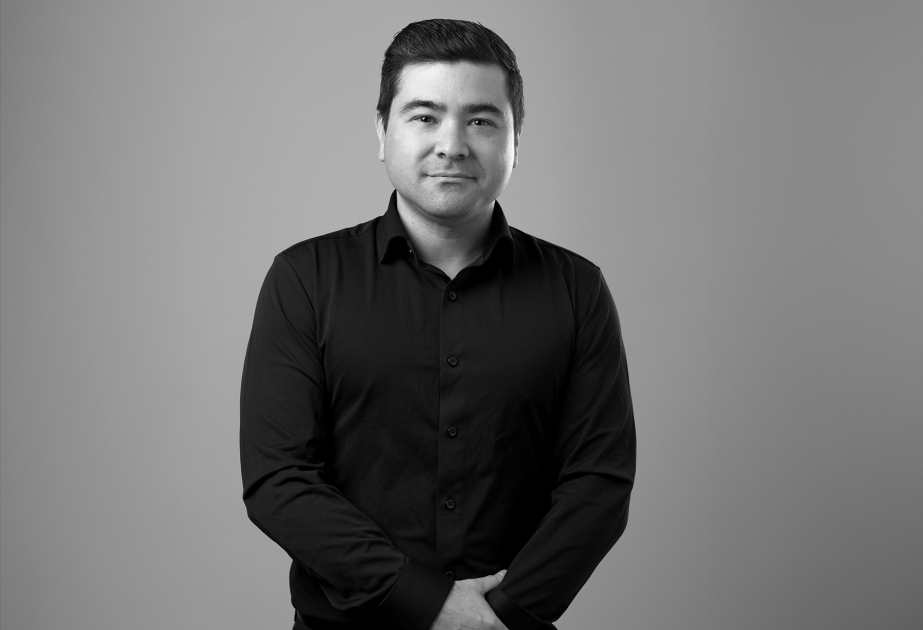
Expert: Reconstruction of territories such as Garabagh presents a rare opportunity to rethink very structure of urbanism

Baku, May 18, AZERTAC

AZERTAC presents an interview with Dr. Rafael Luna, architect, urban researcher, and director of the Infra-Architecture Lab. He is also co-founder of PRAUD and Senior Lecturer at the University of Technology Sydney.

- Why is Azerbaijan’s reconstruction process particularly significant in today’s global urban context?

- Azerbaijan’s reconstruction and urban transformation efforts arrive at a particularly important moment globally because cities are increasingly being forced to rethink their relationship to climate, infrastructure, housing, resources, mobility, and collective life. In many parts of the world, urban development remains constrained by outdated zoning models, fragmented infrastructures, and highly consumptive patterns of growth. The reconstruction of territories such as Garabagh, however, presents a rare opportunity to rethink the operational structure of urbanism itself.

What makes this process especially compelling is that reconstruction is not simply about replacing what was lost. It creates the possibility to test new forms of living, new infrastructures, and new relationships between architecture, ecology, technology, and community. In many ways, the future of sustainable urbanism will depend not only on how cities grow, but on how they reorganise systems of housing, production, mobility, environmental management, and public life into more integrated and resilient models.

- What role can architecture and infrastructure play in shaping more sustainable and resilient cities?

- Through the work developed at the Infra-Architecture Lab, we explore what we call hybrid or productive architecture — architectural and infrastructural systems that integrate the production and management of resources directly into the built environment. Historically, cities have separated housing, industry, ecology, transportation, energy, and infrastructure into isolated zones. Increasingly, resilient cities will depend on hybrid urban typologies where these systems become integrated into shared operational frameworks.

Rather than treating infrastructure as hidden technical systems operating independently from architecture and public life, future urban models can integrate renewable energy generation, biodiversity systems, water management, mobility networks, productive landscapes, and public amenities into multifunctional infrastructures. A single system can simultaneously provide housing, support biodiversity, generate energy, collect water, reduce urban heat, and activate public space.

One of the most significant opportunities for Azerbaijan is the possibility of developing cities that are environmentally productive rather than environmentally consumptive from the beginning.

- How should cities respond to changing demographics and new patterns of urban life?

- This relates directly to changing demographic realities. Around the world, cities are facing major shifts in household structures, including ageing populations, smaller family units, migration, and the rapid growth of single-person households. New urban developments should therefore not be conceived as static models, but as adaptable frameworks capable of evolving.

Hybrid typologies offer important opportunities because they can support mixed-use living, multi-generational communities, local economic production, and flexible housing systems that respond to changing social conditions.

Density also needs to be reconsidered. Too often, density is discussed only quantitatively through floor area ratios or population numbers. However, the vitality of cities depends on the qualitative relationship between density, public space, mobility, accessibility, and typological diversity. Successful urban environments create proximity between housing, work, culture, recreation, and infrastructure, allowing daily life to function through pedestrian networks and accessible public transportation rather than long-distance dependency.

- Why are collective memory and smart technologies both essential for the future of urban development?

- Another critical aspect of future urbanism is the integration of collective memory into contemporary development. Cities are not simply technological systems; they are accumulations of history, identity, infrastructure, and social experience layered over time. One of the risks of rapid urban development is the production of generic environments disconnected from local culture and memory.

This becomes particularly meaningful within post-conflict reconstruction. Preserving traces of history while simultaneously introducing new infrastructures and contemporary urban systems creates continuity between past and future. Collective memory becomes part of the cultural and spatial richness of the city itself.

At the same time, the role of smart technologies deserves reconsideration. Many contemporary smart-city models remain focused primarily on data collection, monitoring, surveillance, and optimisation. However, the next generation of smart cities should move beyond passive data gathering toward adaptive urban intelligence — cities that can learn, evolve, and respond dynamically to environmental and social change.

- What opportunity does WUF13 create for Azerbaijan and the wider South Caucasus region?

- Hosting global events such as World Urban Forum 13 places Azerbaijan within the broader international conversation about the future of cities. The forum’s focus on housing, resilience, reconstruction, climate adaptation, and sustainable urban development reflects many of the central questions currently shaping global urban discourse.

For Azerbaijan and the South Caucasus more broadly, there is a unique opportunity to position the region as a laboratory for future-oriented urbanism. Few regions currently can rethink urban systems at such a scale while simultaneously engaging with questions of sustainability, reconstruction, demographic transformation, environmental transition, and technological change.

The future of sustainable cities will depend on how architecture, infrastructure, ecology, mobility, memory, and public life are reorganised into integrated urban systems capable of adapting over time. Reconstruction becomes more than rebuilding — it becomes an opportunity to imagine new forms of urban life that are resilient, productive, ecologically integrated, and deeply connected to both people and place.

Author – Tamilla Mammadova

Share news on social media

Follow us on social network

Media: Azerbaijan showcased its urban development vision to the world at WUF13 platform

Event held in Azerbaijan Military History Museum

Azerbaijan’s Independence Day celebrated in Yekaterinburg

Azerbaijan Technical University, Kazakh universities explore cooperation opportunities

Kazakh delegation visits Azerbaijan

Azerbaijan, UK expand cooperation in higher education

Uzbek delegation visits Azerbaijan’s Central Bank

Azerbaijani Ambassador presents his credentials to Mauritanian President

UN chief 'disappointed' after nuclear treaty conference fails to reach agreement

Kingdom of Eswatini invites Azerbaijan to its Investment Conference in July

Türkiye captures 10 ISIS suspects in Syria, including figure linked to Ankara train station attack

President Ilham Aliyev: WUF13 represents another meaningful contribution by Azerbaijan to multilateralism and collective action for a better future

Speaker of Azerbaijan’s Milli Majlis visits Azerbaijan’s Consulate General in St. Petersburg

Death toll rises to 82 in north China coal mine accident

Four countries agree to establish joint company as part of Green Electricity Transmission and Trade project

Top stories update

D-8 Secretary-General participates in WUF13 and high-level energy and urban dialogue

Global media highlights WUF13's role in shaping new roadmap for global urban policy

569 NGOs from 103 countries sign Baku Declaration on WUF13

Hikmet Hajiyev thanks media representatives covering WUF13

Coordinator General of International Affairs of Mexico City: Azerbaijan organized WUF13 in an exemplary manner

BEU students make their mark with key projects at WUF13

Anacláudia Rossbach: We need collective action based on human-centered urban development

UN-Habitat representative: Azerbaijan demonstrates a successful approach to urban regeneration

Baku is a vivid example of successful urban transformation and development toward sustainability, says Dean of WSB University

Azerbaijani schoolchildren win awards at international science olympiad

Azerbaijan demonstrates an example of sustainable and comprehensive urban recovery, says expert

Call to Action addressing global housing crisis adopted in Baku

UN Deputy Secretary-General tours “ASAN Khidmet” in Baku to familiarize herself with its activity VIDEO

UN Deputy Secretary-General tours “ASAN Khidmet” in Baku to familiarize herself with its activity VIDEO

Anacláudia Rossbach: A great and well-organized WUF13 took place under Azerbaijan’s leadership

Maimunah Mohd Sharif congratulates Azerbaijan for successfully hosting WUF13

® Azercell certified as a Great Place to Work

Mayor of Nkayi: WUF13 was held at a high level and fully corresponds to the scale of the international event

Iran fires 3,300 missiles, drones at UAE since start of conflict

Iran's IRGC says 35 more ships cross Hormuz Strait in past 24 hrs in coordination with its navy

Baku Call to Action

UN-Habitat representative: Youth must be recognized as an integral part of decision-making

Baku has provided an exceptional platform for hosting WUF13, says UN-Habitat Regional Director

Pakistani participant: Azerbaijan plays a significant role globally in urban planning

Azerbaijan, Somalia explore prospects for cooperation

UN official: Baku stands as an example of renewal and sustainability at WUF13

Top stories update

UN-Habitat Executive Director thanks Azerbaijani government for hospitality

Spanish urbanist: Role of public spaces is key to quality of urban life

Head of the UN Resident Coordinator's Office: WUF will create concrete and tangible results for society, not only globally, but also domestically

Azerbaijan demonstrates important role of culture, history, and education in sustainable development, says Nigerian official

Housing rights discussed at WUF13

Azerbaijan’s role in sustainable development and urban transformation is highly valued by experts, says expert

Giorgi Khaindrava: Excellent organization of WUF13 carries significant importance for the wider region

Official closing ceremony of WUF13 held

Slovenian official: SEA Protocol is directly linked to 11 of the 17 SDGs

Baku could become a pilot platform for hybrid urban models of the future, says international expert

From Santiago Peña, President of the Republic of Paraguay

American urbanist: Azerbaijan and WUF13 play an important role in sharing experience on sustainable urban development

Mayor of Banjul thanks Baku for bringing participants together

Anar Guliyev: Signing of letter of intent on implementation of “Baku Standards” is among key legacy outcomes of WUF13

Amina Mohammed: Baku proved to be a very suitable place for discussions

Director of UN-Habitat Global Solutions Division: UN-Habitat stands ready to continue collaboration on urban development

From Salim bin Mohammed AlMalik, Director-General of ICESCO

UN-Habitat GCC Representative: Large-scale events fundamentally transform the appearance and functionality of a city

From Kim Jong Un, Chairman of the State Affairs Commission of the Democratic People's Republic of Korea

‘Digital resilience and cybersecurity are becoming key to the future of cities’

Israeli researcher: WUF13 taught me that there are many more people living in slums

National Coordinator: WUF13 was successful through strong partnerships

From Hamad Bin Isa Al Khalifa, King of Bahrain

Interesting moments from the final day of WUF13 – PHOTOS

From Sheikh Mansour bin Zayed Al Nahyan, Vice President, Deputy Prime Minister, Chairman of the Presidential Court of the United Arab Emirates

Greg Munro: Baku successfully combines preservation of historical heritage with modern urban development

Slovenian delegate appreciates Azerbaijan’s strong organizational standards and hospitality

From Sheikh Mohammed bin Rashid Al Maktoum, Vice President, Prime Minister of the United Arab Emirates and Ruler of Dubai

From Sheikh Mohamed bin Zayed Al Nahyan, President of the United Arab Emirates

Former Executive Director of UN-Habitat: Twelfth Malaysia Plan covers all major topics

Patricia Scotland: Azerbaijan brings the world together to discuss important issues related to urbanization

Columbian expert: All initiatives implemented by Azerbaijan under the “smart city” concept are commendable

Kenyan delegate at WUF13 praises warm hospitality experienced in Azerbaijan

Prime Minister Ali Asadov attends CIS Council of Heads of Government meeting in Ashgabat

UN Deputy Secretary-General hails Azerbaijan's reconstruction process

Anar Guliyev: Azerbaijan is ready to share its experience in the preparations for WUF14

Fiona McCluney: Housing problems are not just problems of first-world countries

Amina Mohammed: World Urban Forum is a key global platform on sustainable urbanization

Speaker of Milli Majlis informs participants of CIS Parliamentary Assembly plenary session about WUF13

Matt Sykes: A warm attitude in Azerbaijan has become an example for strengthening human ties in urban planning

Anar Guliyev: WUF13 has become a global platform for dialogue and partnership

Élène Levasseur: The main challenge of modern cities is tackling climate change

Session on “Coalition of builders promoting productive partnerships in the Global South” held at WUF13

Anacláudia Rossbach: WUF13 brought together a record number of participants

UN official: Demining will take a long time

WUF13 Flag lowering ceremony of Azerbaijan and United Nations held VIDEO

WUF13 Flag lowering ceremony of Azerbaijan and United Nations held VIDEO

Digital transformation of historical cities and “smart reserve” approach discussed at WUF13

Multicultural smiles: New photo report from WUF13

UN-Habitat: Housing is a basic human right that must be prioritized within the global urban agenda

Ali Asadov: Azerbaijan strengthening its reliable transport-logistics position between Europe and Asia

Ambassador: I will be happy to welcome everyone in Mexico

Role of Urban Thinkers Campus Initiative as a global action platform highlighted at WUF13

From Willem-Alexander, King of the Netherlands

WUF chairmanship handed over from Azerbaijan to Mexico

UN official congratulates Azerbaijan on successful hosting of WUF13

Anacláudia Rossbach: WUF13 features extensive international participation and high activity

Anaclaudia Rossbach: The outcome of WUF13 will be measured by the implementation of commitments made in Baku

Mexico begins preparations for WUF14