Nearly half of the world’s children exposed to at least three overlapping climate threats – UNICEF
Baku, June 16, AZERTAC
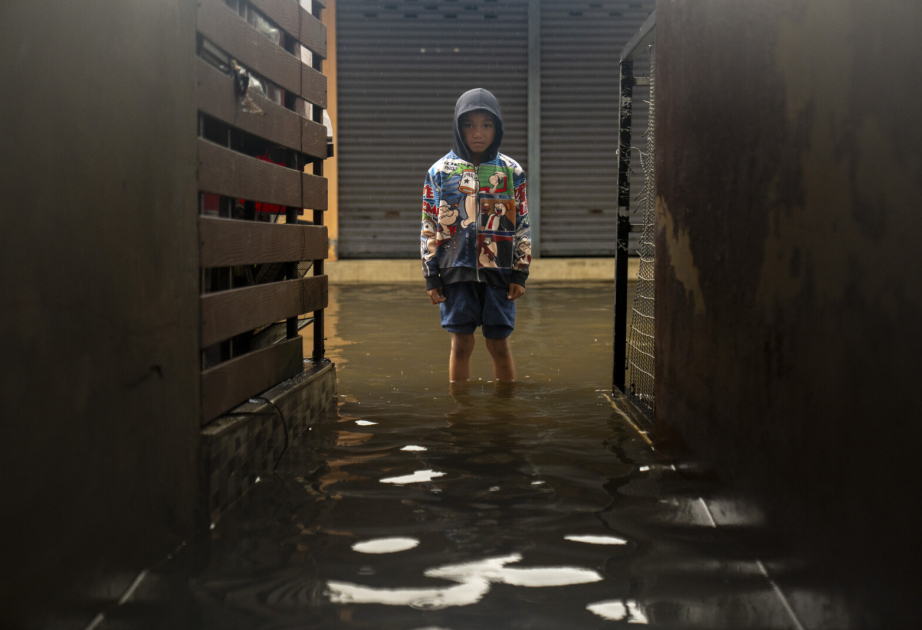
Nearly half of the world’s children – or 1.1 billion – are now exposed to at least three overlapping climate hazards, threatening their health, education, and survival, according to a new UNICEF report launched today. Almost every child in the world faces at least one climate hazard, while more than 4 million could face as many as six overlapping threats, the report warns.
The Children’s Climate Risk Report 2026 uses the latest available data to map children’s exposure to the eight most frequent climate threats, including coastal floods, droughts, extreme heat, fires, heatwaves, riverine floods, sand and dust storms, and tropical storms. For the first time, the report reveals exactly where – and how intense – multiple and overlapping climate threats are affecting children and the essential social services they rely on, and how governments can take concrete actions to respond.
“The lives of children continue to be upended by the impact of heatwaves, wildfires, droughts, and floods,” said UNICEF Executive Director Catherine Russell. “Half of the world’s children are now living with at least three overlapping climate threats shaping their daily lives.”
Drought, extreme heat, and heatwaves are the most widespread combination of climate hazards, with over 296 million children living in areas exposed to all three conditions, according to the findings. The second most common combination – drought, extreme heat, and tropical storms – leaves more than 115 million children worldwide exposed to these overlapping threats.
In the Sahel region of Africa, one of the hardest hit, more than 4 million children face the triple threat of heatwaves, extreme heat, and sand and dust storms, while in countries across Asia, for example Bangladesh, Myanmar, and Pakistan, children are exposed to more climate hazards at once and at a higher intensity than anywhere else in the world.
High-income countries are not immune to overlapping climate shocks. In Italy, for example, more than 6 million children are exposed to prolonged heatwaves and drought, the data show. Yet the country illustrates how investment in climate change adaptation can mitigate some of the risks children face, while highlighting the need for further action as the climate crisis intensifies.
In addition to the eight most frequent climate hazards, the report analyses children’s exposure to air pollution and malaria; two risks that are highly sensitive to the effects of climate change. Data show that air pollution affects nearly every child globally, while 1 billion children are exposed to malaria, adding another layer of danger for children already facing multiple climate hazards.
Other news in this section


