Nigar Arpadarai: Cities must transform into innovation labs
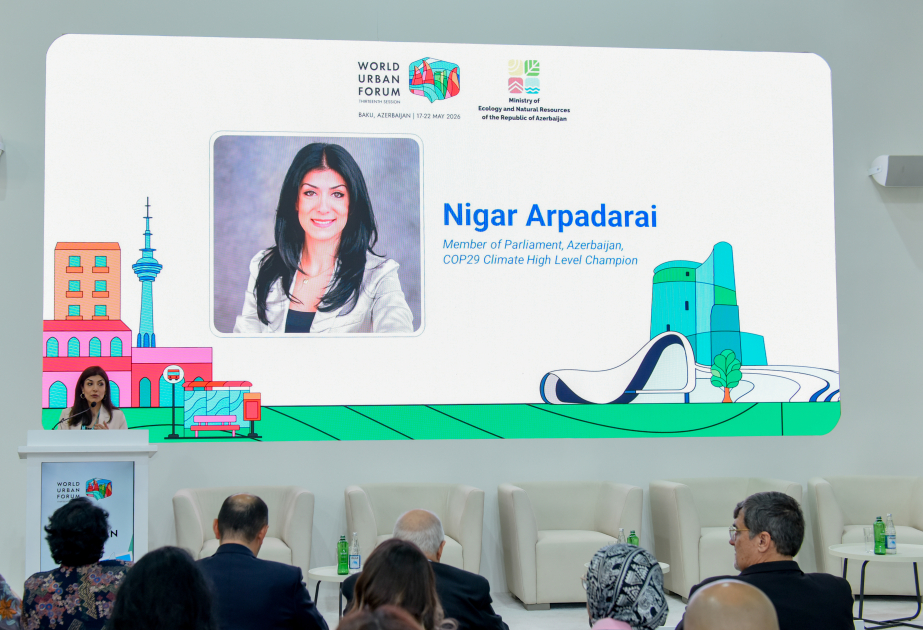
Baku, May 20, AZERTAC
"Urban spaces generate the bulk of global emissions, consume the majority of the world's resources, and, at the same time, stand on the front lines of climate impacts. If we want sustainable, resilient, and livable cities, we cannot continue with the 'take, use, and dispose' mindset. This model no longer works. We must transition to an economic model where materials are kept in circulation, reused, recycled, and redesigned for as long as possible. Plastic pollution clearly demonstrates just how urgent this transition is," said Nigar Arpadarai, the COP29 Climate High-Level Champion and Member of the Milli Majlis, during an event titled " Tackling Plastic Pollution: Promoting Liveable Cities and a Circular Economy," organized by the Ministry of Ecology and Natural Resources as part of the 13th Session of the World Urban Forum (WUF13).
"From rivers flowing into the Caspian Sea to the rapidly urbanizing regions of Eurasia, the Middle East, and the Global South, we see how unmanaged plastic waste damages ecosystems, threatens biodiversity, impacts tourism and food systems, and poses severe risks to human health. This problem is particularly relevant in our region because environmental systems do not recognize political boundaries. Pollution spreads through rivers, seas, trade routes, and supply chains. For this reason, regional cooperation is a necessity, not a choice. Within the framework of COP29, Azerbaijan placed special emphasis on the importance of practical climate action, inclusive partnerships, and sustainable urban development. Cities must transform into innovation labs by investing in sustainable waste management systems. They should promote 'green' public procurement, support businesses in creating innovative solutions, and reduce single-use plastic consumption. However, infrastructure alone is not enough. We also need education, awareness-raising, and ensuring community participation in this process. Therefore, the education system must absolutely be involved. This topic should also be widely discussed and disseminated among the youth. Young people are already leading some of the most innovative environmental movements on a global scale. Civil society organizations, meanwhile, continue to play a crucial role in mobilizing communities and holding institutions accountable. The private sector must also transition from making commitments to taking concrete, measurable action, especially in the packaging, manufacturing, and supply chain sectors. Governments, on their part, must formulate policies and incentives that make sustainable choices accessible and economically viable," Nigar Arpadarai noted.
Other news in this section


