South Korea closes 4,000 schools permanently amid demographic crisis
Baku, December 29, AZERTAC
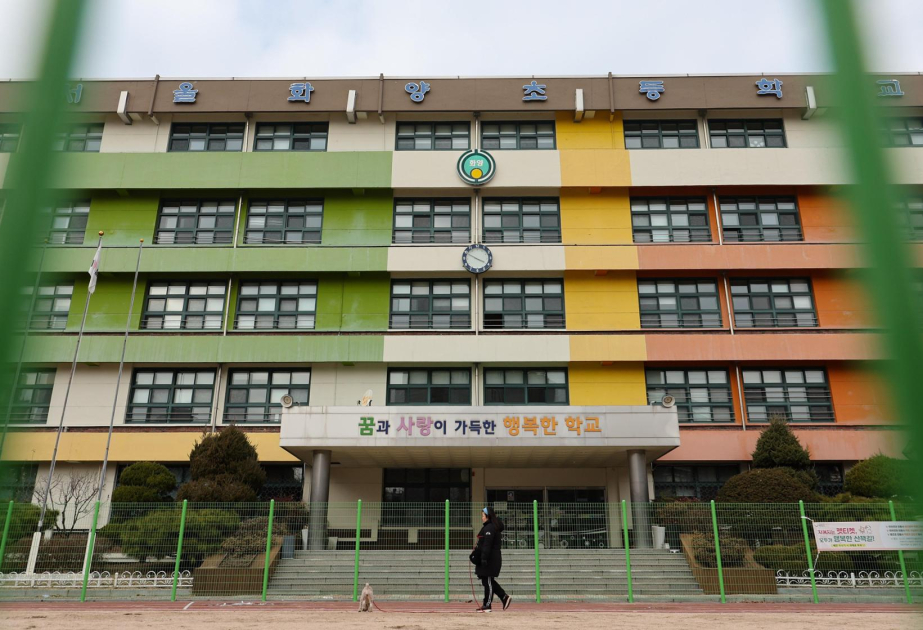
More than 4,000 elementary, middle and high schools across South Korea have shut their doors as the country’s student population shrinks, according to South China Morning Post.
According to the Ministry of Education’s latest figures, revealed on Sunday by Representative Jin Sun-mee of the ruling Democratic Party of Korea, 4,008 schools under 17 regional education offices nationwide have closed so far as student numbers continue to decline.
Junior schools account for most closures, with 3,674 shut down permanently, compared with 264 middle schools and 70 high schools. Over the past five years alone, 158 schools have closed, and an additional 107 schools are projected to shut down over the next five years.
South Korea’s birth rate ― the lowest in the world with the total fertility rate remaining below 0.8 ― is the chief reason behind this contraction. A rate of about 2.1 children per woman is needed to keep the population the same.
The pace of closures also suggests that enrolment decline is expected to accelerate in provincial regions rather than in the capital area.
The largest number of school closures is in North Jeolla province, which has 16 schools affected. This is followed by South Jeolla province with 15 closures, Gyeonggi province with 12, and South Chungcheong province with 11 schools closing.
The country’s broader demographic outlook suggests that the contraction will only intensify in the coming years, if not decades.
The state run Korean Educational Development Institute estimates that the number of junior, middle and high school students stands at about 5.07 million this year and is projected to decrease to roughly 4.25 million by 2029 – a drop of more than 800,000 pupils in just six years. This enrolment figure would be less than half of the more than 10 million students recorded in the 1980s.
The ministry data also reveal serious gaps in how closed school sites are being managed. Of the 4,008 schools that have been shut down, 376 remain unused. Among them, 266 have been left idle for more than a decade, and 82 have sat abandoned for over 30 years.
According to the lawmaker’s office, the figures suggest that follow up management and reuse of former school facilities are lagging behind the speed of closures, which raises concerns about wasted public assets.
“A considerable number of schools have already closed, and this will continue as student numbers decline,” Jin said. “We must not stop at simply shutting schools down, but instead develop a long term road map to repurpose them as assets for local communities.”
Other news in this section


