Mikayil Jabbarov: The non-oil and gas sector has already become the driving force of our economy – EXCLUSIVE INTERVIEW
Baku, June 10, AZERTAC
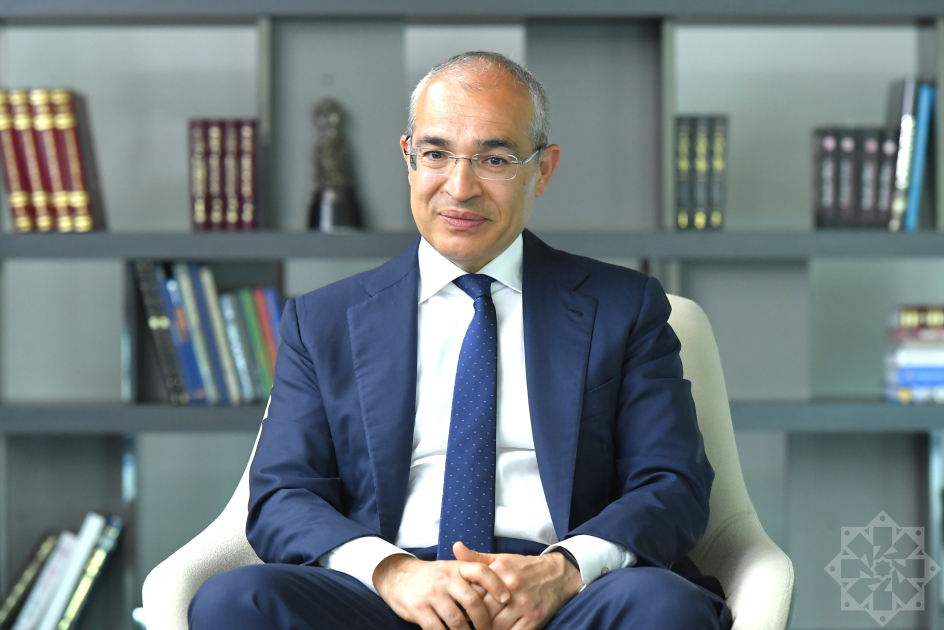
Minister of Economy of Azerbaijan Mikayil Jabbarov gave an interview to Public Television (ITV) and the Azerbaijan State News Agency (AZERTAC). AZERTAC presents the interview.
- Mr. Jabbarov, the performance of the Azerbaijani economy is a matter of concern to every citizen. Our income, jobs, daily life, and future plans depend on it. We thank you for taking the time for this interview with Public Television and the Azerbaijan State News Agency.
- Thank you very much.
- Azerbaijan possesses a very large volume of strategic foreign exchange reserves, and the country's external debt level is very low. This grants the country immunity and resilience against external influences and shocks. On the other hand, some view this as untapped development potential. What does this economic approach promise in the medium and long term?
- I would like to answer the question by looking at where we have come from and where we are heading. I think that when talking about our goals, the question arises: "How do we want to see the country's economy?" The answer is that we want to see the country's economy built on a solid financial foundation while remaining diversified—meaning it is not dependent on a single natural resource, such as oil and gas, or on any one sector, but rather is supported by a broad range of economically sound sectors.
On the other hand, whether we approach this from the perspective of an economist, a policymaker, or a citizen, probably the most important factor for every citizen is the economy's potential to create new jobs. Here, we are talking about economic opportunities that require a certain level of knowledge and skills and provide the foundation for a decent standard of living.
Naturally, the next question is how we should achieve this. In many cases, we speak about the development of the non-oil sector as a priority. However, not every area can be considered a priority. By carefully analyzing our strengths and weaknesses, including the time factor, we base our approach on developing priority sectors in the country's economy, both in industry and services.
What are our opportunities and limitations? You touched upon our opportunities. As a result of the policy successfully implemented over many years by our esteemed President Ilham Aliyev, Azerbaijan's strong macroeconomic and macro-fiscal resilience has been ensured. Today, our foreign exchange and gold reserves exceed the country's gross domestic product (GDP). The dynamics of recent years show that despite all external shocks and crises, the country's external debt is on a downward trend while its reserves continue to grow. This is the overall picture.
On the other hand, the size of our domestic market is limited. In other words, a successful and sustainable economic model cannot rely solely on domestic demand. We must pursue an export-oriented economic model, and this export orientation should not be limited to the production and export of goods. It also means that services provided within the country should be export-oriented. The tourism sector, as well as financial and other professional services, are good examples. In these sectors, foreign-currency earnings are generated not through the export of goods, but through the provision of services.
Of course, we will return to this topic. To achieve these goals, a number of factors are important—namely, clear and consistent state policy, public and private investment, human capital, and skills. The strength of any economy is measured by its ability to produce goods and services that are competitive in both price and quality. Especially in areas where we do not yet have long-standing traditions or deep expertise, this is directly linked to know-how, technology, and the level of knowledge and skills possessed by our citizens, companies, and other economic actors.
- Currently, which areas of the non-oil and gas sector account for the largest share of gross domestic product? You mentioned the non-oil and gas sector and the issue of priority areas. To ensure the sustainability of economic development, which sectors should be strengthened alongside traditional industries? What role can investment play in this process?
- Again, if we look at the bigger picture, it is useful to consider both our starting point and where we stand today. If we examine the structure of our economy in 2025, we see that the non-oil sector accounts for 71.5 percent of Azerbaijan's economy. This means that the oil and gas sector's share is less than 30 percent. Twenty years ago, this figure was below 45 percent, standing at around 43.5–43.6 percent. This demonstrates the progress we have made and confirms the success of the policies that have been implemented. It is worth recalling that during this 20-year period, the country also experienced a severe currency devaluation, one of the most significant shocks in our modern economic history.
Despite this, the structure of the country's economy has undergone a substantial transformation. However, has this transformation reached a level that fully satisfies us? No, it has not. Therefore, the key question becomes: Which sectors should be regarded as priorities? I believe that identifying these priority sectors is an inclusive process. In other words, it is not determined by a single ministry but through coordinated government policies, including through the Economic Council mechanism. Today, we identify a number of priority sectors and direct state support instruments, institutional mechanisms, and incentives for entrepreneurs toward these areas.
First and foremost, I would mention the non-oil industrial sector. It is no secret that industrial capacity is one of the foundations of a country's economic resilience. Azerbaijan has a number of advantages in this regard, many of which also apply to other sectors. However, industry differs from trade in that it requires a longer-term perspective because the return on investment takes more time. At the same time, it promotes the development of human capital and know-how, including knowledge, skills, technology, engineering expertise, manufacturing capabilities, and the ability to market products successfully. Azerbaijan's strengths include political stability, macroeconomic and fiscal stability, competitive energy prices for industry, and well-developed infrastructure.
When speaking about the non-oil sector, we also see significant potential in the development of mining. This is due to both natural and historical factors. The natural factor is that Azerbaijan possesses substantial geological reserves that are important for the mining industry. By historical factors, I mean that prior to our great Victory, Azerbaijan had access to only a limited portion of its mineral resources. Most of the country's reserves of gold, copper, silver, and potentially critical minerals are located in the liberated territories. Even though only a relatively short period has passed, we are already seeing tangible results in this sector. We are highly optimistic about its prospects. Let me also note that, in accordance with the decree signed by President Ilham Aliyev in April, the draft state program for the development of the mining and metallurgical industries is currently in its final stage of preparation.
I would also like to mention the chemical industry. The main reason is that Azerbaijan possesses a strong raw-material base. Thanks to the country's oil and gas resources, we have favorable conditions for the development of high-value-added industries, including polyethylene, polypropylene, polymers, and other petrochemical products.
Agriculture should also be highlighted. It is both a traditional sector for Azerbaijan, where the necessary expertise and skills already exist, and one that plays an important role in non-oil exports. Furthermore, under the relevant state program recently approved by President Ilham Aliyev, the sector benefits from regulatory support, capital investment, infrastructure development, and the attraction of private investment. Azerbaijan's favorable climate, strategic geographic location, and existing trade agreements make agriculture one of our priority sectors.
In the services sector, transport and logistics deserve particular mention. It is no secret that Azerbaijan has become an important transport hub. This represents a significant achievement. Given our geographic circumstances, including the absence of direct access to the open sea, Azerbaijan's emergence as a transport hub along both the Middle Corridor and the North–South Transport Corridor is the result of many years of consistent policy efforts. At the same time, much of the potential created by these developments has yet to be fully realized.
I have already mentioned tourism. Without going into detail, I can say that, based on the instructions of the country's leadership, a comprehensive approach is being pursued, covering everything from increasing the number of visitors to Azerbaijan to expanding domestic tourism infrastructure.
Finally, I would mention two areas not as sectors, but as fundamental conditions for economic development. One is digitalization, including information and communication technologies (ICT) and data centers. We no longer view digitalization as a standalone sector of the economy; rather, we see it as an essential prerequisite for successful economic activity across all sectors.
The second is energy. I emphasize energy in a broader sense, rather than oil and gas specifically. Energy is a critical prerequisite for the development of nearly all sectors of the economy, and for this reason we also consider it among our priorities.
- Mr. Minister, you touched upon the development of the non-oil sector and various industries. The figures are indeed impressive. At the same time, you mentioned the potential of these sectors to generate foreign-currency earnings through exports. Which products and services do we aim to export more of, and to which markets? Is there a point that could be described as a breakthrough in this process? If such a point is reached, would it signify a transition to a new stage of development?
- It is a good question. When we analyze exports, we always examine non-oil exports separately. This is because the factors affecting oil and gas exports are relatively clear and transparent. The exportable volumes and international market prices are largely determined by external conditions, and our ability to influence either through economic policy tools is quite limited.
When it comes to non-oil exports, however, this is an area that can be directly influenced by government policies and support mechanisms. There is also a third pillar that is sometimes overlooked in economic discussions—the export of services. In fact, this represents a substantial component of our export potential. I have already mentioned examples such as tourism, professional services, and other service-based activities.
Looking at recent trends, we can see that Azerbaijan has nearly doubled its non-oil exports over the past six years. This positive momentum has continued this year as well. During the first four months of the current year, non-oil exports increased by more than 17 percent. This is a very strong growth rate. At the same time, we focus not only on the volume but also on the quality of non-oil exports—that is, the composition and diversity of the products being exported.
As I mentioned earlier, economic resilience—our primary objective—depends on expanding the range of export products. Alongside diversification, the expansion of export markets is equally important. It is no secret that countries around the world apply various tariff and non-tariff barriers, particularly in non-oil trade. Therefore, a significant share of our exports is directed toward countries with which we have free trade or preferential trade agreements, where tariffs are eliminated on a reciprocal basis.
If we look at the current situation, we see that Azerbaijan's free trade agreements are concentrated primarily within the post-Soviet space. While this creates opportunities for our exporters, it also imposes certain limitations. Therefore, we seek to expand our export geography through new preferential trade arrangements. Today, we are already seeing positive dynamics under preferential trade agreements with countries such as Türkiye, the United Arab Emirates, and Pakistan, reflected in the growing volume of non-oil exports to these markets.
The second key element concerns the products that Azerbaijan can produce competitively. This relates directly to the issue of investors and investment that you raised earlier. When discussing investment, we often think primarily of private investors, particularly foreign direct investors. In reality, however, the state itself is also a major investor in the economy.
At the same time, attracting private investment remains a top priority. This is because investors bring not only capital. Azerbaijan has sufficient financial resources, but investors also bring knowledge and skills. This enables the production of new goods, the expansion of existing industries, improvements in productivity, and reductions in production costs through the application of modern technologies.
Naturally, there are both opportunities and challenges. The opportunities stem from Azerbaijan's favorable business environment, legal framework, and, most importantly, its strong reputation among investors. This reputation was built through decades of successful cooperation with major international companies, beginning with the "Contract of the Century." Azerbaijan has consistently honored all of its contractual commitments.
At the same time, we face certain challenges. One of them is the relatively limited size of the domestic market. Therefore, we must ensure that investors who establish operations in Azerbaijan gain access not only to the domestic market but also to regional and international export markets.
Another challenge is access to finance. When discussing investment, there is often an assumption that a foreign investor provides 100 percent of the required capital. In reality, international practice is different. The investor's own capital generally accounts for only around 30–50 percent of total investment, while the remainder is financed through loans and other financial instruments obtained from domestic financial markets.
Therefore, access to finance—particularly the availability of long-term financing at competitive interest rates—is a decisive factor, especially for industrial projects. This is why we closely link export growth with the attraction of private investment. We continuously monitor this trend, and the encouraging news is that private investment continues to grow steadily.
As for the broader concept, we must recognize that export expansion is a long-term process. We focus simultaneously on four key elements: product quality, brand recognition, reliable transport and logistics connectivity, and access to finance. Financing is essential not only during the investment phase but also during the process of conducting trade and exporting goods and services.
Azerbaijan consistently records a trade surplus. In other words, the value of our exports exceeds the value of our imports. This places the country in a favorable position and contributes both to the stability of the national currency and to overall price stability.
If we look across the region, we can see that high inflation and currency depreciation in many countries often stem from persistent trade deficits rather than trade surpluses. From this perspective, Azerbaijan has quite a strong foundation.
- You have outlined a number of support mechanisms. What additional measures could provide new momentum for achieving the country's development goals? Are there any new instruments under consideration?
- We probably have not yet fully utilized some of the tools already at our disposal, as many of them are still at different stages of development. For example, industrial zones remain one of the key instruments supporting industrial growth and export expansion. In particular, the Alat Free Economic Zone, which is export-oriented and highly specialized, is an important example of state investments. At the same time, state investment is not directed solely toward sectors that generate direct economic returns. It also covers social infrastructure, security field, and the investments required for the Great Return program, ranging from road construction to housing for citizens returning to the liberated territories.
If we return to the elements that encourage export and industrial development, we see both existing zones—the industrial zones and the free trade zone—as permanent tools. Our current focus is on improving their economic efficiency, primarily through the attraction of new investors.
In addition, of course, the government continuously seeks to introduce new instruments. A moment ago, for example, we spoke about financial accessibility and touched upon bank loans. We are currently working to expand the mechanism for subsidizing interest rates on bank loans. This is not a new instrument for Azerbaijan. It was first applied extensively during the COVID-19 pandemic and produced positive results. Today, we are once again expanding this mechanism and aim to broaden its application beyond the liberated territories and selected sectors.
The second issue I want to note is the measures aimed at covering, or reducing and stabilizing, logistics and transport costs. We are currently examining them. The decision on the third issue, which is currently under relevant discussion, has not yet been adopted, but we hope that it will conclude successfully. All enterprises—our taxpayers—have value-added tax (VAT) accounts. In our country, based on the relevant legislative mechanism, value-added tax accounts are separate, special accounts. We are considering the possibility of using the funds in those accounts for other payments to the state, especially for social insurance payments. In the event that these tools are applied, naturally, the entrepreneur's need for additional financial resources decreases, or conversely, their capabilities expand. The entrepreneur can then direct it more actively toward business growth.
Another tool that exists and is successfully used is the investment promotion mechanism. Here, if investment is carried out in priority areas determined by the state, entrepreneurs are granted a number of tax and customs concessions. Also, as you know, a wide package of tax exemptions is applied in a number of our territories, including the territories liberated from occupation and the Nakhchivan Autonomous Republic. I would also like to note that one of the tools we use through the Business Development Fund of Azerbaijan is the allocation of preferential loans to entrepreneurs. Naturally, we cannot provide loans that fully meet market demand, but this still represents a quite high figure. Every year, more than 200 million manats in loans are disbursed in this manner. Those loans are provided not to large projects, but mostly to small and medium-sized entrepreneurs. As for large projects, the state accepts capital risk by participating as an investor and minority shareholder, and we actively use this tool as well.
Particularly, if we are talking about the non-oil sector, among the projects that will contribute to increasing our export potential in the short and medium term, I would like to note the construction of the Dashkasan iron ore plant. This is a project requiring a substantial investment of around 2 billion manats. If we continue with the mining sector, we can also include the project involving the exploitation of the Zod deposit in our liberated territories. Along with these, I would also like to cite as an example the project aimed at doubling aluminum production from its current level, and it can be said that several other projects are currently in an active phase as well.
One element here is directly related to green energy. As you know, the energy transition is progressing quite successfully in our country. To date, two large power stations have already been constructed and are now in operation through the investments of foreign investors. These are the 230-megawatt solar power plant built by Masdar and the 240-megawatt wind power plant built by ACWA Power. The Shafag project is also currently being implemented in the liberated territories with the participation of bp, SOCAR, and other investors. These projects, in addition to contributing to the domestic energy supply, reduce the volume of natural gas previously used for electricity generation and thus expand the country’s export capabilities. I would also like to note that, in the future, we see Azerbaijan not only as an energy producer but also as an energy hub, or energy crossroads. Here, the discussion is not limited to green energy; tangible projects are already being implemented across traditional energy sectors as well, including oil and gas infrastructure.
- Currently, oil production is decreasing. True, as a result of the impact of some geopolitical processes, prices are rising, but it is assumed that this increase is temporary and transitory. Undoubtedly, the importance of this sector as a whole is great for Azerbaijan. Therefore, everyone is interested in understanding the prospects of the oil and gas sector.
- Thank you. It is indeed an important question, because first and foremost, the oil and gas sector continues to play a very large role in our economy. I noted that this sector constitutes 30 percent of gross domestic product (GDP), which is a very significant figure. On the other hand, it plays an important role in generating state revenues. This is true from a purely economic point of view, but it is also clear that this sector will have no real alternative for decades to come. When building our economic policy, we must approach it in this way: while recognizing the importance of the oil and gas sector, we should not tie our development to fluctuations in commodity prices on international markets. Instead, we should focus on ensuring the sustainability of the economy.
When it comes to our oil reserves and developments in the oil and gas sector, we passed the peak of production 16 years ago. This was in 2010, when close to 51 million tons of oil were produced in the country. For comparison, let me note that in 2025, this indicator stood at 27.7 million tons. Yes, compared to that period, natural gas production has increased significantly. However, in value terms, these are not factors that completely replace one another. In the current environment, I would divide our strategy in this field into two parts.
The first is that Azerbaijan still possesses substantial oil and gas reserves. New projects will also be launched, while the continuous operation of existing projects will be ensured. Work is actively continuing on the start of deep gas production from the Azeri-Chirag-Gunashli (ACG) field, the full-scale development of the Absheron field, the commencement of production at the Babek field, the implementation of the second phase of the Umid field, the development of the rich resources of the Bahar and Gum-Deniz fields, as well as the Garabagh project. This is one side of the issue, and therefore our country will remain a reliable oil and gas producer and exporter for many years and decades to come.
On the other hand, we must not forget that, until now, oil and gas production in our country has been carried out using traditional methods. We have not yet applied the unconventional production methods that have emerged in the sector over the past decade, but these opportunities are currently being studied. Relevant resources exist within our country's territory. Various memoranda of understanding and framework agreements have been concluded between SOCAR and a number of foreign partners in this area. However, I would like to emphasize one point: in planning our economy and revenues, we should view these projects merely as an additional opportunity. Even if they do not materialize, our primary objective remains the development of a diversified economy capable of producing competitive products across multiple sectors. We should regard them as a bonus; even without them, we will achieve our main targets.
The second part of the strategy is that we do not intend to lose our country's centuries-old traditions, expertise, and capabilities, or its position in regional and global markets in this sector. This is precisely why you see the activities of SOCAR, our leading company in this field, expanding into foreign markets and becoming increasingly active in recent years. If we look back 18 years, SOCAR's entry into the energy market of brotherly Türkiye, and its ownership today of the country's largest energy investment, one of its most modern oil refineries, its sole integrated petrochemical complex, logistics terminals, and major pipeline infrastructure, marked the beginning of this long-term strategy. What we see today is the result of that vision.
Today, however, SOCAR is acquiring stakes in foreign markets and various projects not only in processing infrastructure but also in upstream production activities. This year, investment projects were launched in the United Arab Emirates and, for the first time, on the African continent, in a major field in Côte d'Ivoire. Participation has also been secured in a gas production project in Israel, and this activity will continue. We believe that Azerbaijan's production base, expertise, and overall role in international energy markets fully justify such expansion.
Let us not forget that today we supply natural gas to 16 countries, thereby contributing to their energy security. Particularly during geopolitically sensitive periods such as the present, this factor further enhances our country's importance. In this regard, we do not engage in these activities as a matter of charity. We offset the decline in revenues from the export of resources produced domestically by operating actively and investing in foreign markets. In return, SOCAR—a company wholly owned by the state—generates dividends and returns that benefit our country.
This is a specific area, and I can cite numerous successful projects in this category. The most recent, in terms of timing, is the acquisition of Italiana Petroli—a major company that includes two oil refineries and several thousand gas stations, holding a 35 percent share of the Italian market. This activity will continue on an ongoing basis. We can also point to the signing of an agreement for the development of the Ustyurt field in brotherly Uzbekistan, together with Uzbekneftegaz and bp. In other words, these activities are continuous in nature.
At the same time, as I mentioned, we must pursue a more active utilization of our country’s existing transport and oil transit infrastructure. In the Caspian basin, where Azerbaijan is located, oil and gas fields belong not only to us but also to our neighboring countries, and we have broad opportunities and extensive cooperation in this area. Today, oil produced in both Turkmenistan and Kazakhstan is transported through Azerbaijan’s infrastructure and delivered to international markets. Naturally, this serves as a crucial element of the Middle Corridor, ensuring energy connectivity while supporting the active operation of our fleet, ports, and transport infrastructure.
Therefore, we view the future of our country’s oil and gas sector with optimism. In fact, I believe we should no longer view this field solely through the prism of oil and gas, but rather as part of the broader energy sector. The ways in which people, companies, and industries consume energy are changing, and we must be fully prepared for these transformations.
Some time ago, a relevant decision was coordinated and adopted regarding the construction of a new oil refinery in our country, which is likely the largest investment project in this sector in recent years. From this perspective, we expect the project to be completed within approximately five to six years. It will be a fully modern refinery designed to meet contemporary requirements. This concerns compliance with modern standards not only in terms of industrial and environmental requirements, but also from the standpoint of its business model. In addition to liquid fuel products, the refinery will produce a new generation of petrochemical products. Currently, under the coordination of the relevant government commission, implementation of the project has been launched by SOCAR with state support.
– Mr. Minister, recently the terms we hear most frequently are digitalization and artificial intelligence. These are global trends, and Azerbaijan, of course, is not lagging behind in this process. What new opportunities do digitalization and artificial intelligence create for the state, the economy, and entrepreneurs, and what challenges do they pose? In particular, what is the Azerbaijani state's vision regarding human capital and human resources in this context?
– As I noted earlier, digitalization is already evolving from a separate sector of the economy into a fundamental element of economic literacy and an essential component of economic activity.
We can look at leading companies operating successfully in any field as an example, whether they compete in domestic, regional, or global markets. In sectors such as energy, transport, industrial production, and agriculture, it is virtually impossible to find a leading company that has not leveraged digitalization and artificial intelligence tools to maintain and strengthen its competitive position. In other words, our approach to this issue must begin with the recognition that this transition has already taken place and is being successfully integrated into the day-to-day operations of our economic actors—in simple terms, our enterprises and entrepreneurs.
Recognizing this trend and, in a sense, anticipating it, the state adopted the Support Program for the Development of the Digital Economy in the Republic of Azerbaijan in December 2025. This is a truly significant and forward-looking program. With your permission, I will not go into all of its details at this time, but I would like to highlight one example. One of the measures envisaged under the program is the preparation and implementation of digital transformation roadmaps for 15 selected enterprises during 2026.
Why do I emphasize this particular initiative? Because through this process, we aim to demonstrate in practical terms to companies already operating successfully in the market how digital solutions can help them increase revenues and production volumes, reduce costs, and ultimately achieve greater economic efficiency.
You also touched upon artificial intelligence and data centers. Indeed, Azerbaijan intends to pursue coordinated activities in this area. As you know, under the relevant Decree of our esteemed President and under the leadership of the First Vice-President of the Republic of Azerbaijan, the Digital Development Council has been established, and a number of important tasks have been assigned to it. The development of data centers required to support the application of artificial intelligence is currently among the priority projects on which we are actively working.
On the one hand, Azerbaijan seeks to meet its domestic needs in this area. However, the issue extends beyond the economy alone. Many of the services currently provided to our citizens are also driving increased demand for data centers. Given the rapid pace of development in this field, we can confidently say that both opportunities and demand will continue to grow from year to year, and even from month to month. At the same time, Azerbaijan has the potential not only to satisfy domestic demand but also to become an exporter of these services to neighboring countries. This potential is supported by the stable investment environment I mentioned earlier, affordable and reliable energy resources—given that energy costs account for a significant share of data center operating expenses—as well as strong telecommunications connectivity. I believe this will become one of the fastest-growing sectors in the years ahead.
As a logical outcome of a number of meetings held by our esteemed President at the World Economic Forum in Davos in January 2026 and at the Munich Security Conference in February—and without wishing to make any premature announcements—the work that has been accelerated since the beginning of this year and is now in its final stage will lead to the official announcement, in the coming months, of data center projects involving artificial intelligence applications in partnership with globally renowned, one could say world-famous, technology companies.
The development and utilization of supercomputer infrastructure are also progressing successfully. Today, when we assess the use of the supercomputer available at the Ministry of Economy, we see that requests and demand from relevant state institutions and the private sector already exceed its current technical capacity. This is very positive news. It demonstrates that the application of artificial intelligence-based solutions is expanding rapidly across our economy, the science and education sector, public administration, healthcare services, the regulation of tax and customs activities, and many other areas.
The final—and perhaps most important—element of this process is, once again, human capital. Digital transformation, the development of artificial intelligence-based applications, the enhancement of efficiency in existing businesses, and the creation of new areas of economic activity all require deeper cooperation between our science and education system, our universities, and foreign partner universities.
– Mr. Jabbarov, the transition of the economy to digital foundations has also been associated with combating the shadow economy in Azerbaijan. We recall that various initiatives were introduced in this direction several years ago. What results have been achieved, what is the current situation, and are there any new plans?
– Yes, we have used, continue to use, and will, I believe, continue to expand the use of digital solutions in combating the shadow economy. In particular, these tools play an important role in analytics, enabling the early identification and prevention of violations, as well as facilitating data-driven analysis and decision-making.
To assess the results achieved in this area, the most accurate indicator is the positive dynamics in fiscal revenues, namely the growth of tax and customs collections. At the same time, when discussing the shadow economy, it is important to recall that we previously paid particular attention to citizens working without formal employment contracts and therefore remaining outside the social protection system. This is a critical issue both in terms of safeguarding citizens’ rights when they reach retirement age and ensuring the state’s ability to provide appropriate social protection. The initiative that delivered the most significant results in this regard was likely the mechanism exempting employees in the non-oil and gas, non-state sectors from income tax. This measure was in force for seven years, from 2019 through 2025.
The outcomes exceeded even our expectations. Over those seven years, the number of permanent employment contracts concluded in the country increased by an average of more than 70,000 annually. Naturally, economic growth also contributed to this trend, and it is difficult to determine with absolute precision what share of the average annual increase of 70,000 contracts—or nearly 500,000 contracts over seven years—resulted from economic expansion and what share stemmed from the reduction of shadow economic activity. However, it is evident that a substantial portion of this growth was achieved through the formalization of previously unregistered employment. During the same period, both tax revenues and social insurance contributions increased significantly, while average wages also rose across the country. Therefore, when speaking about the shadow economy, I would say that we consider its scale in the traditional sectors of economic activity to have decreased substantially.
However, the issue has not been fully resolved. Digital solutions will remain one of the primary tools we employ in this area, alongside the state’s regulatory and administrative mechanisms. Examples include e-invoices, e-tax services, e-signatures, DOST, ASAN Khidmet, and the myGov platform. Today, these systems serve not only as tools of convenience but also as administrative safeguards that help prevent shadow economic activity. In some cases, we may use a particular tool without fully recognizing its secondary or even tertiary functions. Yet many of these digital solutions simultaneously simplify services, improve transparency, and strengthen oversight mechanisms.
– You discussed the macroeconomic indicators for the first four months of this year. What are your expectations for the year as a whole?
– At present, we have data for the first four months of the year. However, this is not an ordinary year. By that, I mean that by the end of the year we may see changes, particularly in the energy markets, as well as in the fertilizer and metals markets that are closely linked to them. These are all products that Azerbaijan produces and exports. At the same time, it is very difficult to predict in advance the year-end dynamics of agricultural production. As we know, the crisis in the Gulf affects not only the prices and supply of oil and gas to global markets, but also the prices and availability of fertilizers. From this perspective, making forecasts for the remainder of the year is somewhat challenging.
There may also be implications for inflation expectations. Here, I am referring not to domestic inflation in Azerbaijan, but rather to global inflationary trends, particularly those associated with the U.S. dollar.
As for our current figures, the data for the first four months indicate that growth rates have been somewhat lower than we had expected. This is primarily related to the rescheduling of a number of state-implemented projects. Construction activity associated with certain public investment projects that are planned for implementation will take place at a later stage.
Therefore, the dynamics observed during the first four months show a significant decline in one particular sector—the construction sector. I would like to emphasize once again that this decline is linked mainly to public-sector construction activity rather than private-sector construction. In other words, we understand the nature of this process, we know its underlying causes, and we are identifying the measures required to address it. This work forms an important part of our ongoing coordination with the relevant institutions operating within the financial and economic bloc.
At the same time, we are observing growth across all other non-oil and gas sectors. In contrast, the oil and gas sector recorded a decline during the first four months of the year. Overall, I would like to emphasize that the non-oil and gas sector has already become the primary driving force of our economy. We witnessed this trend in 2025 as well.
If we look at a longer-term period, the average annual growth rate in 2021–2025 was 6 percent, while in 2022–2025 it stood at 5.7 percent. What should we compare this with? There are two key benchmarks. First, global economic growth, which averaged 2.9 percent during the same period. Second, growth in developing countries, where the average rate was 3.8 percent. In upper-middle-income countries, this figure reached 3.9 percent.
Therefore, when we compare these indicators with Azerbaijan’s non-oil and gas sector growth rates of 5–5.7 percent, we can conclude that the overall pace of growth in the non-oil and gas sector has been satisfactory and in line with our expectations.
I would also like to highlight the leading sectors in terms of growth. In the first four months of this year, information and communications recorded growth of nearly 9 percent. The non-oil and gas industry expanded by 7.8 percent, transport by 4.5 percent, and trade by 3.7 percent. These are all healthy growth rates.
Until the end of the year, we will focus on addressing the known factors that have affected activity levels in order to stimulate renewed growth, particularly in both the public and private construction sectors.
The crisis has not spared the tourism sector either. Every crisis has consequences, and we must acknowledge as an objective reality that growth in this sector has slowed. This remains difficult to forecast, as developments will likely depend not only on the situation within Azerbaijan but also on broader regional conditions.
At the same time, we intend to accelerate growth in other sectors, and we do not see any serious obstacles to achieving this goal. In this regard, I would like to emphasize once again that non-oil and gas exports continue to grow rapidly. During the first four months of the year, they increased by more than 17 percent, which we view as a highly positive development.
It is also no secret that the relatively high oil and gas prices observed over the past three months will have a positive impact. In some cases, revenues are equated with growth rates. While there is a certain correlation between the two, this relationship does not hold true in every instance.
The Azerbaijani development model that has delivered success over recent decades is based on directing surplus revenues primarily into reserves. These reserves—including the assets of the State Oil Fund and the Central Bank, as well as other financial safeguards—serve as shock-absorption mechanisms that help ensure macroeconomic and fiscal stability.
A very good example of this can be seen in the liberated territories. These areas represent an entirely new and large-scale direction for state investment and budget expenditures. From an economic perspective, however, we view these allocations not as expenditures but as investments. This is because they will generate returns over the long term through the return of our citizens, the restoration of economic activity, and the reconstruction of these territories.
Had we not accumulated these reserves, it would have been far more difficult to finance the additional expenditures required by the state budget in a timely manner. The resources of the State Oil Fund and other reserves have enabled us to meet these obligations effectively and without delay.
– Mr. Jabbarov, let us frame this as a continuation of your previous remarks: the process of reintegrating Garabagh and East Zangezur into Azerbaijan’s economic life is currently underway. What will this bring to our economy?
– That is a very good question. I will answer it, but first, please allow me to share my broader perspective.
I do not believe that the return to these territories was driven solely by economic objectives. The return of our lands and the implementation of these investments represented, in the best sense of the term, a national idea. In my view, as a state, we lived for this goal and worked toward this objective. We achieved it thanks to the policy pursued by our esteemed President, the heroism of our glorious Army, and the unity of our people.
From an economic standpoint, however, we approach the issue differently. The key question for us is: in what sequence should we implement the investment, recovery, and reconstruction process in order to achieve the best possible economic outcome? If we were to approach this purely through an economic lens—expecting every single qapik invested to generate a direct return to the state budget within five, seven, or twelve years—that would be a fundamentally different approach.
At the same time, the first and most important condition for a successful return is economic sustainability. By economic sustainability, we mean creating employment opportunities and ensuring economic activity for returning citizens, whether they are residents of rural communities, farmers, or entrepreneurs. This is essential to making the return process sustainable and irreversible.
What tools have we used to achieve this objective? First and foremost, we sought to define the economic specialization of each district within the Garabagh and East Zangezur economic regions. The development priorities identified for Kalbajar differ from those for Lachin, Jabrayil, or Aghdam. Based on this approach, two industrial parks were established. The industrial park in Aghdam reflects our focus on developing the industrial potential of that particular region. The Araz Valley Economic Zone Industrial Park, meanwhile, is designed primarily to support and serve the transport, logistics, and economic activities expected to emerge from the operation of the Zangezur Corridor.
To be frank, the indicators regarding the number of residents and operating enterprises in the Aghdam Industrial Park have not fallen below our expectations; on the contrary, they have exceeded them. Today, 31 business entities have been granted resident status and 5 have been granted non-resident status in the Aghdam Industrial Park, with 13 of those enterprises already operational. As for the Araz Valley Economic Zone Industrial Park, it currently has 20 residents and 3 non-residents. What do we compare this with? We compare it to the fact that, after our oldest and largest park—the Sumgayit Chemical Industrial Park—the Aghdam Industrial Park already ranks second in terms of the number of residents.
The second major area relates to infrastructure. Under the leadership of our esteemed President, the state has implemented infrastructure development in the liberated territories not on an as-needed basis, but through a planned approach guided by the principle of “clearing the path ahead.” Today, anyone visiting those areas can see that energy supply systems, road networks, and social infrastructure for returning citizens are all long-term investments that will generate substantial economic benefits.
The third issue I would like to highlight is the mining industry. We believe these territories possess tremendous potential in this regard. For example, the launch of operations at the Shahbulag stone quarries, the Dovlatyarli limestone deposit, and the facing stone deposits in Khojaly serves as clear evidence of this potential. One can also point to the resumption of activities at the Demirli Ore Processing Complex in Aghdara, which was illegally exploited during the occupation period, as well as developments related to the Zod deposit. The exploitation of limestone deposits in Gubadli and Lachin is also being launched. In the coming years, we expect to see the implementation of major mining projects focused on the extraction of mineral resources.
In agriculture, particularly in livestock farming and horticulture, intensive orchards have already become widespread. We have also decided to introduce, in the liberated territories, the pilot agropark model that was successfully implemented in Yevlakh.
I believe that the service sector should not be overlooked either. While tourism is often highlighted, what we are actually witnessing in the liberated territories is the emergence of a new model represented by the Garabagh University project in Khankendi. The implementation of the city-university and university-city model will, in my view, generate significant long-term economic dividends.
This is because it contributes not only to the revitalization of the city and the formation of a vibrant student and academic community, but also to the introduction of the creative economy to the region. It should be remembered that creativity has always been one of the strengths of both Garabagh and East Zangezur.
I believe that today’s economic model and approaches—particularly the provision of education in multiple languages at Garabagh University and its integration with the region’s economic ecosystem—will make a substantial contribution to enhancing the economic potential of the area.
During the next phase, within the framework of the Second State Program on the Great Return, and taking into account the incentives on taxes, customs duties, social contributions, and utility connections that I mentioned earlier, our key priorities will include extending concession periods, introducing new incentive mechanisms, expanding access to financial resources (including interest-rate subsidies and other support instruments), continuing geological surveys, and strengthening human capital.
– Mr. Minister, one of the words and terms you used most frequently during the interview was entrepreneurship. Therefore, our final question also relates to this topic. What steps is the state taking to develop entrepreneurship, and what results have been achieved? What challenges exist in this area, and how do you plan to address them and put processes on the right track?
– For me, one of the main criteria for measuring success or failure in entrepreneurship is the tax contributions of the private sector. Why? This may sound somewhat unusual, perhaps even slightly unfriendly toward entrepreneurs, so I would like to explain my reasoning. The point is that the tax base stems from economic activity. If there is no profit and no economic activity, then no taxes are generated either. In this sense, what encourages us is the direct link between private sector tax payments and operational efficiency. Both their growth rate and their contributions to the state budget serve as an indirect indicator of the pace of entrepreneurship development.
But does this pace and the creation of jobs mean that entrepreneurs have no problems, or that the state has not invested resources in developing the private sector? If an entrepreneur had no need for support, they would not create jobs based on a ministerial order, request, or—if I may say so—instruction. Therefore, when defining state support tools, we begin with diagnosis: what difficulty does the entrepreneur face, and what problem are we trying to solve? Because the tool depends on the nature of the problem. For this reason, extensive tax and customs incentives are applied in Nakhchivan, the liberated territories, industrial parks, and the agricultural sector. This reflects our intention to encourage entrepreneurs either to operate in these geographic areas or to engage in specific types of activities.
In other words, generally speaking, there is no “bad” type of economic activity as long as it is legal. I do not mean this in a negative sense, but there is a difference between the trade sector and the industrial sector, as well as between construction and industry. In trade, capital turnover occurs in a relatively short period, whereas in industry, significant long-term investments must be made, with returns expected only after 7–8 years at best. We specifically aim to promote types of activity that serve the country’s long-term economic priorities and the goals we have discussed. At the same time, we seek to ensure that entrepreneurs have the capacity to achieve this today.
Concessionary loans and interest subsidies are aimed precisely at addressing financial accessibility challenges—we provide them because there is a clear need. We also implement a state guarantee mechanism for loans, as many entrepreneurs face difficulties related to collateral. This mechanism helps increase banks’ confidence in lending to entrepreneurs who lack sufficient collateral. In addition, the list and scope of projects under the investment promotion document have been defined; if investments are directed toward these projects, corresponding incentives are provided. The issuance of startup certificates has also produced clearly positive results.
Secondly, I would like to emphasize that maintaining a dialogue format with entrepreneurs is not only useful but also highly important for us. Therefore, the relevant structures of our ministry are closely engaged both with small and medium-sized enterprises and with entrepreneurship policy as a whole. It should be understood that while some needs of large international investors and small or medium-sized entrepreneurs overlap, others differ significantly, and it is not possible to address all of them using a single instrument.
We also openly acknowledge existing challenges. As I have already noted, there is the issue of access to finance, and in some cases, we believe that the level of state regulation exceeds what is necessary. A third issue we frequently encounter is that, in certain sectors, state-owned entities operate as market participants. When both the private sector and a state enterprise operate in the same field, ensuring equal conditions and a healthy competitive environment becomes a key concern.
Let us return once again to the figures for the current year. In the first four months of this year, investments in fixed capital within the private segment of the non-oil-and-gas sector increased by slightly more than 15 percent. Meanwhile, the share of the private sector in total sector-wide investments rose to 51.1 percent. What does this mean? It means that, on the one hand, private capital now exceeds public investment; on the other hand, a 15 percent increase in private investment compared to last year indicates that the private sector either sees strong prospects, considers conditions favorable, or both. From this perspective, we believe we are moving in the right direction.
However, I would like to emphasize once again that this reflects the perspective of a government official. It is essential for us to hear the voice of entrepreneurs. In this regard, relevant working groups operate under the leadership of the Deputy Prime Minister, and we actively participate in their work. Therefore, coverage of entrepreneurs’ challenges in the media is often highly useful for us as well.
Mr. Minister, on behalf of ourselves and our colleagues, we thank you for this interview and wish you success in your activities.
– Thank you very much.
Other news in this section


