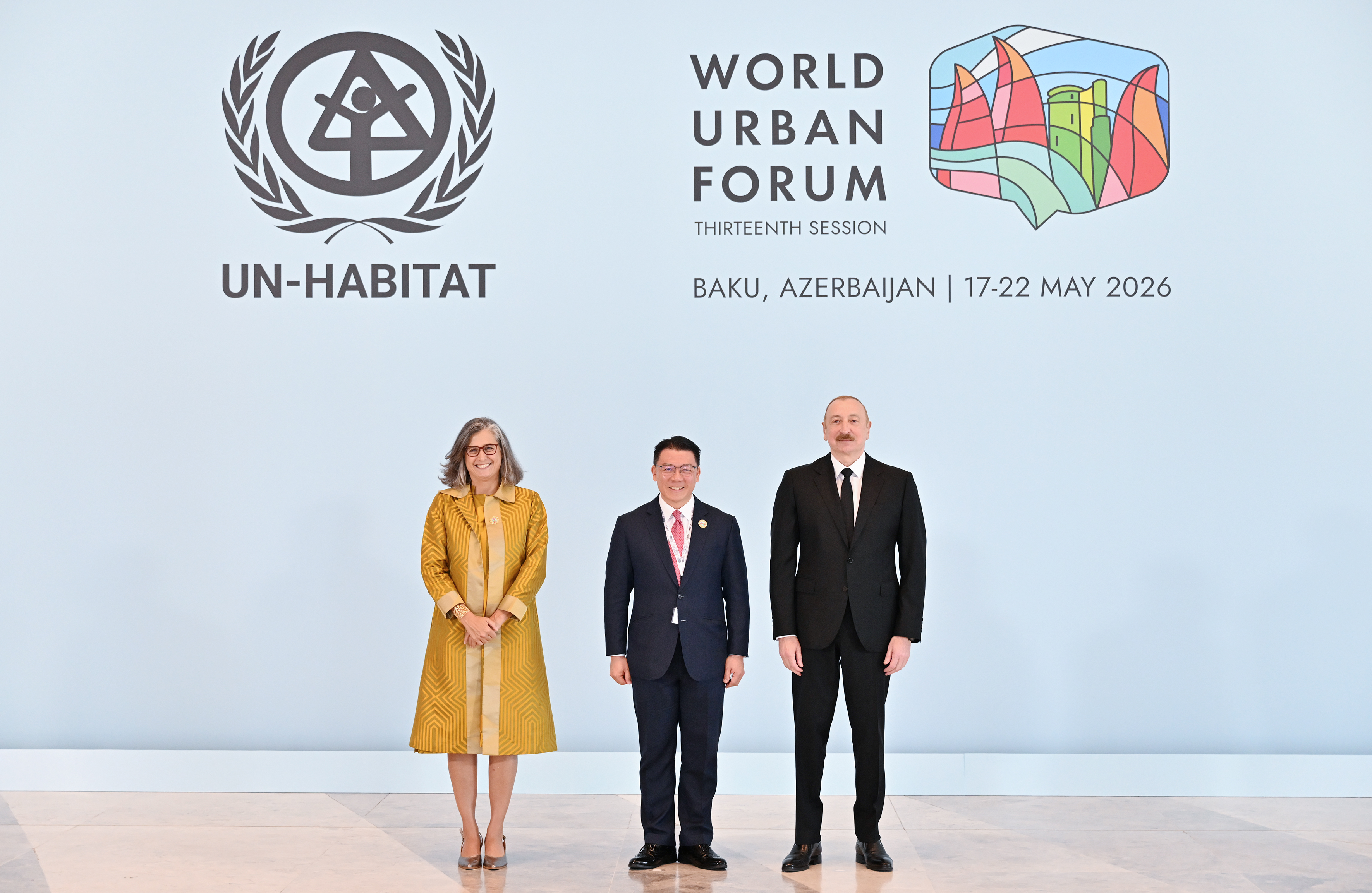
Baku hosted opening ceremony of the 13th Session of the World Urban Forum
President Ilham Aliyev addressed the event VIDEO

Baku, May 18, AZERTAC
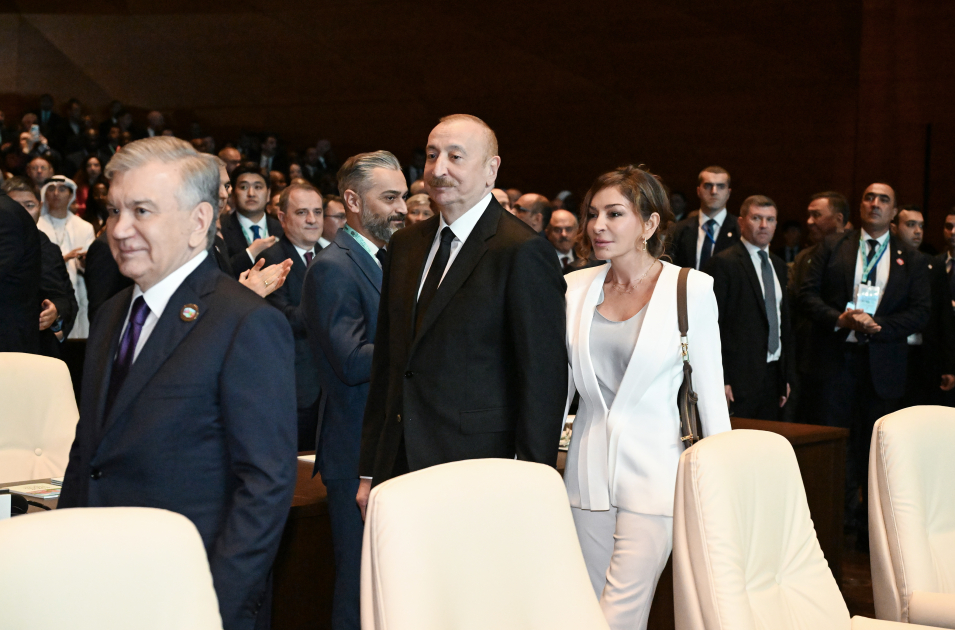
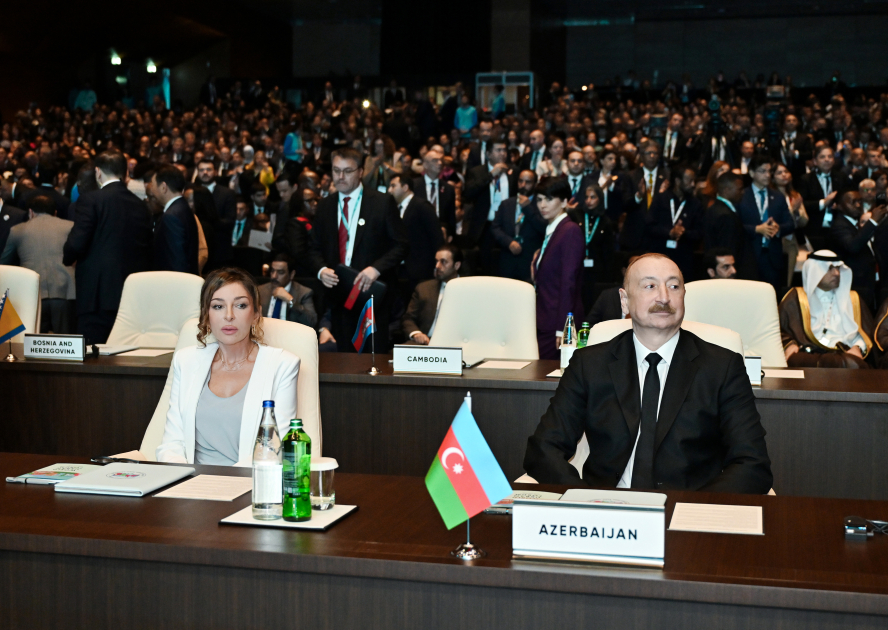
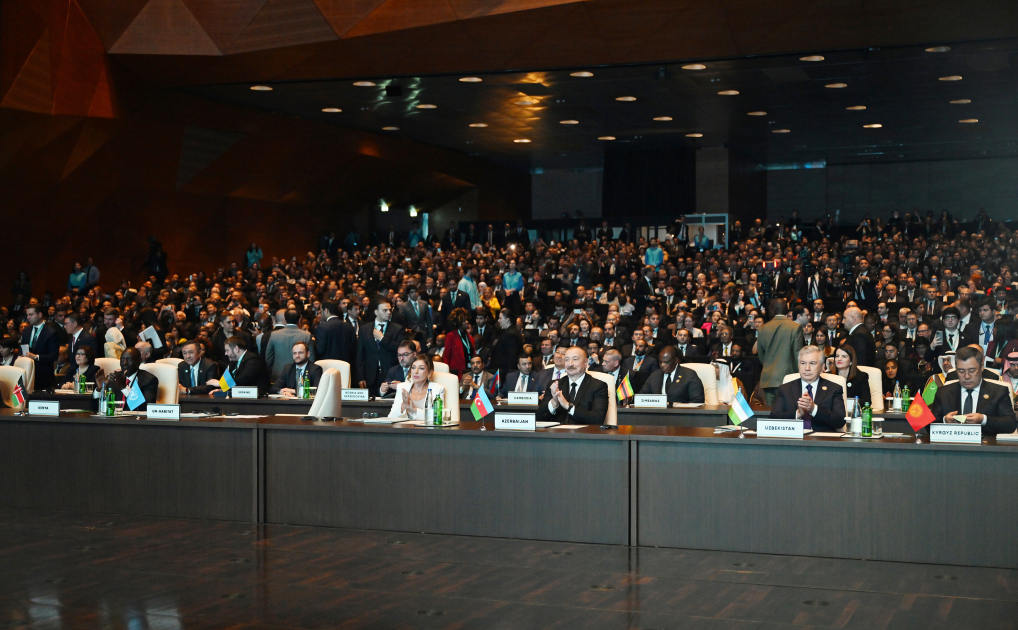
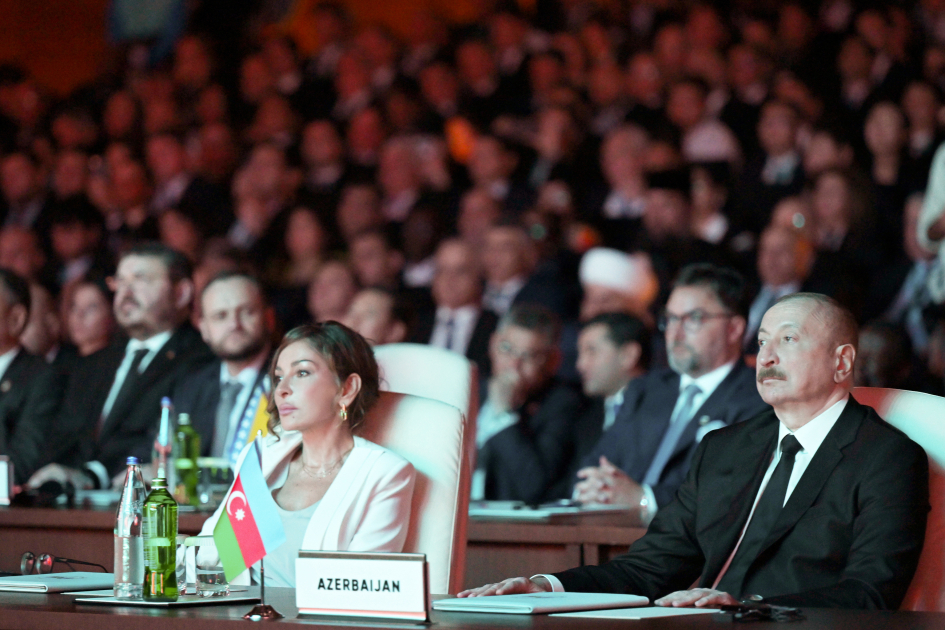
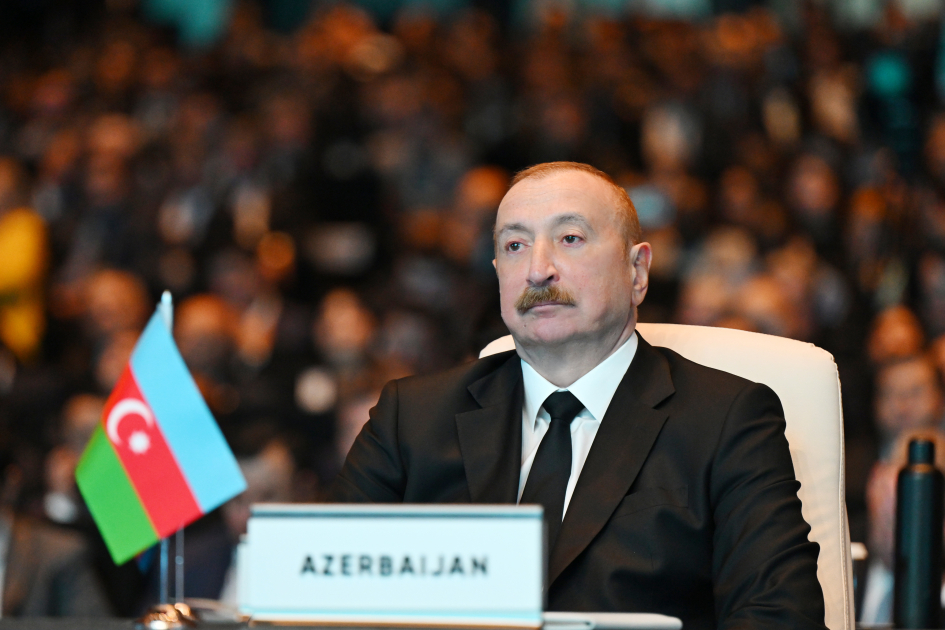
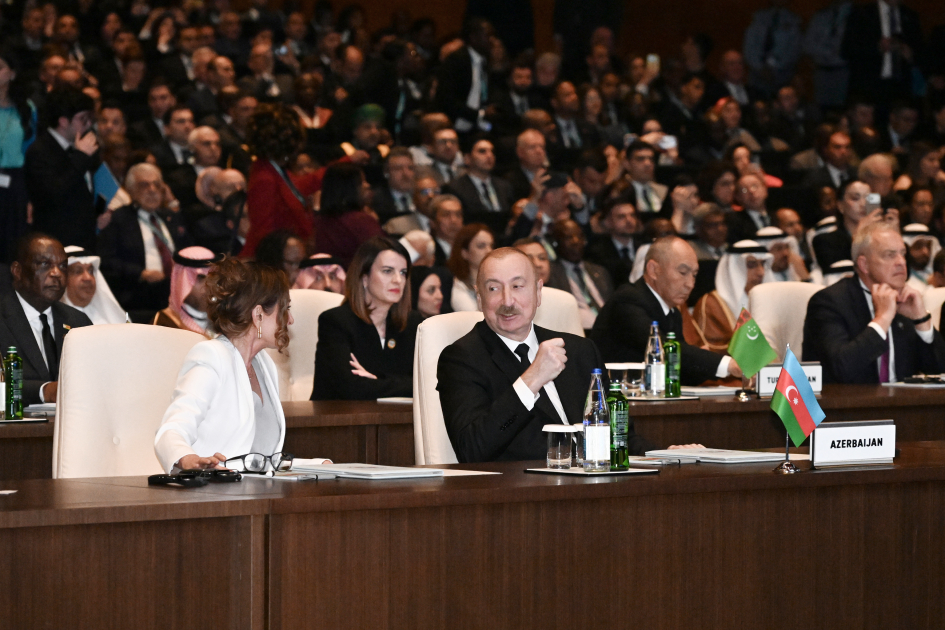
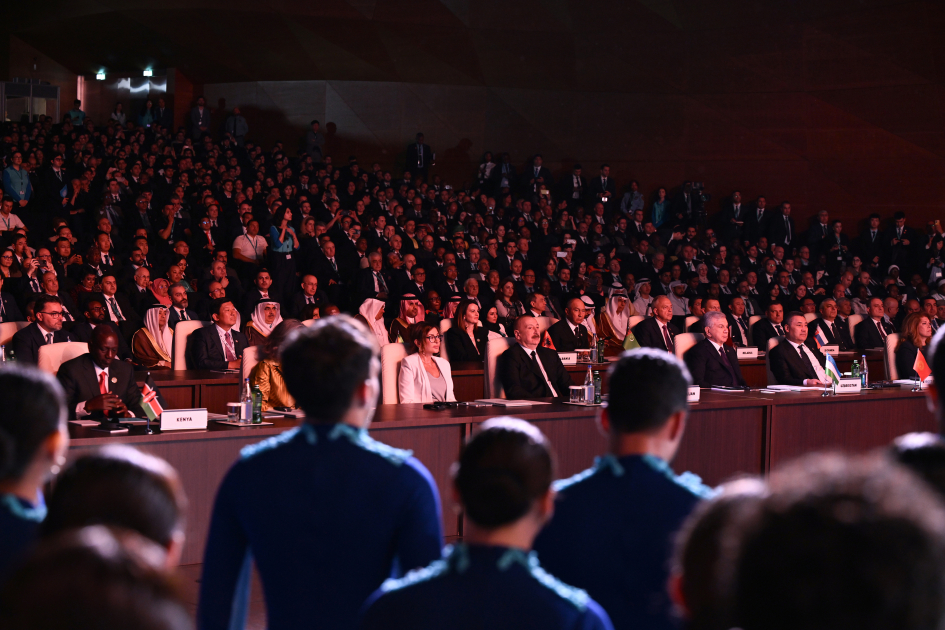
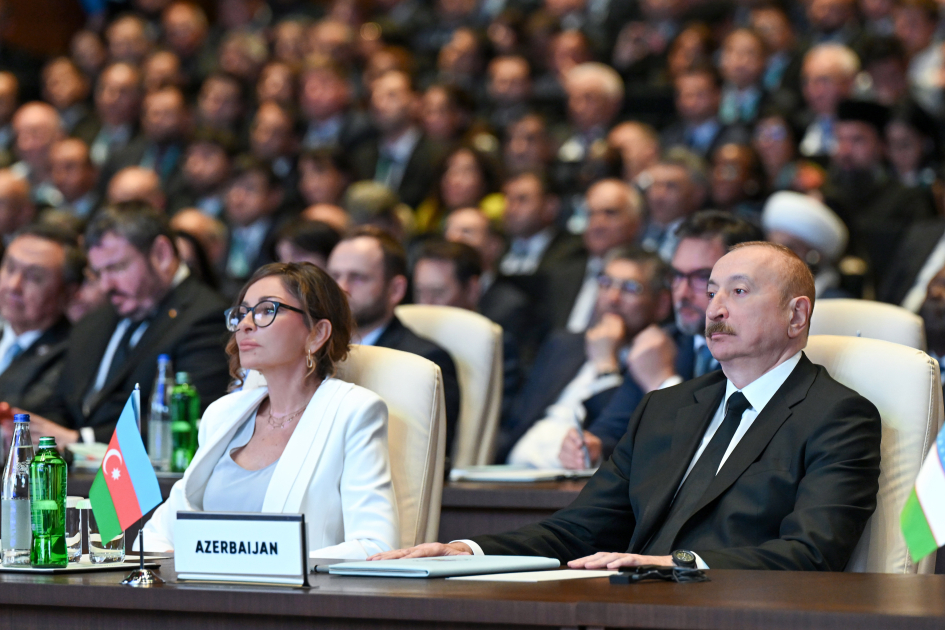
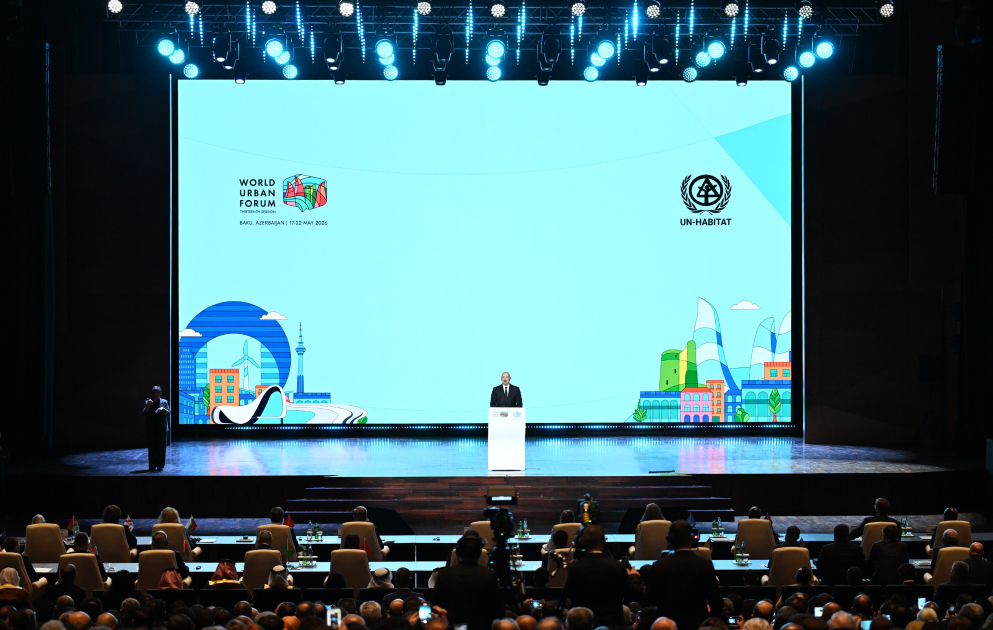
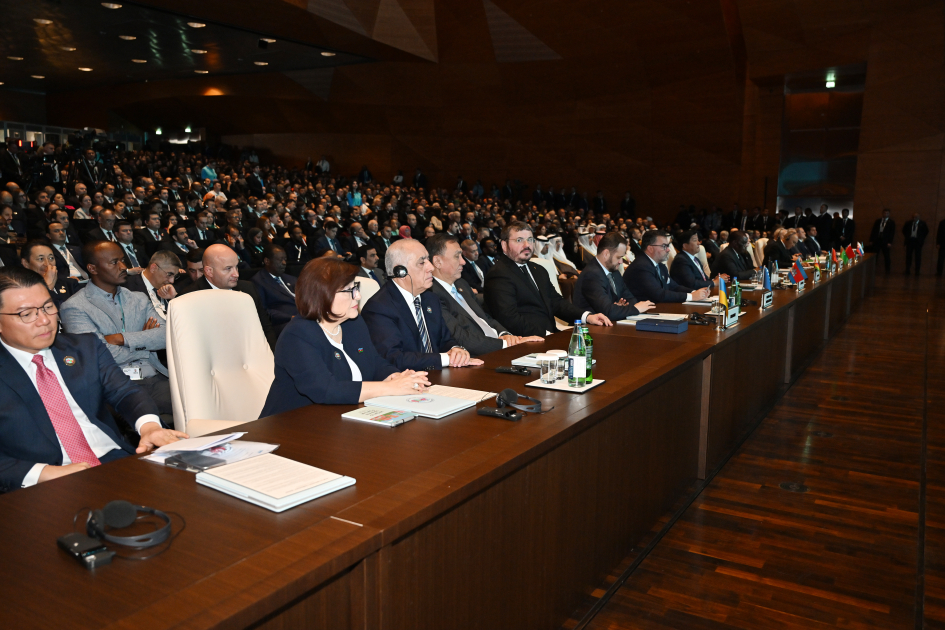
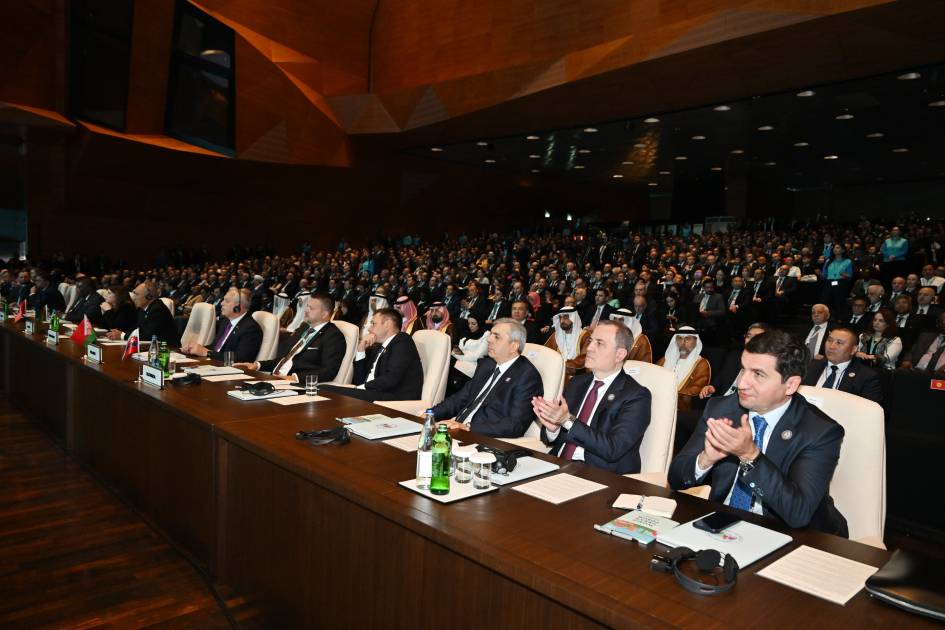
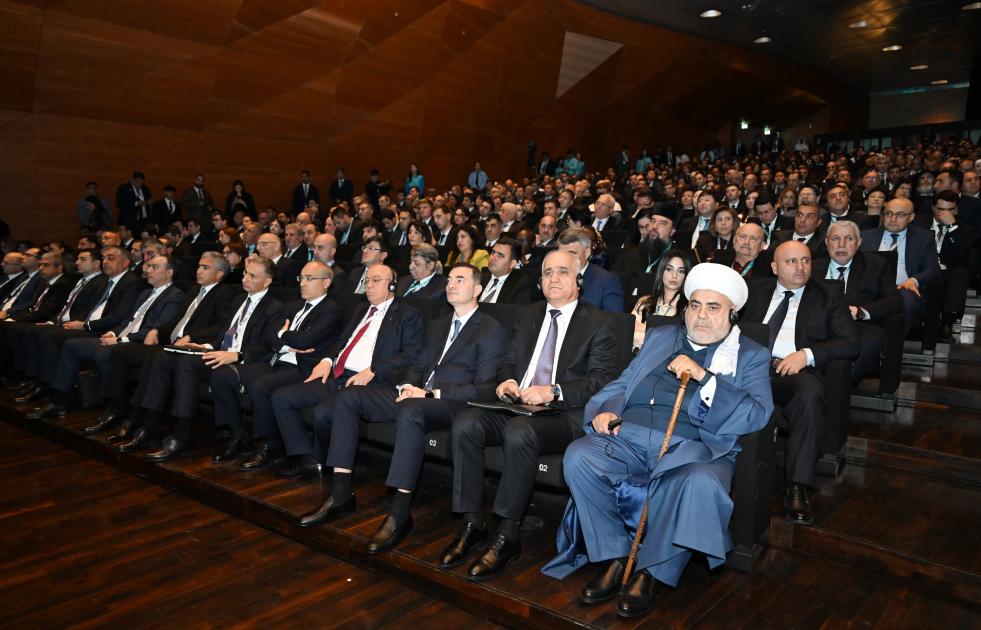
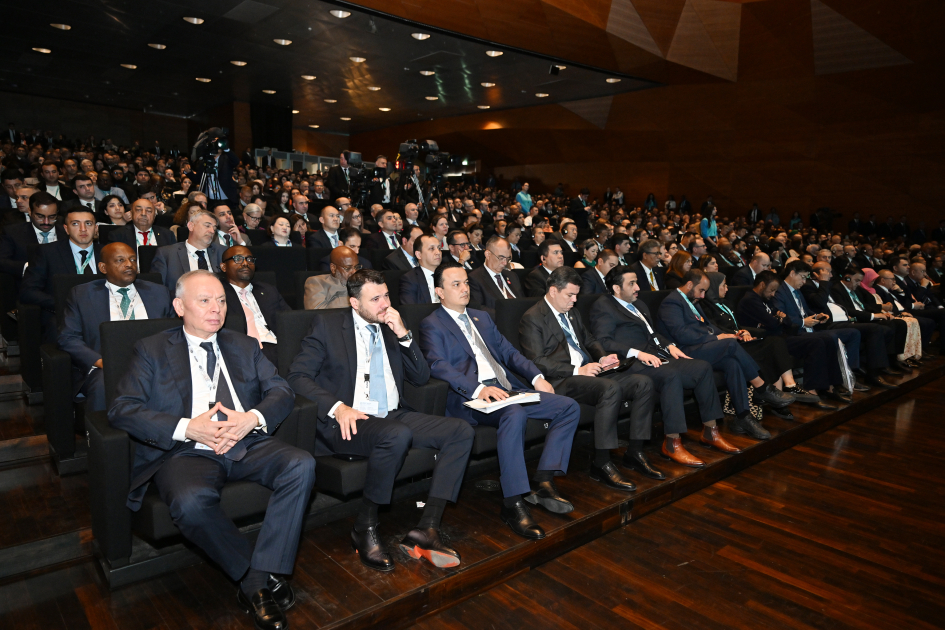
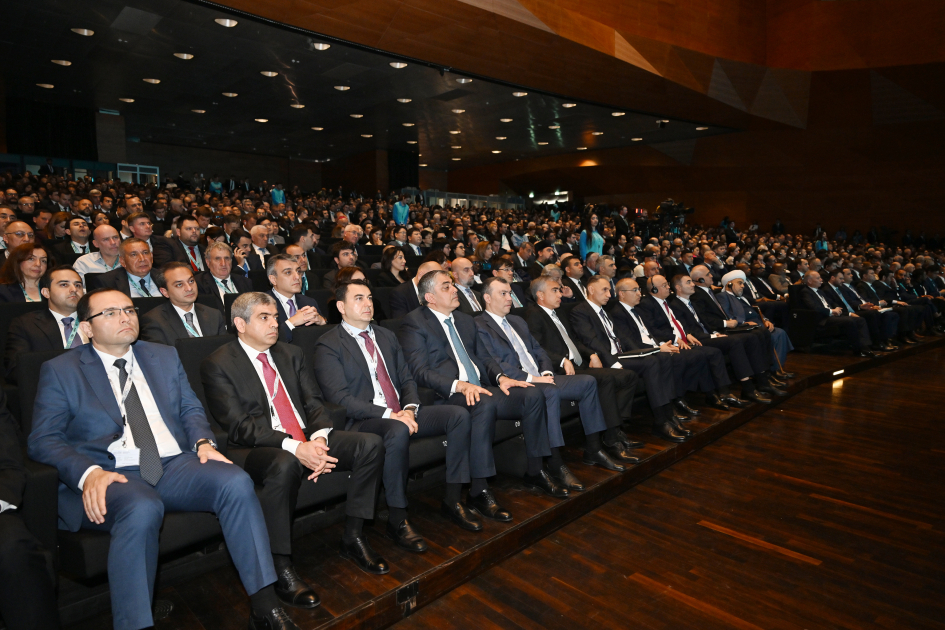
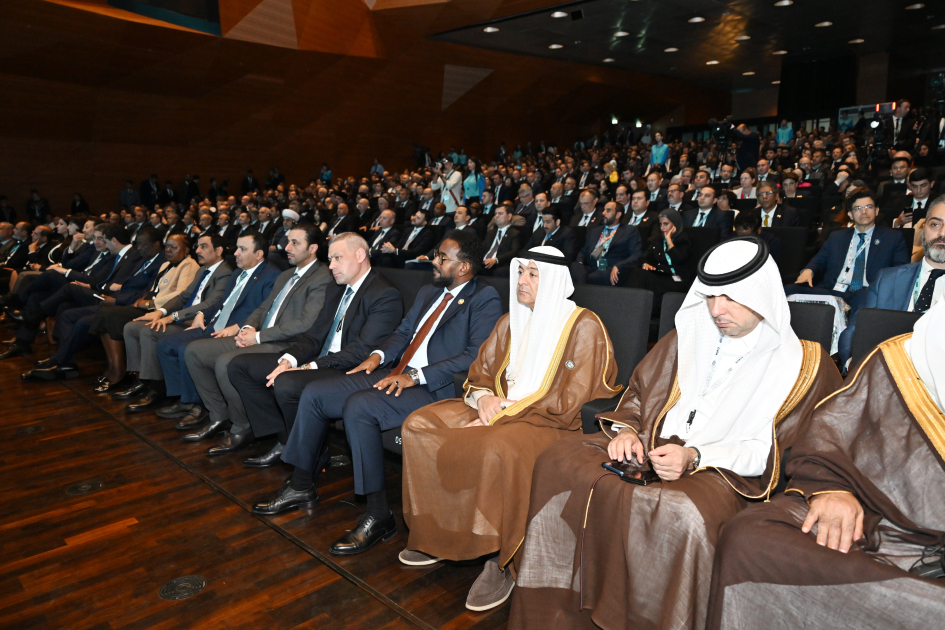
The opening ceremony of the 13th Session of the World Urban Forum (WUF13) was held in Baku on May 18.
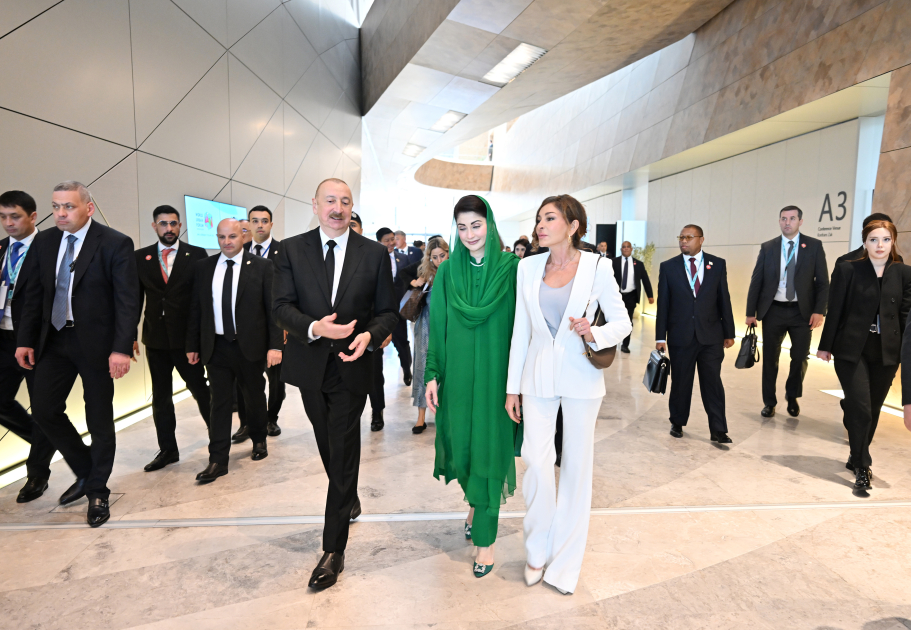
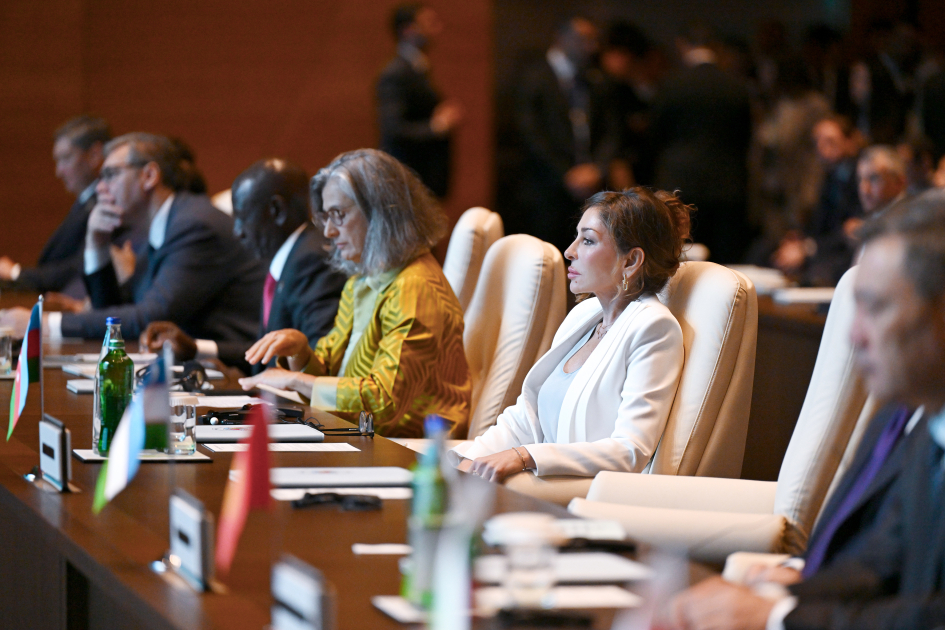
President of the Republic of Azerbaijan Ilham Aliyev and First Lady Mehriban Aliyeva attended the event.
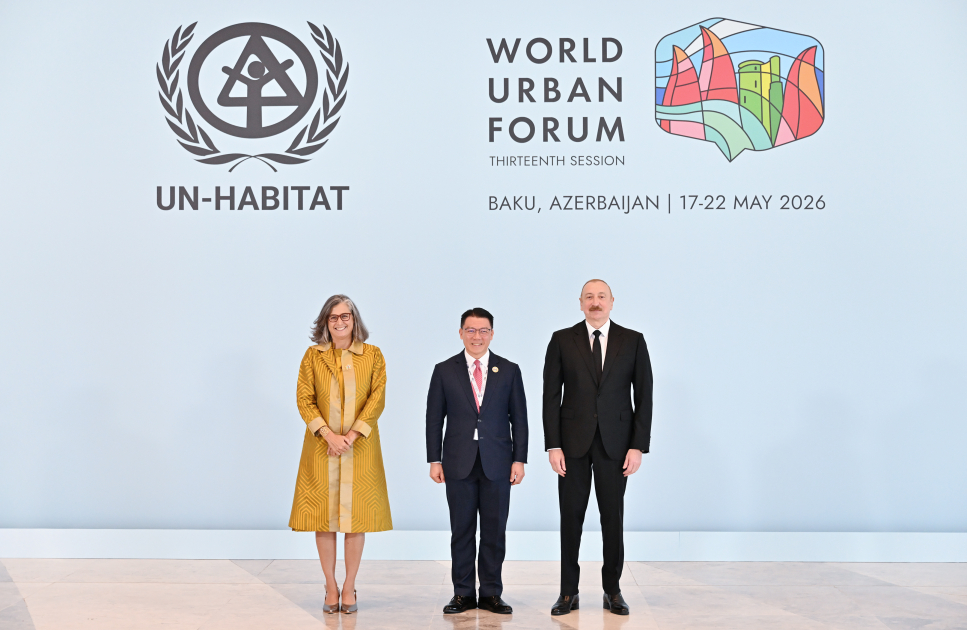
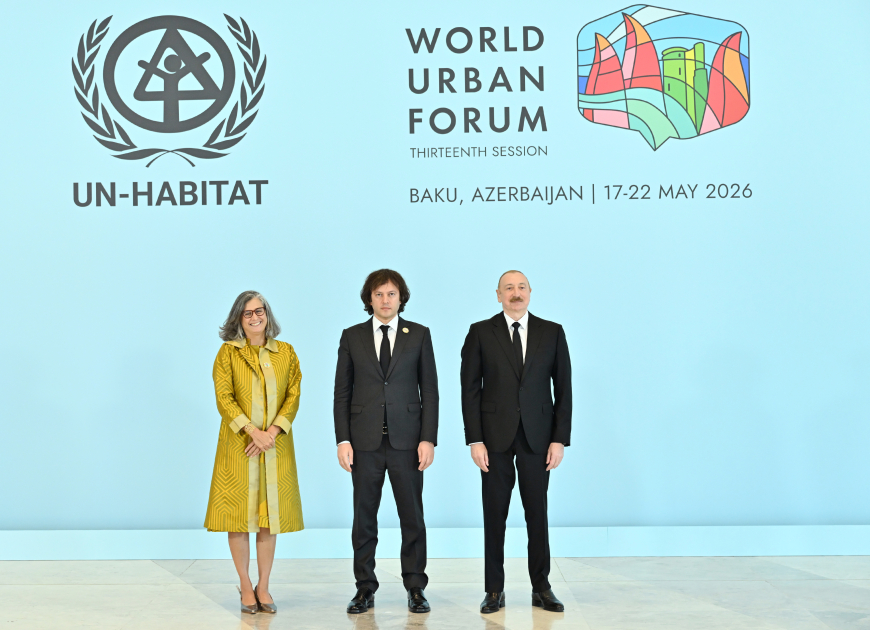
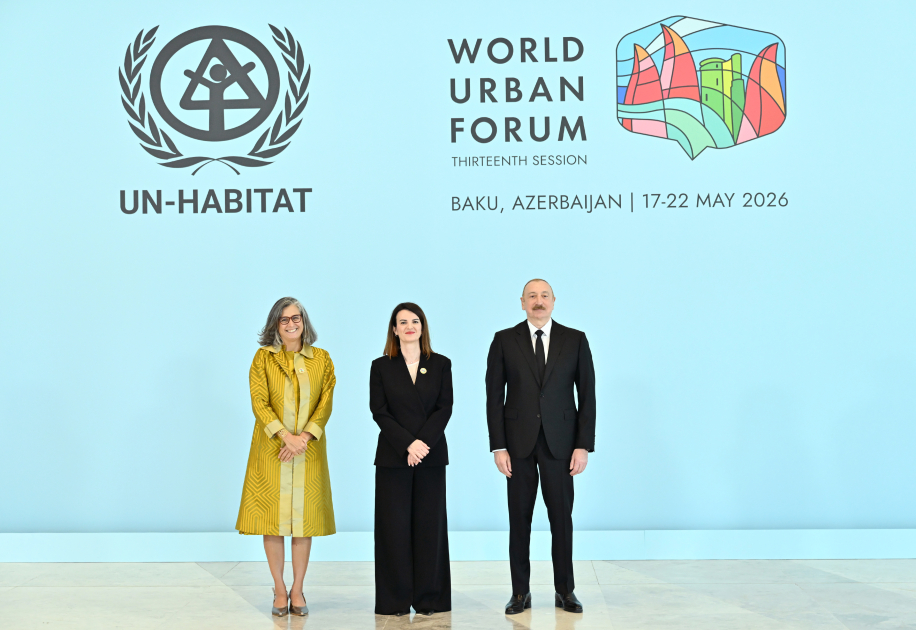
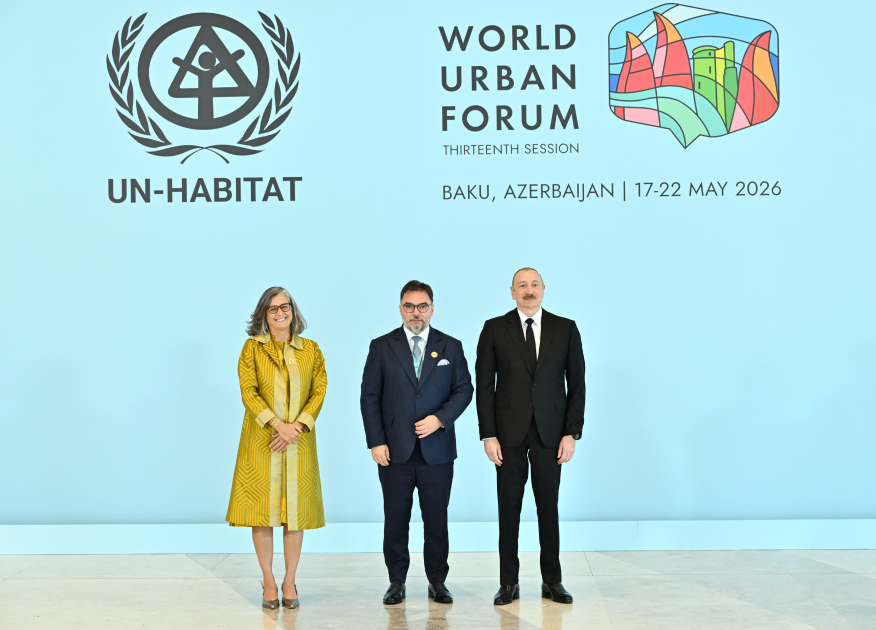
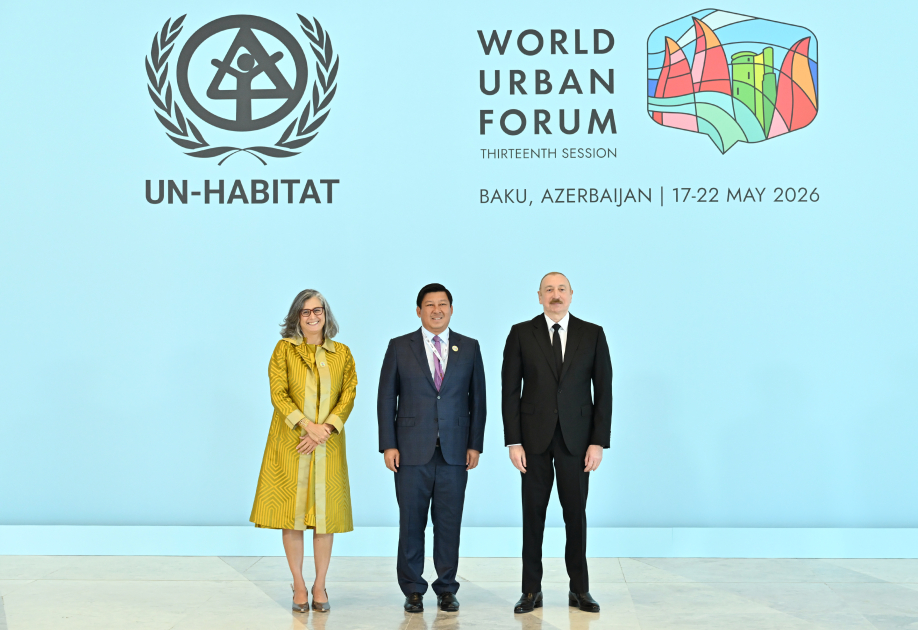
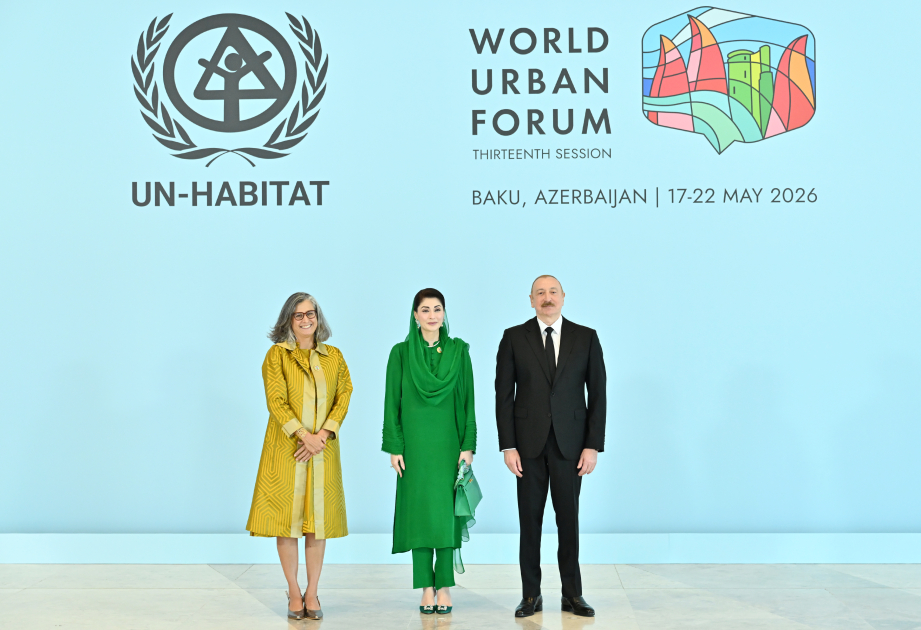
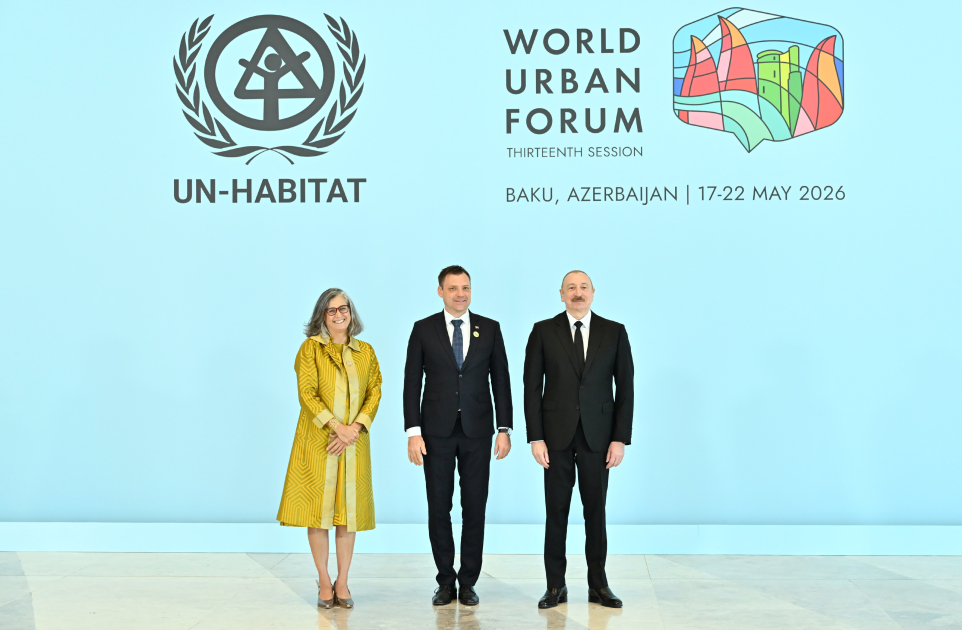
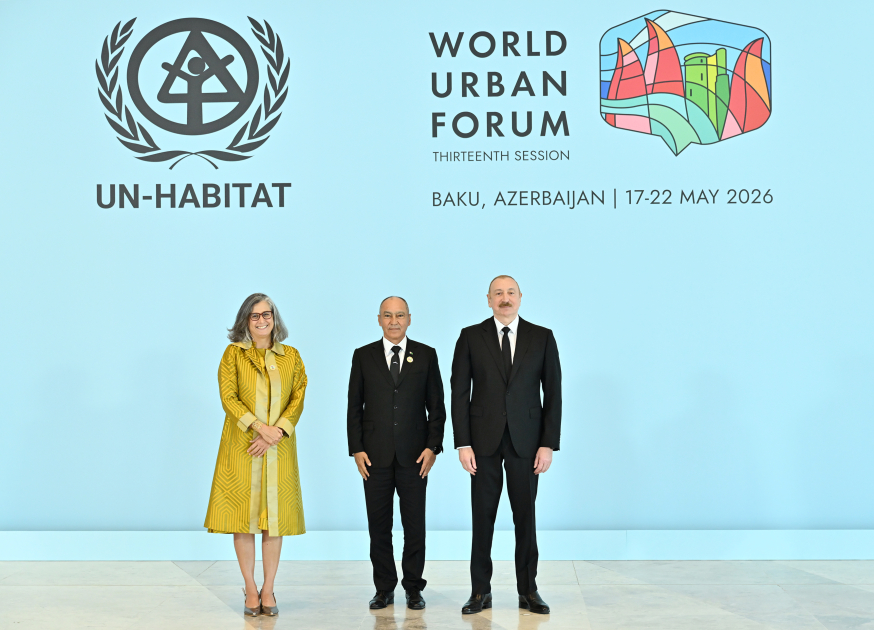
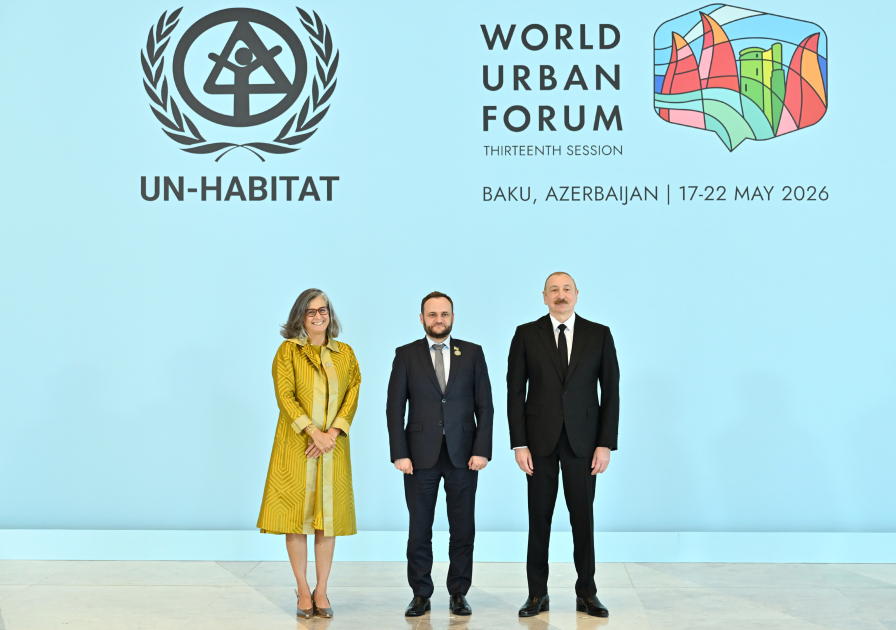
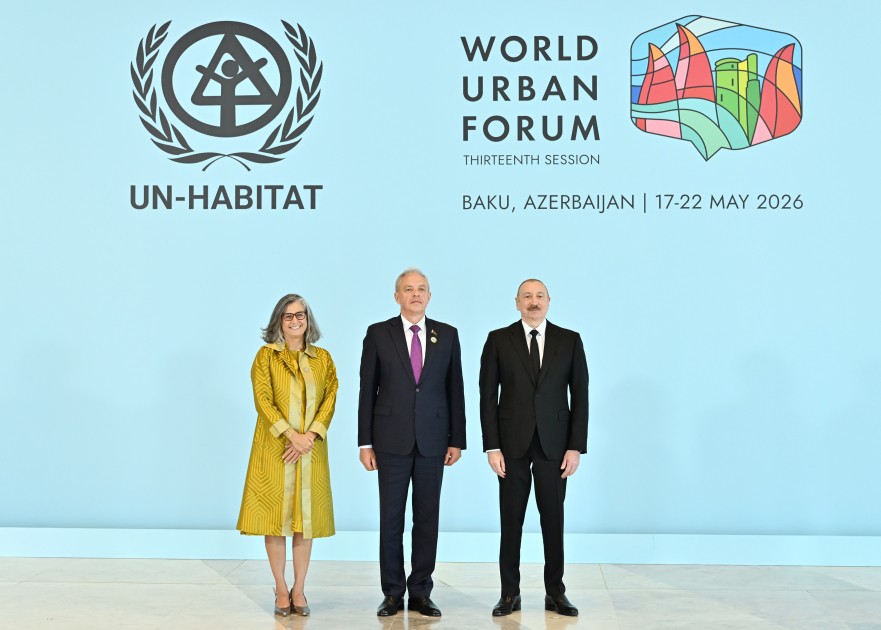
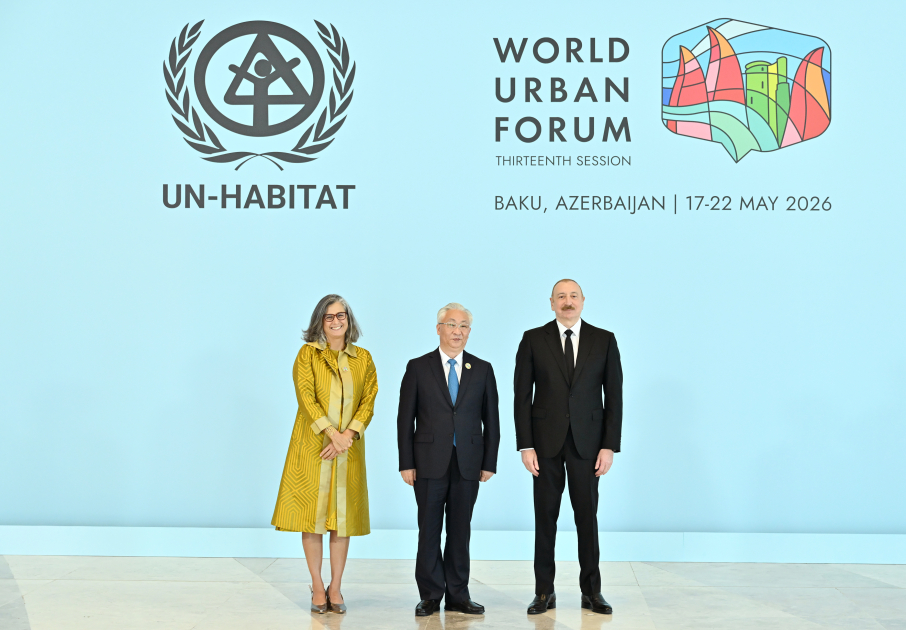
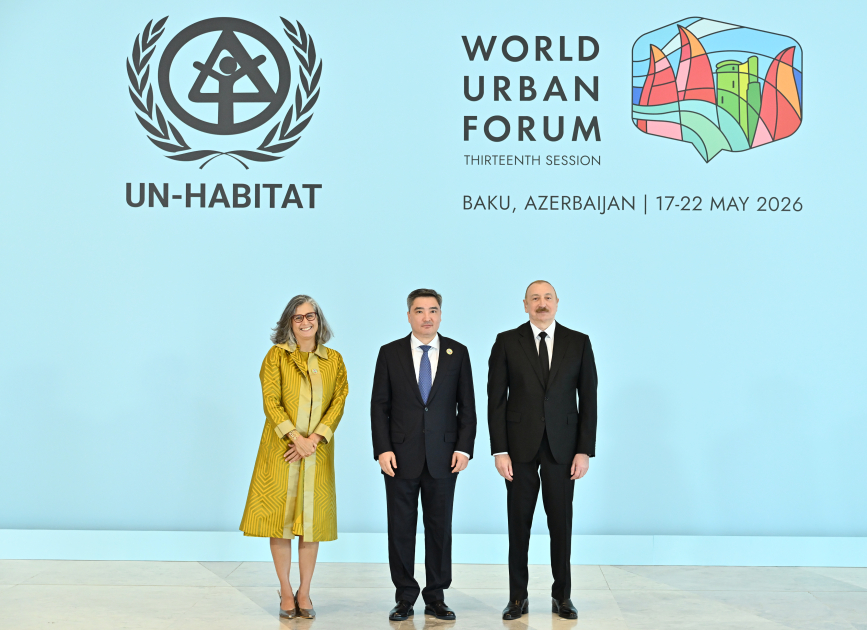
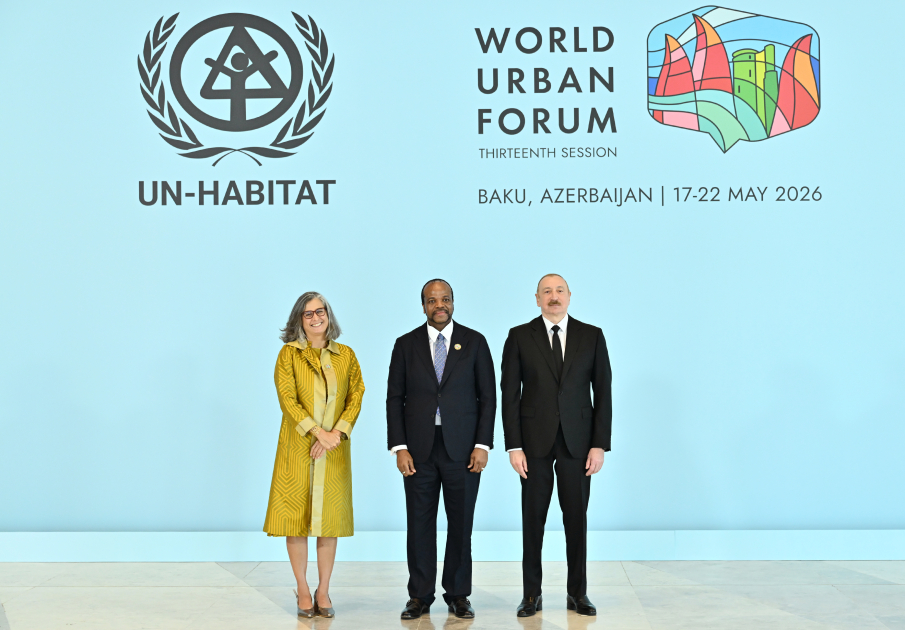
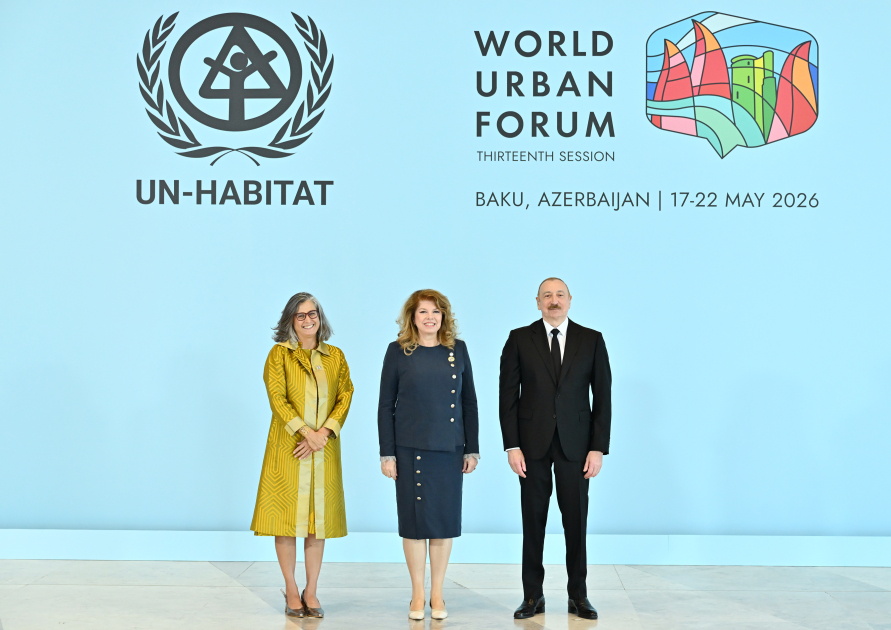
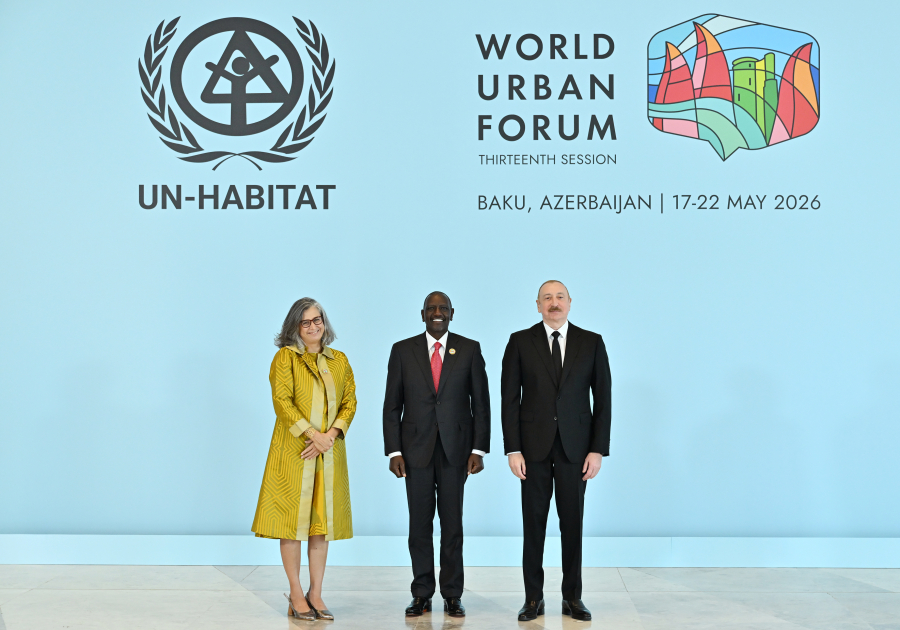
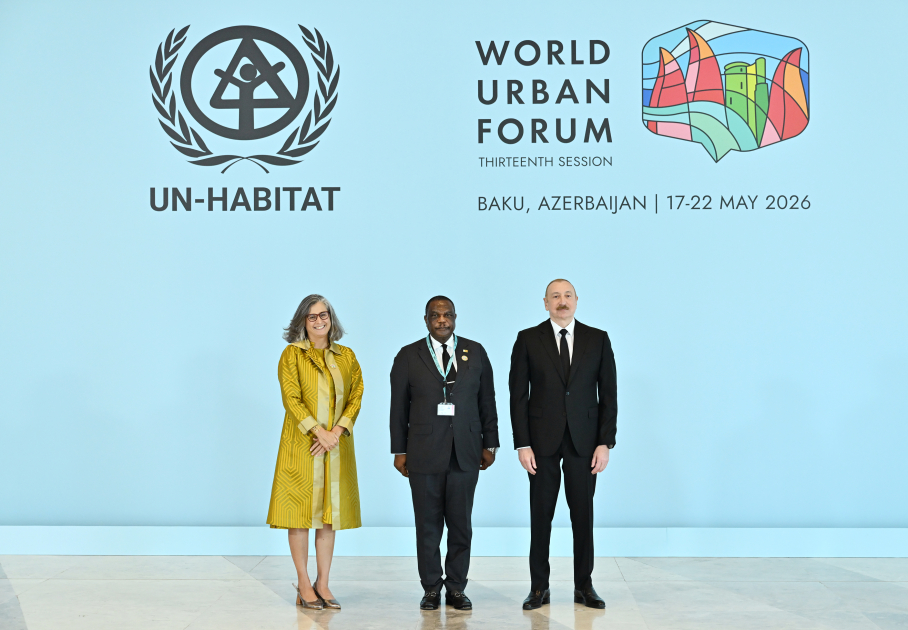
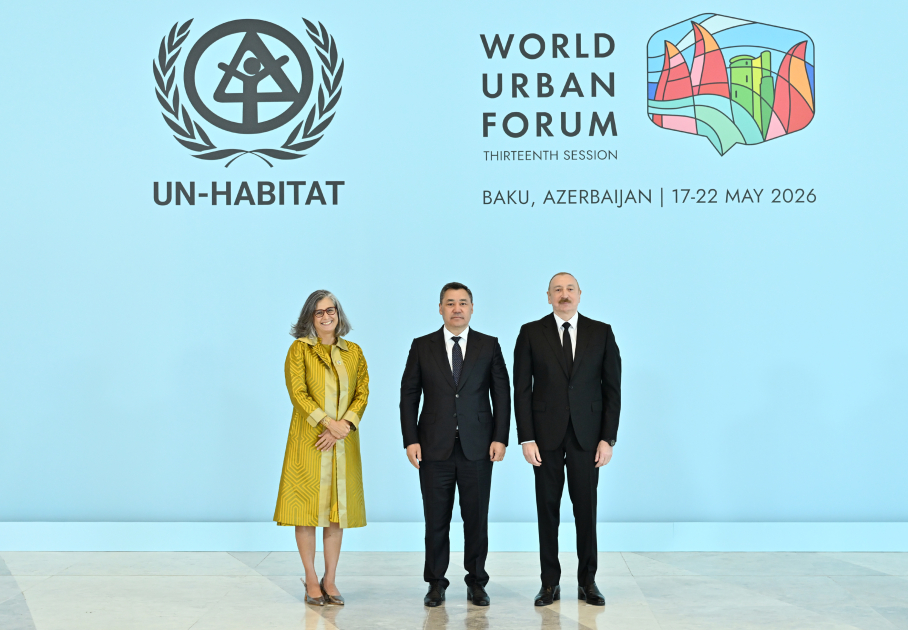
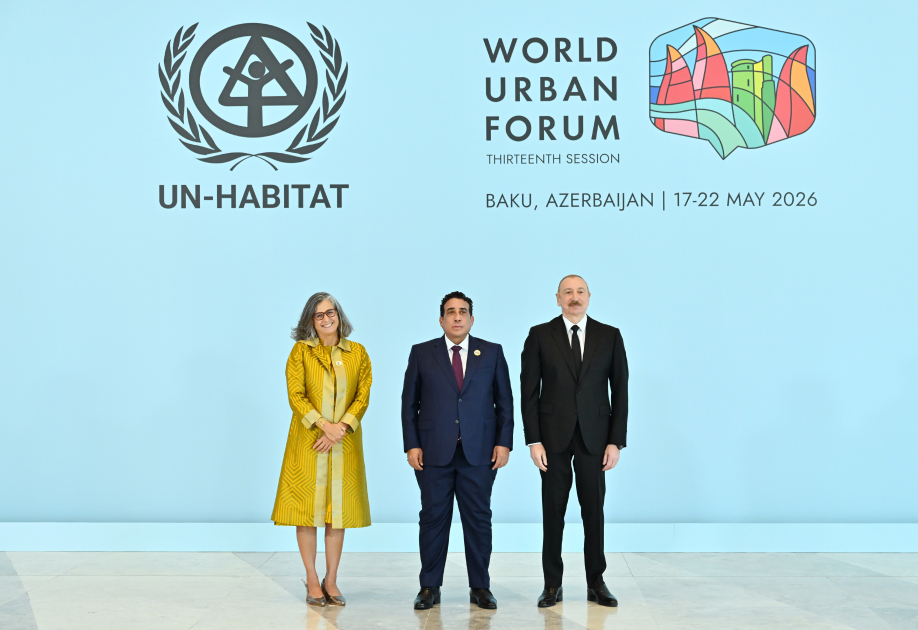
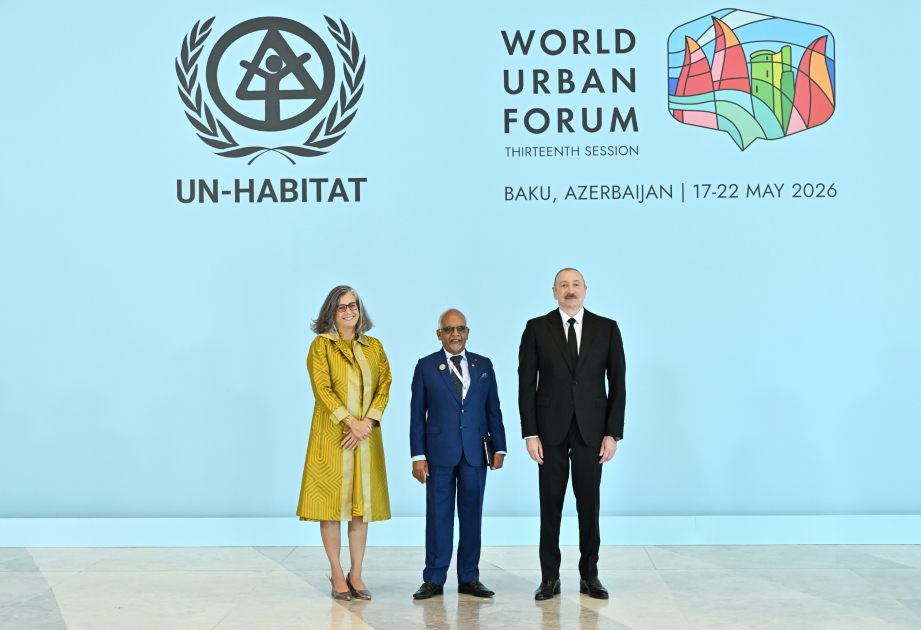
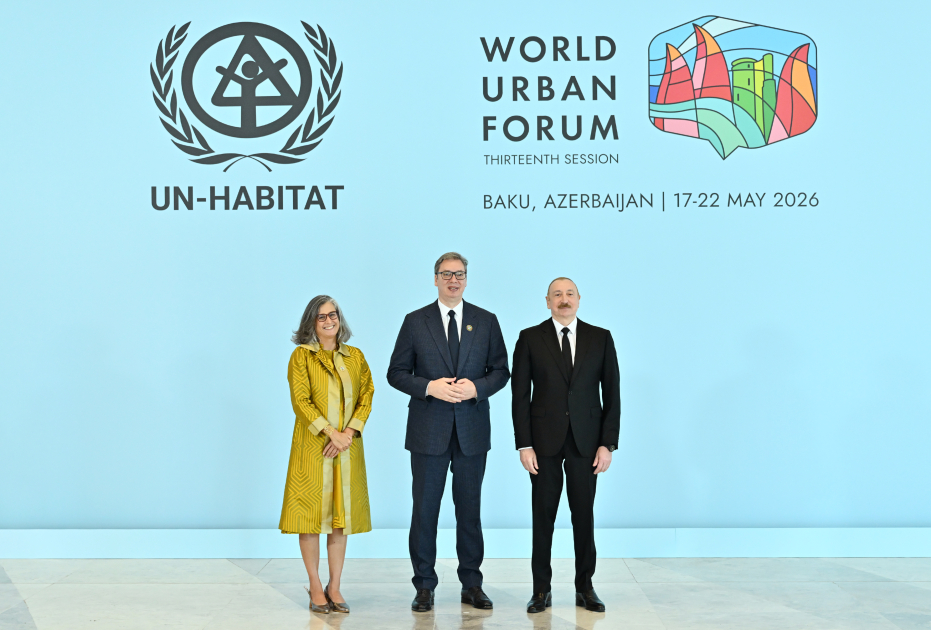
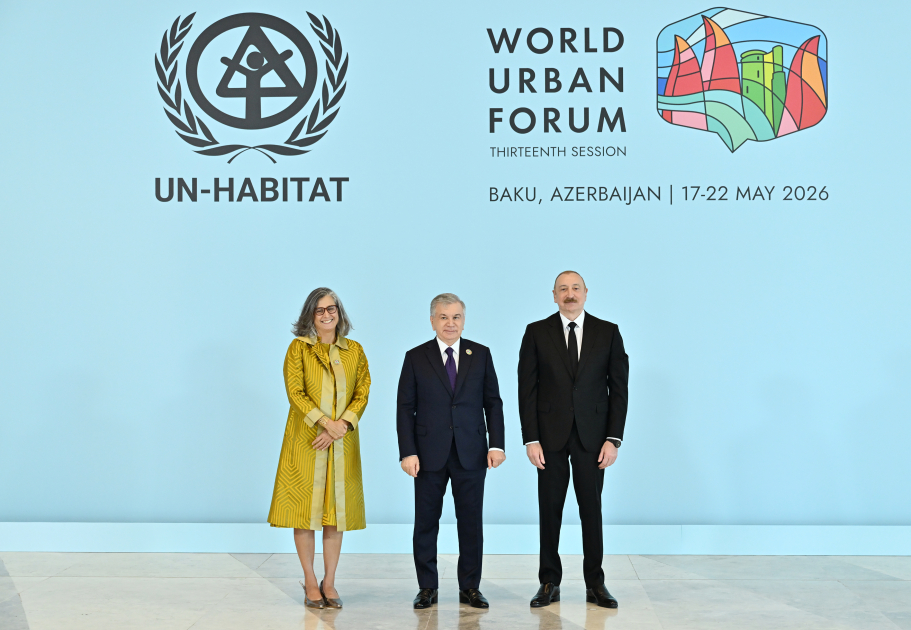
President of the Republic of Azerbaijan Ilham Aliyev and Executive Director of the United Nations Human Settlements Programme (UN-Habitat) Anacláudia Rossbach welcomed the heads of state and government, as well as the heads of delegations participating in the session.
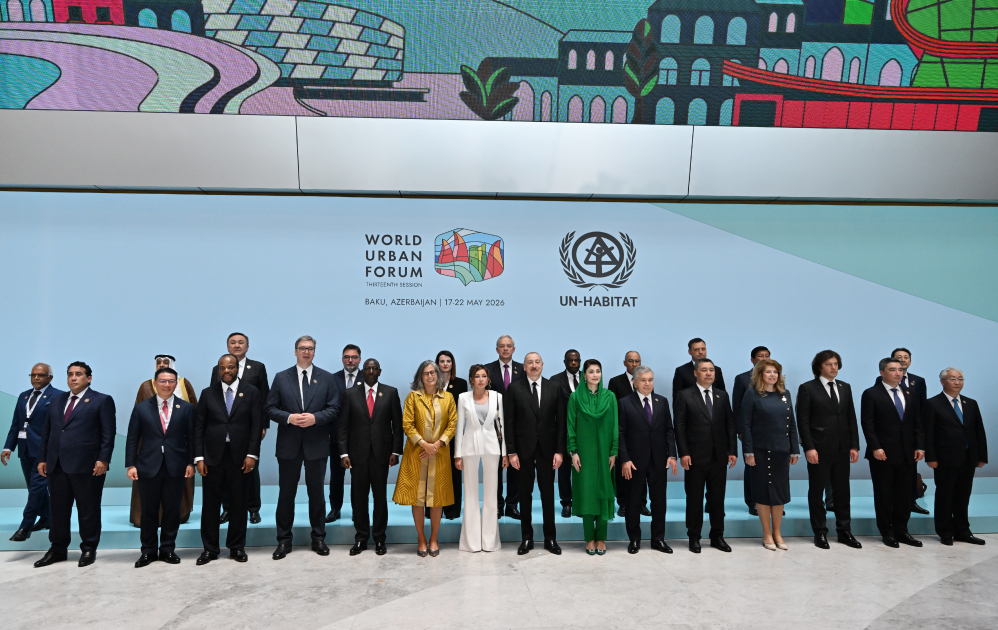
The welcoming ceremony was followed by a family photo session.
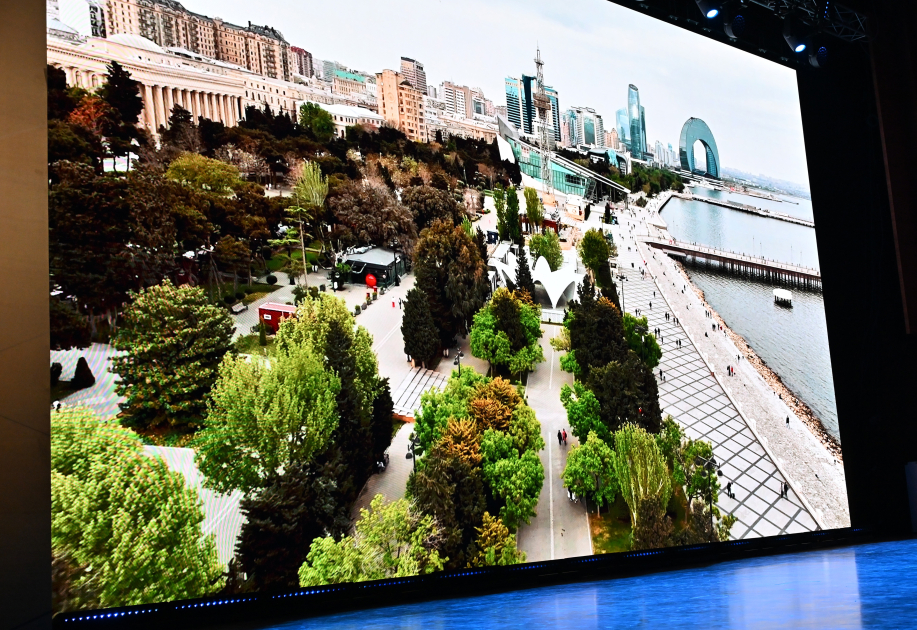
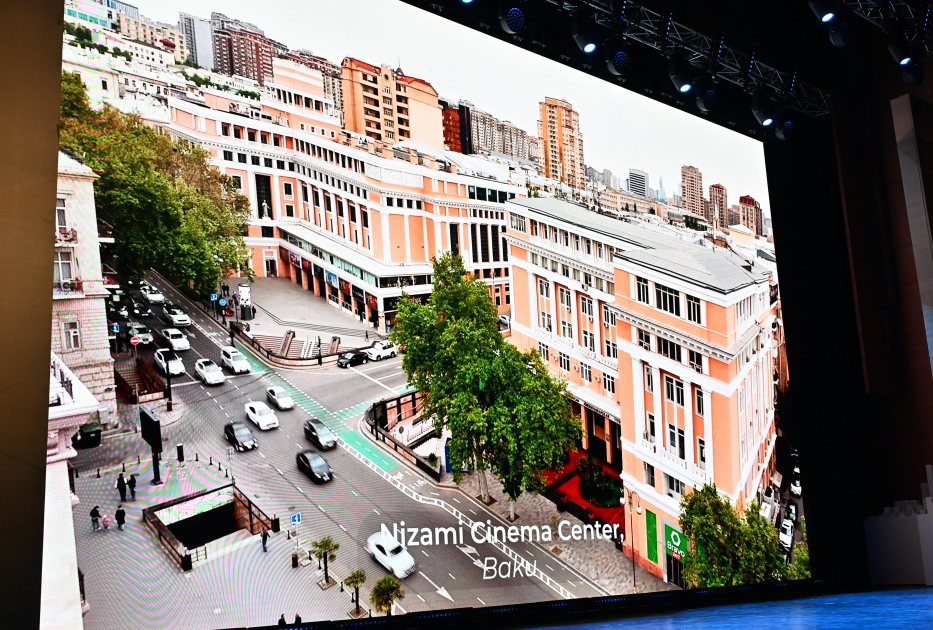
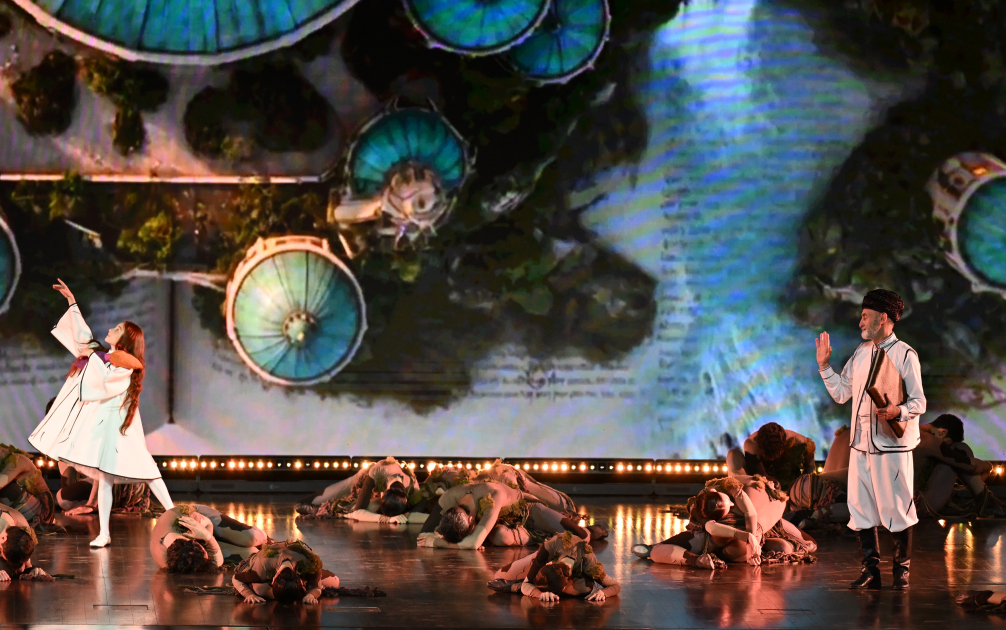
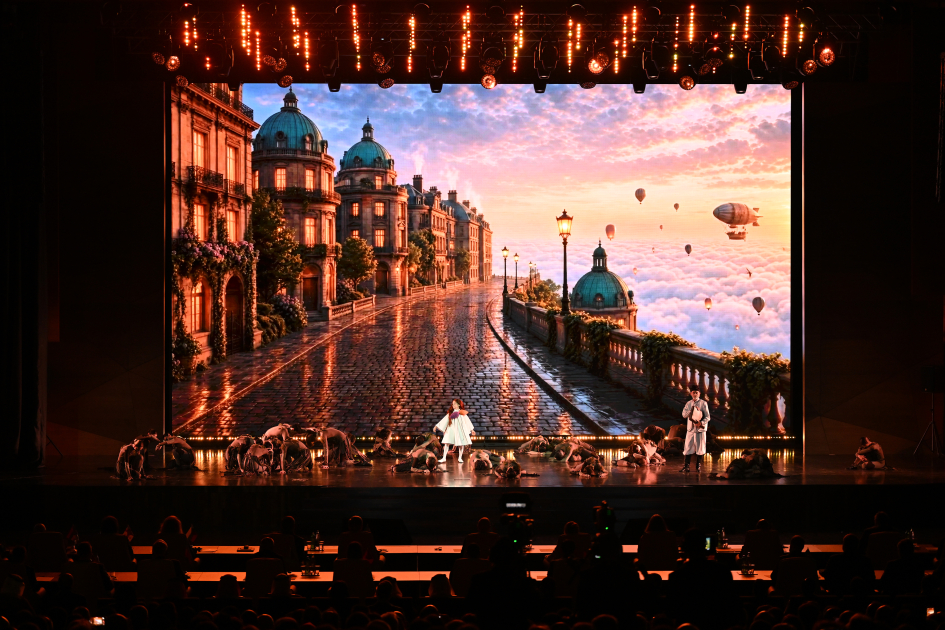
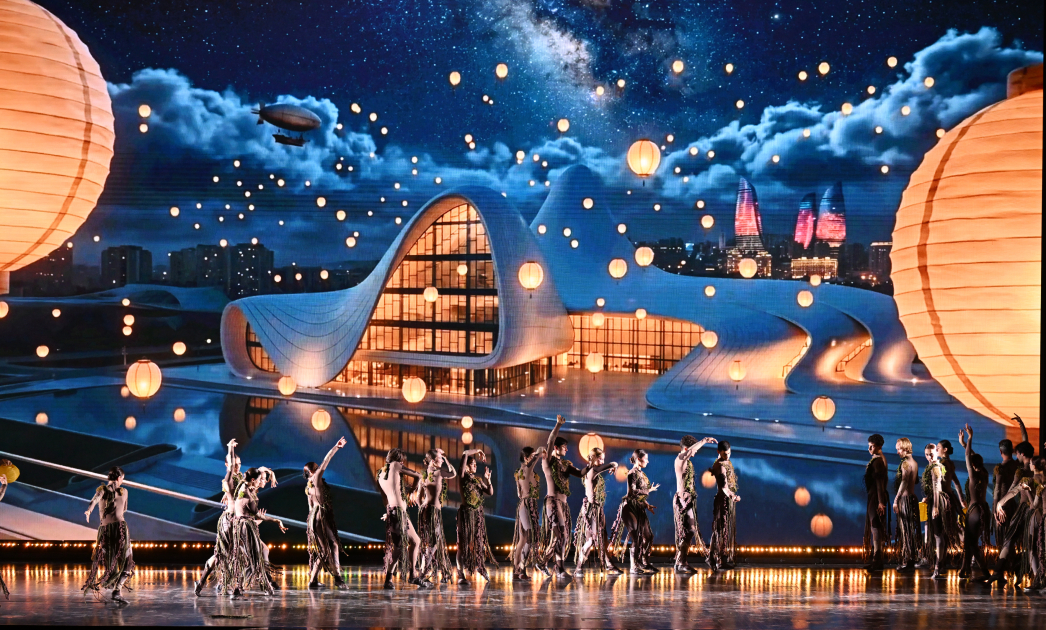
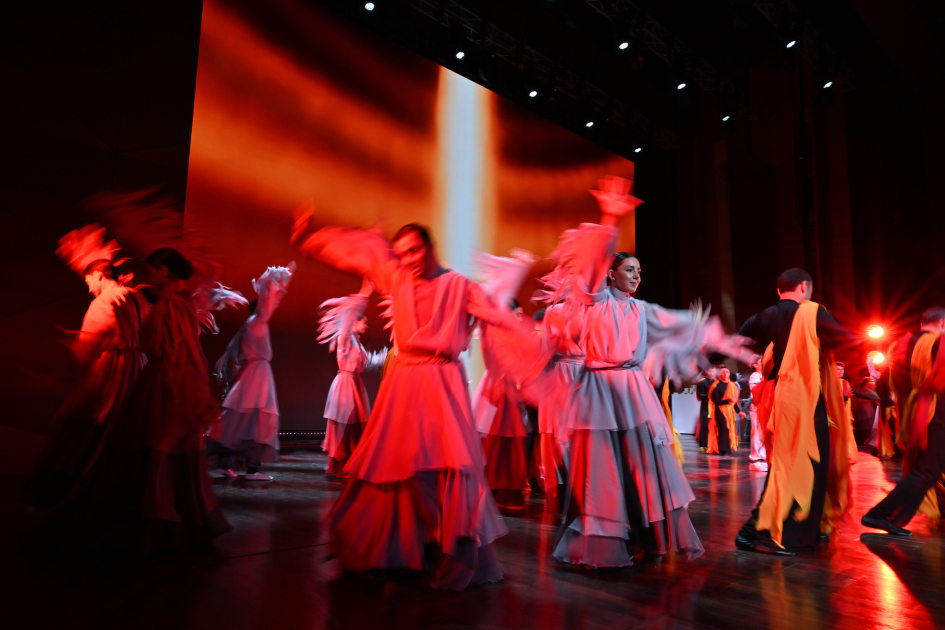
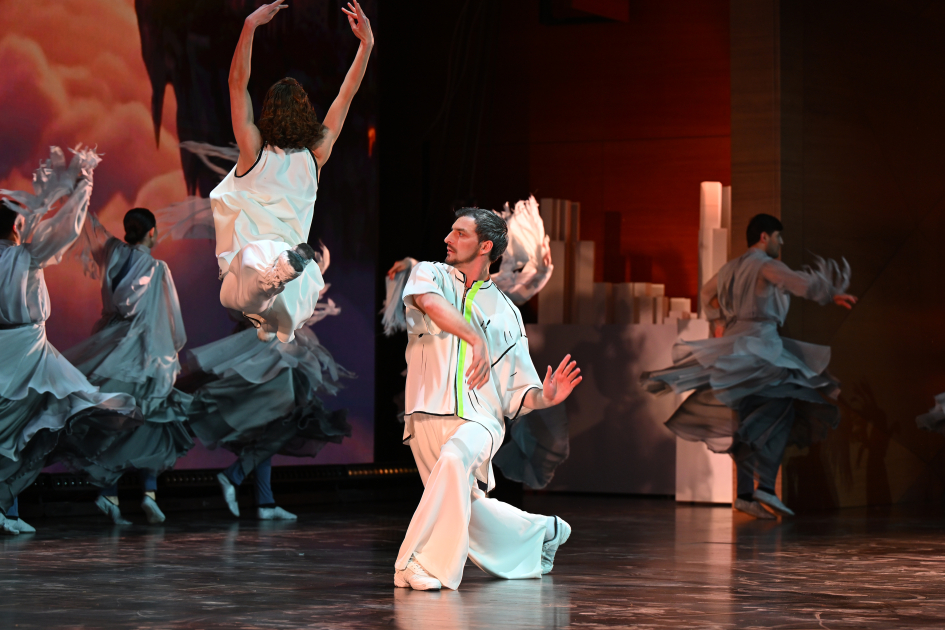
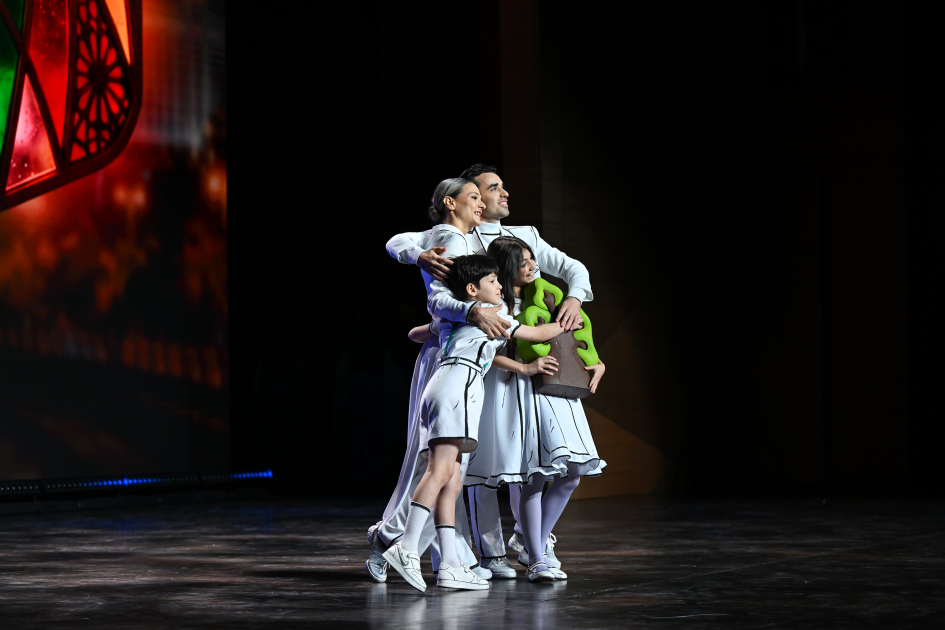
Then, a video dedicated to the opening of WUF13, prepared by the United Nations Human Settlements Programme (UN-Habitat), was screened, and a cultural program was presented.
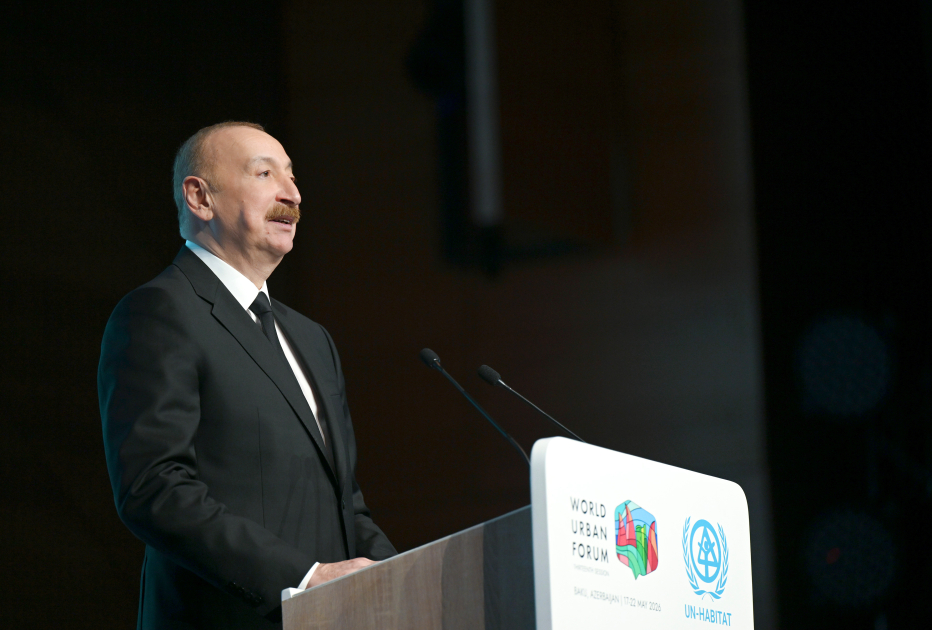
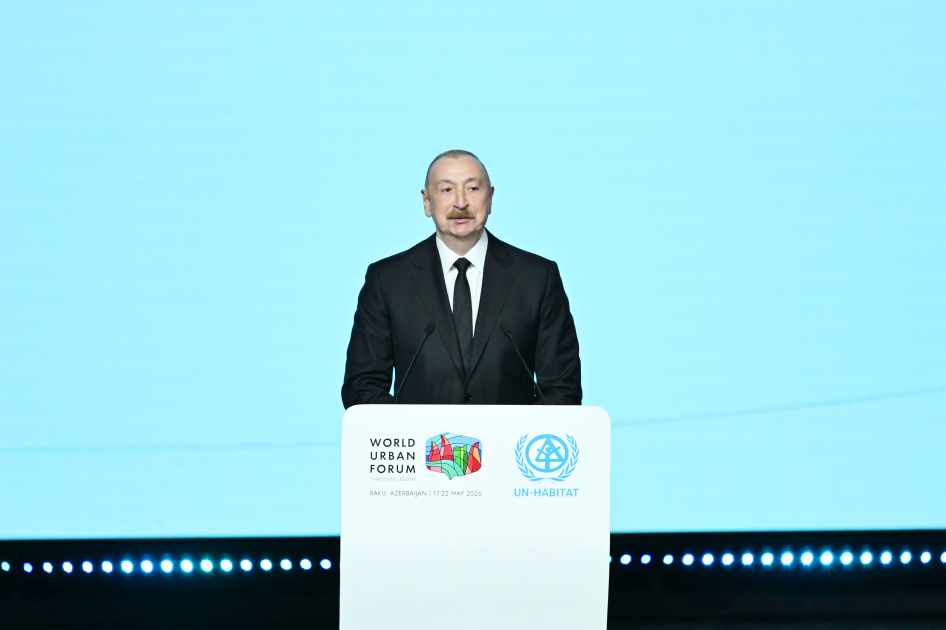
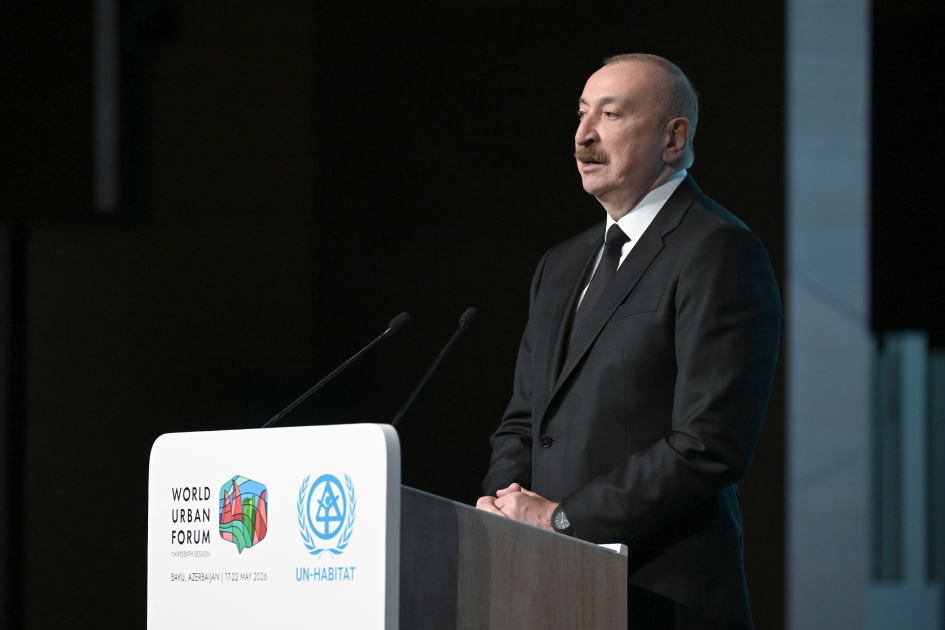
The head of state addressed the event.
Speech by President Ilham Aliyev
- Excellencies, ladies and gentlemen, dear guests,
First of all, I’d like to welcome all the participants of the World Urban Forum in Baku and wish the forum success. We have probably a record number of registered participants. This morning, I got information that we have more than 45,000 registered participants from 182 countries. So, this is the second biggest international event ever held in Azerbaijan after COP29, which was held one and a half years ago. And I hope that the outcome of WUF13 will be as successful as COP29. I think that during these days in Baku, many of our guests, who are visiting us for the first time, will have the opportunity to know our country and our city better, and to see with their own eyes what is being done in Azerbaijan with respect to urban development.
Azerbaijan is situated between Europe and Asia and has always been the place where East meets West. And this is also reflected in our country’s architecture. So if you walk inside the ancient walls of the old city of Baku and just cross the street, you will find yourself in the absolutely modern surroundings of the Baku Boulevard, which used to be three kilometers long and now is more than a 15-kilometer seafront promenade, and next to that are the buildings of the 19th century, which were designed and built by European architects.
So this natural harmony in Baku, between old and new, between the preservation of our historical heritage and the need for urban planning and modernization, really is a vivid demonstration of the talent of our ancestors, and of how we are preserving our historical and architectural heritage. Urban planning, not only for Baku but for many cities of Azerbaijan, is something that we are working on daily.
This year, by my decree, was declared the Year of Urban Planning. I'd like to express gratitude to UN-Habitat for their support in the organization of this event, for cooperation, and for entrusting us with this very responsible duty to be the host of WUF13. Since 2022, we, together with UN-Habitat, have held three national urban fora in Azerbaijan - in Aghdam, Zangilan, and Khankendi - the cities which were under occupation for many years.
And today, by organizing this global gathering, we once again demonstrate our strong commitment to urban planning, urban development, and to our agenda to make the lives of the people better, and to provide our population with all necessary means in order to feel comfortable. Not only Baku, but many ancient Azerbaijani cities can be proud of their architecture. I will name just some of them: Shamakhi, once the capital of the State of Shirvanshahs, the birthplace of the great Azerbaijani poet of the 14th century, Nasimi, has one of the oldest mosques in the world, which was built in 743. Nakhchivan, once the capital of the State of Atabeks, the birthplace of the great Azerbaijani architect Ajami Nakhchivani, has the monument built by him, which is called the Momine Khatun Mausoleum, dating back to the 12th century. Ganja, one of the oldest cities in the world, the birthplace of another great Azerbaijani poet, Nizami Ganjavi, of the 12th century, today is developing while, at the same time, like Baku, preserving its historical look. Gabala and Sheki, the capital and one of the main cities of the state of Caucasian Albania, had numerous historical monuments, and the church in the village of Kish, near Sheki, is probably one of the oldest in the world. Another example of the talent of our ancestors is the village of Lahij. Fifteen centuries ago, when the village was created, the people built a sewage system and water pipeline, which are functional today. The crown of Garabagh, Shusha, which was under occupation for almost 30 years, now is being reconstructed almost from scratch, and its damaged fortress has been restored.
All that I mentioned, and, of course, Baku, with its sixth-century Maiden Tower, all these monuments not only were built by our ancestors, not only survived invasions, devastations, and destructions, and were rebuilt and restored by different generations of Azerbaijanis, but are also preserved today. And all of those which I mentioned, everyone can go and see, get inside, and touch. And I think this is the best indication of our attitude to our historical heritage, to our legacy. We are proud of it, proud of our ancient history, which is reflected not only in our music and poems, but also in architecture. And our duty is to preserve it for the next generation, and the next generation will do the same, I'm sure.
And today, with a full understanding of the necessity of urban development, especially in capital cities, we must be brave and cautious. I sometimes compare it with the Formula One race in Baku, which, by the way, is one of the few races which are city circuits. So the speed on the main speedy street is more than 300 kilometers per hour, and then the pilots have to push the brake and squeeze the bullets into a seven-meter-wide street, just one meter next to the ancient city wall, so the pilots must be brave and cautious, as must the leaders, those who make decisions, and those who have an agenda of development. We must be brave in development, in the creation of better conditions for our people, in modernization, but at the same time very cautious when it comes to the preservation of our historical heritage.
One of the main tasks for our government now is the reconstruction of Garabagh and East Zangezur, the area which was under Armenian occupation for 30 years, and which suffered total destruction and devastation. International observers and visitors compared, for instance, Aghdam with Hiroshima. They called it the “Hiroshima of the Caucasus,” because this city just did not exist. It was totally leveled to the ground, and unlike Hiroshima, it was done not in one day as a result of an atomic bomb, but it was done during 30 years of occupation, when the buildings, historical buildings, public buildings, and houses were just dismantled and completely destroyed.
So now the Great Return Program is being implemented, and the master plans for cities and villages are being prepared. I can, of course, bring a lot of figures, but I will mention only two - the lengths of the tunnels which we are building now. In five years, 70 kilometers have already been built, with five more to be built; 435 bridges have been built out of 500. So this was done along with power stations, along with water supply, water storage facilities, houses, schools, hospitals, three international airports, railroads, and this was done only in five years.
And this is how the owners of the land behave, unlike those who come only to demolish, to destroy, and to bring suffering. Today, more than 85,000 Azerbaijanis already live in the formerly occupied territories, they work, they live, they study, and their employment is also one of the important targets for our government.
So, prior to building the apartments and private houses for them, schools and hospitals, of course, we have to do demining, but at the same time we have to think about employment. So numerous industrial zones, which have already been created and will be created in those areas, definitely will support the rapid return of hundreds of thousands of people who were deprived of their fundamental right, the right to live on their own land.
Talking about Baku, a couple of things more, we had to do a lot of environmental work. Baku was the first city in the world where oil was produced back in 1846. And throughout these 180 years, almost all these years, there was zero respect for environmental protection. So Baku was heavily polluted, and if I name some parts of Baku like Black City, Bibiheybat, Boyukshor, maybe for foreigners it doesn't mean anything, but if you have time to visit these places and to have some video footage or pictures of how they looked, say 20 years ago, and how they look now, you will see what has been done in order to create environmentally friendly spaces in Baku. Instead of Black City, which was heavily polluted—that is why it was called Black City—today we have White City, the model of urban development. It's a city inside the city. Another demonstration of urban development is the resort city of Sea Breeze, and I highly recommend our visitors go there, especially those who like to swim in cold water.
I know some of them are in this hall, and I recommend they go there just to see another example of modern urban development. In the last 20 years, we created 100 parks, squares, and gardens in Baku, and 19 of them have been totally renovated. Environmentally friendly cities with quick access to public transportation, micromobility, underground systems, and modern buses that generate their power from electricity are all being developed within a comprehensive concept for the capital, and not only the capital.
As I said, in many parts of Azerbaijan, urban development is progressing very rapidly, and definitely this important gathering and the expertise of our friends from the United Nations and numerous guests who visit us will help all of us to learn more, to learn from each other, to learn from positive experiences, and also to talk about our mistakes. There have been many mistakes made in the process of development, but I think that period is already in the past. I don't want to take much of your time.
I can also speak as a guide for Baku, but I think it would be better for you to see everything with your own eyes. I wish all the guests a pleasant stay in Baku and the World Urban Forum success. Thank you.
x x x
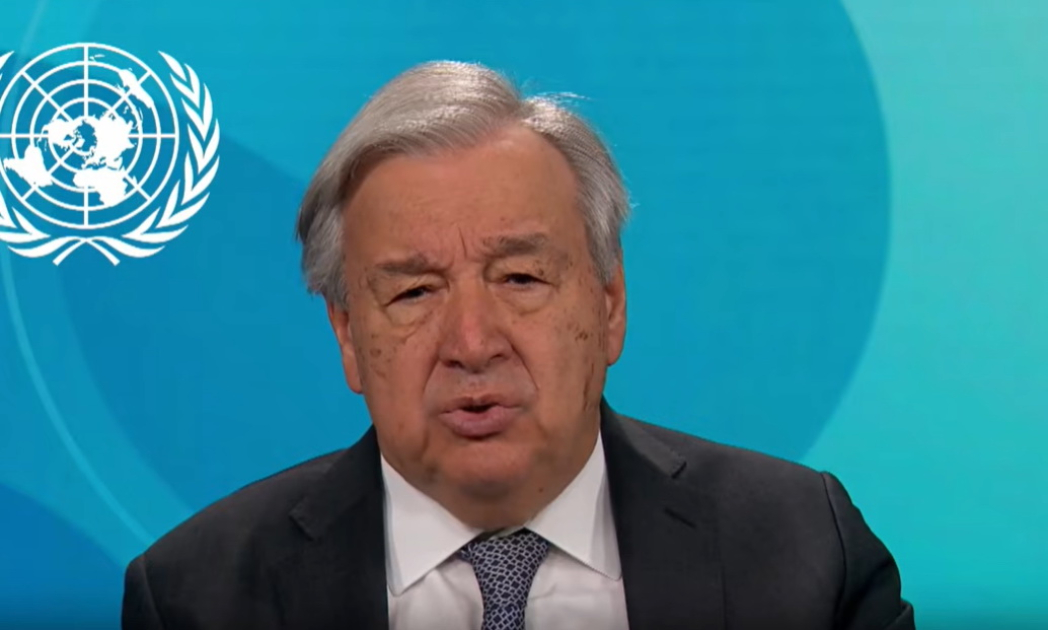
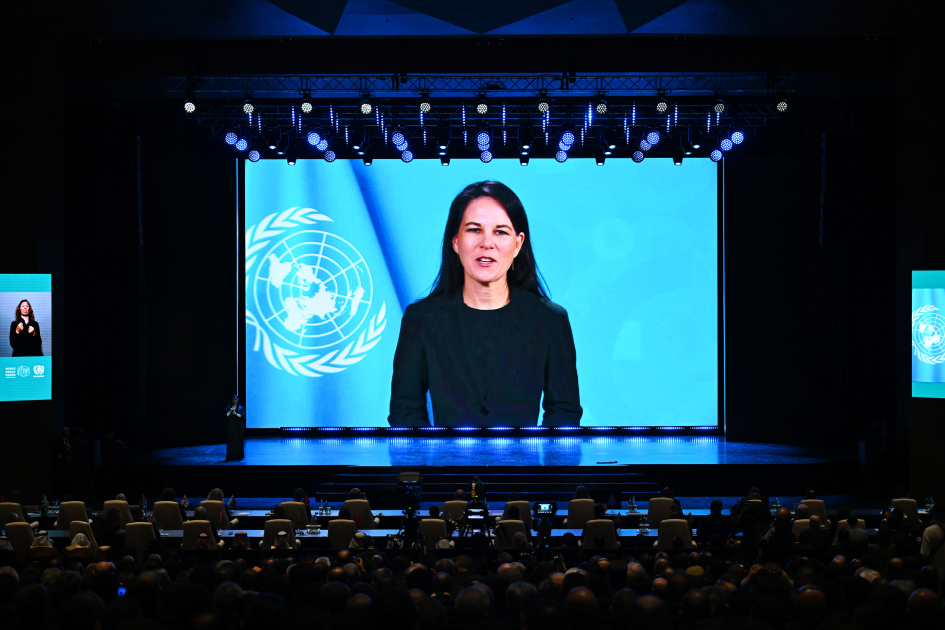
Subsequently, video messages from UN Secretary-General António Guterres and President of the UN General Assembly Annalena Baerbock addressed to the event participants were screened.
The UN Secretary-General, in his message, emphasized that the World Urban Forum will serve as an important impetus for turning the goals of the Forum into reality.
President of the UN General Assembly Annalena Baerbock said: “This event also creates an opportunity to strengthen actions related to the housing crisis.”
x x x
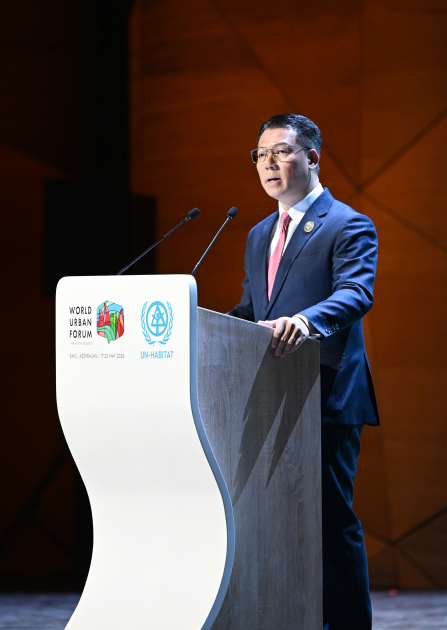
Then, addressing the event, Nga Kor Ming, President of the UN-Habitat Assembly, said:
- Your Excellency, Ilham Aliyev, President of the Republic of Azerbaijan.
Excellences, heads of state and government, Madam Executive Director of UN-Habitat, honorable ministers, mayors, distinguished delegates, ladies and gentlemen.
It is a profound honor to stand before you in the historic city of Baku, at the crossroads of the ancient Silk Road, and a city of the future, with its modern skyline on the Caspian Sea. I wish to extend my heartfelt gratitude to the Government and the people of Azerbaijan for their extraordinary hospitality and vision.
I also acknowledge the messages delivered to us by UN Secretary-General Mr. António Guterres and the President of the General Assembly, Ms. Annalena Baerbock. We take note that the Global Urban Agenda has never been more urgent as the basis for multilateral cooperation.
Excellences, as Baku becomes the capital of the world during this 13th World Urban Forum, let us recall a fundamental promise. When we fail to provide housing, we are breaking a promise to our children. Hence, the theme of this Global Forum – Housing the World, Safe and Resilient Cities and Communities – is not merely a slogan, it is a call to immediate action. But let us also remember that this call to action must be grounded in the real world and in the real economy. It might be aspirational to want to house the world, but we will only be boiling the ocean if we do not have the political will, the right policy, and the economic resilience to build and house all our citizens.
According to UN-Habitat, the world is facing a global housing crisis, affecting nearly 2.9 billion people, with one in every four people living in informal settlements. Furthermore, over 2 billion urban dwellers will be impacted by an increase of at least 0.5°C by 2040. For those trapped in inadequate housing, these are not just numbers. They represent a critical threat to survival. As President of the UN-Habitat Assembly, I see these pressures converging. Yesterday, over 80 ministers gathered here for an informal Ministerial Meeting to prepare for the high-level mid-term review on the New Urban Agenda in New York. All of us, in our own way, are grappling with similar urban challenges. However, if we unite in a common shared purpose, we shall overcome together.
I am here to tell you that we do not face it alone. Instead, let us double our efforts to localize the implementation of the New Urban Agenda, to achieve the Sustainable Development Goals. As you know, the Habitat Assembly established the Intergovernmental Working Group on Adequate Housing for All. This is our historic platform for multilateral cooperation, the bridge that connects global policy to local delivery.
Excellencies, while I stand here as President of the Assembly, I am also guided by the experiences of my home nation, Malaysia. This journey of implementing the New Urban Agenda is guided by our Malaysia Madani vision. We have delivered over 1.1 million affordable homes, achieving a 77 per cent homeownership rate. We have also surpassed our green targets with the planting of over 150 million trees. Furthermore, 60 percent of the local authorities have completed voluntary local reviews, proving that when government is strong and communities are empowered, the SDGs move from the policy to positive impact on the ground.
Excellencies, I ask you today, when you look at your city maps, do not just look at roads and zones. See the faces. See the young entrepreneurs in slums who need a legal address to start a business. See the families in the coastal cities at risk from rising sea levels. Let us commit to human-centered urbanism. Let us bridge the $5.4 trillion annual financing gap for climate-resilient infrastructure. As I prepare to pass the mandate of President to the United Arab Emirates next year, I invite you all to contribute to the WUF13 call to action. Let us make it a legacy document that is both ambitious and inspirational.
Excellences, heads of government, our hosts in Azerbaijan, understand the true value and importance of having a home. There is a beautiful saying here, “Hər kəsin öz evi öz dünyasının mərkəzidir” means “Every home is the center of one's own world, their sanctuary.” The feeling of being at home is especially critical when the world feels unstable, when institutions falter, and when technology transforms our societies. In those moments, remember this, the future does not belong to those who predict it, it belongs to those who built it. And our task this week is to be the builders of an urban future for all.
Once again, I am inspired by the Azerbaijani proverb that resonates deeply with our work: “Dama-dama göl olar, axa-axa sel olar. Drop by drop, a lake is formed, and by flowing, a river is made.” Let us take the wisdom from Azerbaijan and make this a better world. So every policy you debate, every partnership you forge, and every commitment you make in the Baku Call to Action, is a drop of hope. Together, let us create a river of action that carries us towards a future and no one and no place is left behind. I hereby wish you all a productive and transformative WUF13. Thank you.
x x x
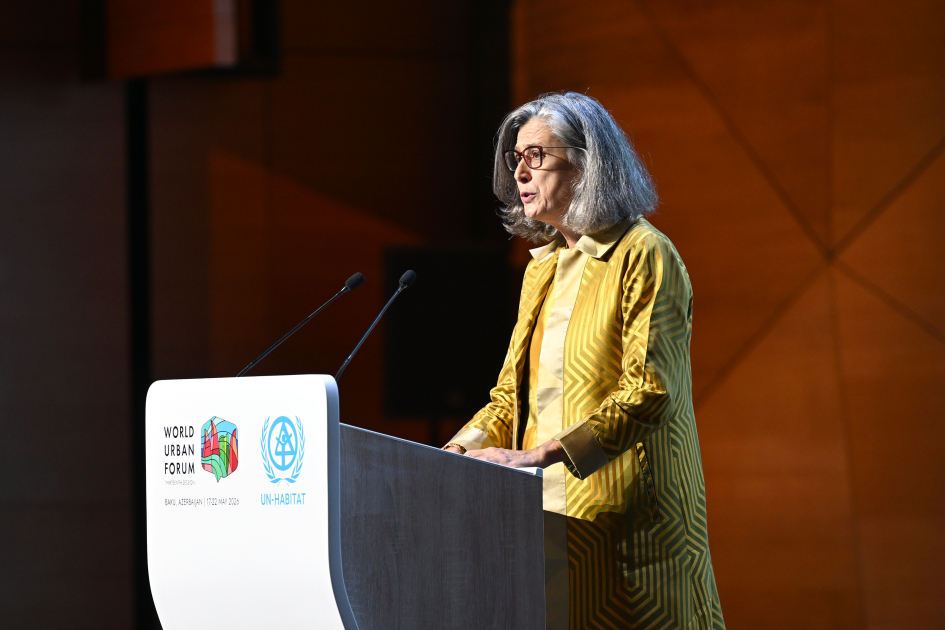
Delivering a speech at the event, Anacláudia Rossbach, Executive Director of the United Nations Human Settlements Programme (UN-Habitat), said:
- His Excellency, Mr. Ilham Aliyev, President of the Republic of Azerbaijan.
His Excellency Mr. Nga Kor Ming, President of the United Nations Habitat Assembly.
Excellences, heads of state and government present, ministers, honorable representatives of member states and local authorities,
Distinguished colleagues and guests.
All protocols observed. Let me correct my initial welcome, I wanted to say welcome to a sunny day in Baku. It is Monday. We all, know that we all have to work this week and very hard. Excellences, we may not know what the future holds, but we do know the realities people face today. The climate crisis, displacement, conflict and destruction. Amid these challenges, over a billion people still live in precarious conditions without reliable access to water, sanitation, electricity, decent work or education, trapped in poor health conditions where disease spreads and children suffer most. This is the world where most people will soon live in cities. Cities where many young people, older persons, migrants and newcomers cannot afford to live. Cities where more people are pushed onto the streets and into informal settlements. Cities increasingly divided between those who have and those who do not.
Excellences, colleagues, it is no surprise that tens of thousands of us from communities around the globe to high-level leaders are gathered here in Baku to address one critical question. How, in this era of uncertainty, instability and destruction, can adequate housing be made available to all?
Despite the intense rainfall and thunderstorms that have affected parts of Azerbaijan in recent days, we could see that yesterday, Your Excellency, we have come together here in Baku with resilience.
This is what we call for cities: determination and a shared sense of purpose. This is the reality of many cities today and we deeply appreciate the team spirit, the quick reaction and your flexibility that brought us today to this beautiful venue—Thank you so much. The level of interest and participation in WUF13 has been truly exceptional. Never before, has a forum of this nature brought together such a vast and diverse global audience reflecting the growing recognition that housing and sustainable urban development are central to our collective future. So let us remind ourselves that collectively we are not starting from scratch.
Across all regions, housing is becoming a central policy priority linked to economic growth, social inclusion and climate resilience. Across Africa, governments are advancing affordable housing, informal settlement upgrading and infrastructure investment. In Asia and the Pacific, several countries are pursuing urban renewal, affordability and large-scale housing expansion. In Latin America and the Caribbean, social housing and transit-oriented development are gaining momentum. In the Middle East, housing is increasingly tied to economic diversification and demographic change. While in Europe and North America, governments are strengthening affordable housing, rent regulation and supply-focused reforms in response to growing urban pressures.
Friends, as the world turns its attention to housing, let us also remind ourselves of the common principles and perspectives we already share. We recognize that the housing crisis is a crisis of equity, resilience and human rights and that the future of our cities will be shaped not by exclusion but by inclusion. Cities cannot thrive when housing systems fall. We know that when people lose their homes, they lose far more than walls and roofs. They lose safety, livelihoods and a sense of belonging. Recognizing that the right to housing is increasingly threatened by climate change, we also share a growing consensus that climate action and housing policy can no longer exist in separate conversations. Recovery begins with housing and resilience begins at home. The homes we build today must withstand the climate realities of tomorrow. We therefore share the conviction that housing must move from the margins of policy to the center of global action.
As we explore the economic and financial dimensions of housing, we collectively recognize that housing is a social necessity and also a powerful economic engine. Realizing the social and economic potential of housing requires financial systems that finance homes, not speculation.
The midterm review of the New Urban Agenda has confirmed both the urgency of today's urban challenges and the enduring value of the commitments made in Quito. WUF13 is an opportunity to accelerate implementation through practical action, partnerships and investments. It is time to focus on solutions. What are the pathways to achieving adequate housing for all? Where have we gone wrong and what must we do differently to move forward? Does UN-Habitat have the solution to the global housing crisis? Do we have all the answers for the nearly 3 billion people living with inadequate housing, for the more than 1 billion living in slums, or the 300 million people experiencing homelessness? I will not pretend that we do, but let me add this. Every one of you, without exception, holds a piece of the answer and that is precisely what this collective effort is seeking. We do not take lightly the time, cost and, dare I say, the climate impact of gathering here together. It is both our responsibility and our privilege to listen, learn from one another's experience and bring our knowledge together. Baku must send a clear message to the high-level meeting of the General Assembly this July. We must move from recognizing the housing crisis to advancing the achievement of the SDGs through concrete policies, investments and action. My hope is that we leave Baku with renewed confidence that, despite today's global challenges, adequate housing can be within reach for all, without exception.
In closing, I would like to thank the government of Azerbaijan for hosting the 13th session of the World Urban Forum.
It is now my pleasure to officially declare the session open. Thank you.
x x x
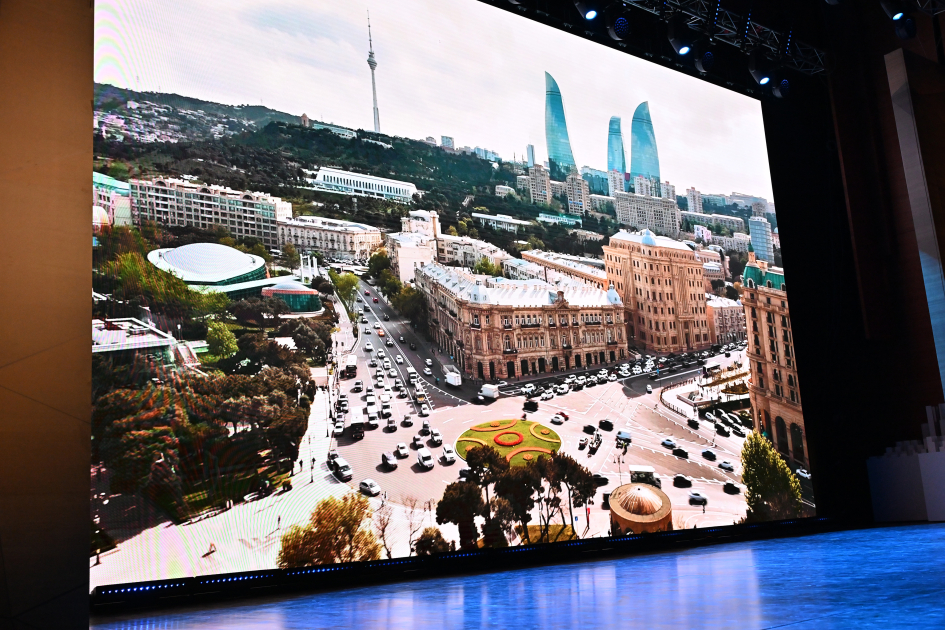
Then, a video dedicated to Azerbaijan was screened.
x x x
Following the speeches, the official opening ceremony concluded.
Other news in this section


VIDEO