Belgium signals F-35 fleet expansion amid transatlantic sparks
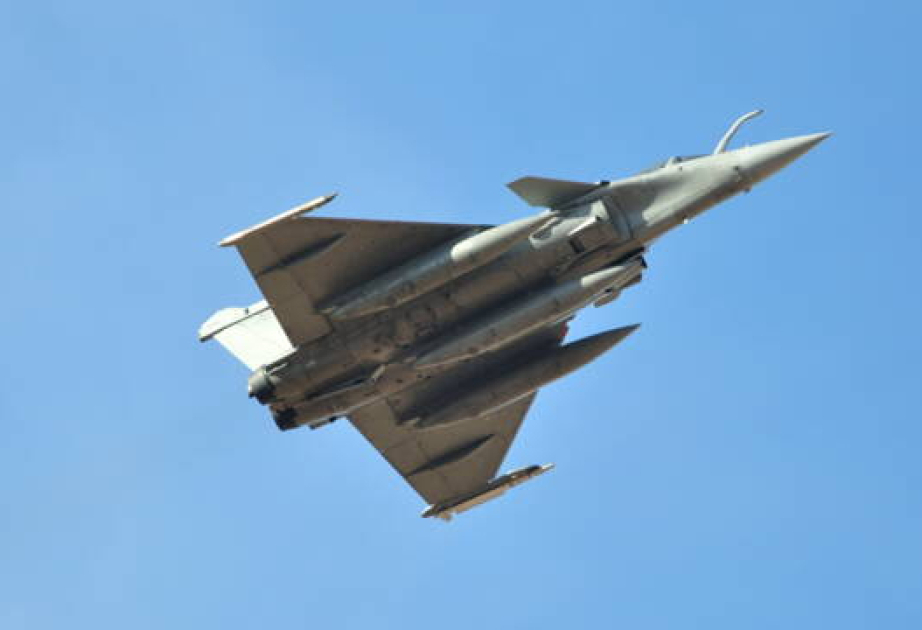
Baku, April 25, AZERTAC
In a move that has raised eyebrows across the Atlantic, Belgium is contemplating the acquisition of 11 additional Lockheed Martin F-35A Lightning II fighter jets, a decision that underscores its commitment to NATO while stirring tensions within Europe’s push for defense autonomy, according to bulgarianmilitary.com.
On April 23, 2025, Belgian Prime Minister Bart De Wever told parliamentarians that the country’s current fleet of 34 F-35As, purchased in 2018, is insufficient to meet NATO’s operational demands, prompting considerations for a bolstered air force.
This announcement, reported by the French outlet Opex360 and Belgian broadcaster RTBF, comes at a time when some European nations are reevaluating their reliance on American military hardware due to U.S.-imposed tariffs and ambitions for homegrown alternatives like the Franco-German-Spanish Future Combat Air System [SCAF].
Belgium’s pivot toward more F-35s signals a strategic alignment with Washington, but it also risks deepening divides in Europe’s fragmented defense landscape.
The Belgian Air Component’s existing order of 34 F-35As, valued at approximately $6.53 billion, was finalized in 2018 to replace an aging fleet of 54 F-16 Fighting Falcons, which have served since the late 1970s.
The decision followed a competitive bidding process where the F-35 outshone European contenders like the Eurofighter Typhoon and Dassault Rafale, primarily due to its lower unit cost of around 76 million euros per jet, as noted by Reuters in 2018.
Deliveries began in December 2024, with the first F-35A arriving at Luke Air Force Base in Arizona for pilot training, according to Aviation24.be. By 2027, the jets are expected to operate from Florennes and Kleine-Brogel air bases, enhancing Belgium’s role in NATO’s air policing and nuclear-sharing missions.
Belgium’s defense strategy is under pressure to align with NATO’s mandate for members to spend 2% of GDP on defense, a target reaffirmed in 2023. Historically, Belgium has lagged, with spending at just 0.9% of GDP in 2017, earning it a reputation as one of NATO’s “free riders,” as Defense Minister Theo Francken recently described in a February 2025 speech posted on X.
To rectify this, Brussels plans to inject an additional 4 billion euros annually into its military budget, a commitment De Wever emphasized in his parliamentary address. The potential acquisition of 11 more F-35As, which Francken suggested could be assembled at Italy’s Cameri facility rather than in Texas, is a cornerstone of this effort.
The Cameri site, operated by Leonardo in partnership with Lockheed Martin, is Europe’s sole F-35 final assembly and checkout facility, having delivered jets for Italy and the Netherlands since 2015, as reported by Army Recognition on April 14, 2025.
The F-35A Lightning II, the conventional takeoff and landing variant of Lockheed Martin’s fifth-generation fighter, is a technological marvel designed to dominate modern battlefields. Powered by a single Pratt & Whitney F135 engine delivering up to 43,000 pounds of thrust, the jet achieves speeds exceeding Mach 1.6 while maintaining a low radar cross-section for stealth operations.
Its advanced sensor suite, including the AN/APG-81 active electronically scanned array radar and the AN/AAQ-37 Distributed Aperture System, provides unparalleled situational awareness, integrating data from onboard and offboard sources. The aircraft’s Helmet-Mounted Display System projects critical flight data onto the pilot’s visor, eliminating the need for a traditional head-up display.
In stealth mode, the F-35A carries 5,700 pounds of internal ordnance, but in “Beast Mode,” it can haul up to 22,000 pounds of combined internal and external weapons, including AMRAAMs, JDAMs, and Sidewinders, as detailed by The Aviation Geek Club. This versatility makes it ideal for NATO’s nuclear-sharing role, where Belgium maintains U.S. B61 nuclear bombs at Kleine-Brogel for potential use in crises.
Belgium’s choice to stick with the F-35A over European alternatives like the Rafale or Eurofighter is rooted in operational and economic logic. Having already invested in training, infrastructure upgrades costing 275 million euros, and integration into NATO’s networked operations, switching to another platform would be costly and disruptive.
The Rafale, built by France’s Dassault Aviation, boasts multirole capabilities and a proven track record in conflicts like Libya and Syria, but it lacks certification for NATO’s nuclear missions, a critical requirement for Belgium.
Other news in this section


