Thor Heyerdahl: Azerbaijanis should be proud of their ancient culture
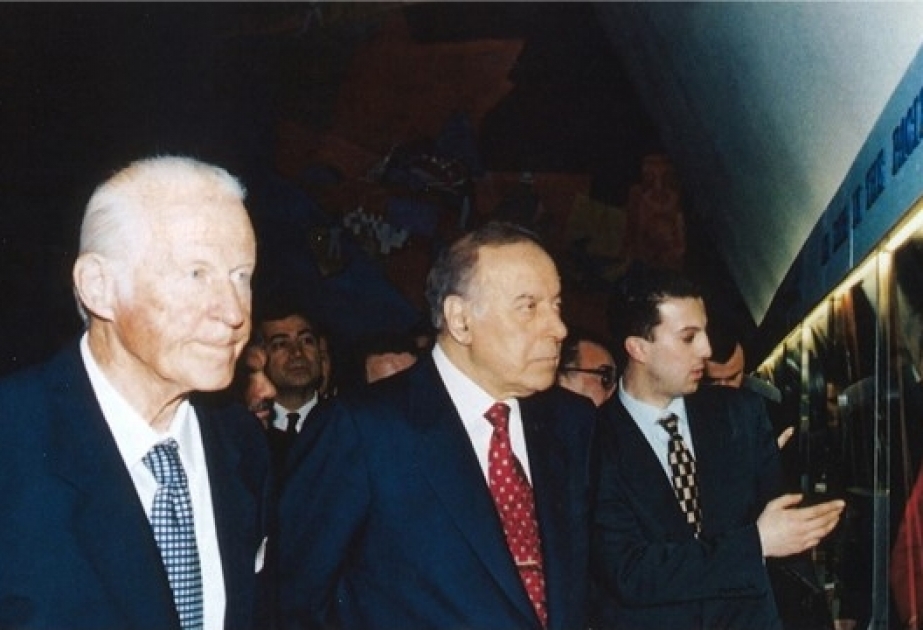
Baku, June 23, AZERTAC
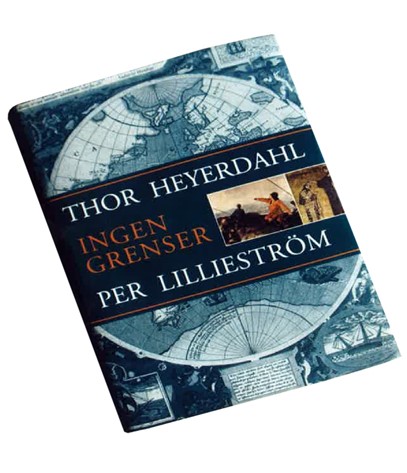
Thor Heyerdahl (1914-2002) was a world-renowned explorer and archaeologist who was convinced that there might be connective links between the Caucasus and Scandinavia. He elaborated on these ideas in his book “Ingen Grenser”, Norwegian for “No Borders”, published by J.M. Stenersens Forlag in Oslo in 1999. In his research he claimed that the Scandinavian god Odin was actually a historical figure who had originated from the Caucasus and then migrated with a large number of his people to Scandinavia and that Scandinavians are the descendants of the people who once lived in the region now known as Azerbaijan.
Heyerdahl’s rich heritage and legacy continue to influence hearts and minds, generate dialogue, multicultural co-operation and build bridges across ethnic diversity, national borders and political and religious factions. His book The Kon-Tiki Expedition, published in more than 70 languages, has become a classic. A documentary film of the Kon-Tiki expedition won an Oscar in 1951. Heyerdahl received 11 honorary doctorates from universities in the Americas and Europe. In May 2011, the Thor Heyerdahl Archives were added to UNESCO’s Memory of the World Programme. The famous Kon-Tiki Museum in Oslo houses original boats and exhibits from Thor Heyerdahl’s world-famous expeditions. Many famous people have visited the museum over the years, including HM Queen Elisabeth II, HM the King of Thailand, President Eisenhower, President Clinton, President Heydar Aliyev and Bill Gates.
Thor Heyerdahl made four visits to Azerbaijan: in 1981, 1994, 1999 and 2000. He was the Honorary President of the Azerbaijan-Norway Friendship Society. This article is a shortened version of Heyerdahl’s speech delivered at a public forum organised by the Friendship Society during his visit to Baku in May 1999.

The author greets Thor Heyerdahl as Honorary President of the Azerbaijan-Norway Friendship Society
Azerbaijan Connection
I think as science advances, it will become more and more evident that we have more in common with each other than any of us realized a few decades ago. This afternoon I visited the Gobustan caves. From the first time I saw the carvings out there (several years ago), I was attracted to the petroglyphs that feature reed ships. On the way back from Gobustan, I was told that I was supposed to speak tonight. I was told that I should speak about my relationship with Azerbaijan and how it began. I had barely half an hour to prepare myself for this topic, but I hope you will give me half an hour so I can tell you what I’ve been thinking.
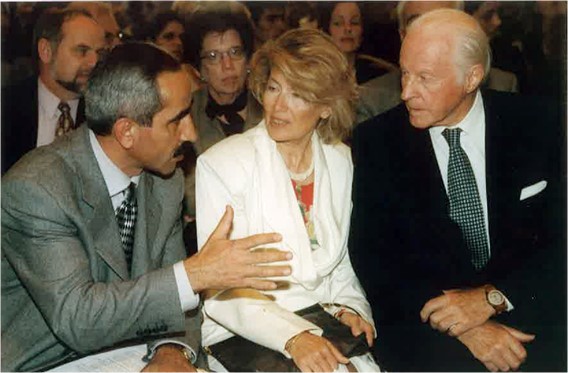
Thor Heyerdahl and his wife Jacqueline Beers, with the author sharing the forum agenda
The first time I came to Azerbaijan was in 1981. There weren’t very many visitors from outside the Iron Curtain who came here in those days. My invitation came from Azerbaijan’s Academy of Sciences. I started thinking about why the Academy of Sciences in Azerbaijan would invite me and it dawned on me that I was in a very unique situation at the time because I was both a member of the New York Academy of Sciences and had received an Honorary Doctorate from the Soviet Academy of Sciences. I didn’t believe in barriers between nations. I believed in people, not political parties.
… And so, after the three expeditions on three different oceans, I was invited to visit Azerbaijan. I came here because I established good contacts with scientists in in this country, and I had learned that you had something quite sensational in Gobustan. I came to Azerbaijan as a guest of the Academy of Science in Azerbaijan to see the famous petroglyphs in Gobustan.
The President of the Academy was driving with me around to see this country and all its beautiful nature, and meet local people and scientists. We went to see the petroglyphs in Gobustan. I learned about my friend’s family connections the day before I left - he was the brother of the President of Azerbaijan. That was how my friendship with your country started.

Heydar Aliyev visiting the Kon-Tiki Museum in Oslo - 1996
(Heydar Aliyev first met Thor Heyerdahl in August 1981 during the Soviet period. After Azerbaijan’s independence, in 1994, Statoil approached President Heydar Aliyev and asked whom they might bring from Norway. Aliyev’s first response was Thor Heyerdahl. - Author)
Due to this friendship that I have with Azerbaijan, when Statoil from Norway came here, I was invited to join the delegation because I knew so many people in your country. And that’s when I became interested in the fact that you have two types of boat petroglyphs in Gobustan.
On my first visit, I came to study the reed ships that are similar to the boats of the ancient Mediterranean. But in the second visit, I learned that the people in Azerbaijan call themselves Azeri. I remember from my school days that we have legends in Norway woven into the Norwegian history in such an intricate way we did not know where the history starts and mythology ends. But the written history of Norway goes back to more than 800 years. Oral traditions about the original homeland of our ancestors were recorded around the year 900 in Iceland and that we are descendants of the land of the “Aser”.
Early Scandinavian History
We learned the line of the royal families in Denmark, Sweden and Norway. But we did not take the stories about our beginnings seriously because it was so ancient. We thought it was just imagination, just mythology. The actual years for the lineage of historic kings began around the year 800 AD. So, we learned all the kings in more than 1,000 years that followed and did not interested ourselves in earlier names.
But I remember from my childhood that the mythology started with the God named Odin. From Odin it took 31 generations to reach the first historic king. The record of Odin says that he came to Northern Europe from the land of Asers. I started reading these pages again, and saw that it was not mythology at all, it was history and geography.
Snorri Sturluson, a 13th-century Icelandic historian, who recorded these stories, started by describing Europe, Asia and Africa, all with their correct names, Gibraltar, the Mediterranean Sea with their old Norse names, the Black Sea and the Dardanelles with the names we use today again, and the river Don with its old Greek name, Tanais. So, I realized that this has nothing to do with the gods who lived with the god of thunder, Thor, in the skies. This is on our planet.
Snorri said that the homeland of the Asers was east of the Black Sea. He said this was the land that chief Odin had, a big country. He gave the exact description: it was east of the Black Sea, south of a large mountain range on the border between Europe and Asia, and extended southwards towards the land of the Turks. This has nothing to do with mythology; it was on this planet, on Earth.
Then came the most significant point. Snorri says: ‘At that time when Odin lived, the Romans were conquering far and wide in the region. When Odin learned that they were coming towards the land of Asers, he decided that it was best for him to take his priests, chiefs and some of his people and move to the Northern part of Europe.’
The Romans are human beings, they are from this planet, and they are not mythical figures. Then I remember that when I came to Gobustan, I had seen a stone slab with Roman inscriptions. I contacted the Academy of Sciences of Azerbaijan. I was taken to the place, and I got the exact wording of the inscription.
There’s a very logical way of figuring out when this was written. It had to be written after the year 84 AD and before the year 97AD. If this inscription matched Snorri’s record, it would mean that Odin left for Scandinavia during the second half of the 1st century AD. Then I counted the members of generation of kings, every king up to the grandfather of the king that united Norway into one kingdom, because such information is available - around 830 AD.

Here is where history, archeology, geography and physical anthropology come together.
The more I research the topic, the more evidence I find that this part of the planet has played a much more significant role than anybody ever suspected. I am working on a book at present together with a colleague, and we are halfway through it describing our observations.
Tarim Mummies in China
In the meantime, we have contacts with Academies of Sciences in 11 countries. We do not want leave anything out. The most surprising thing was when we contacted Communist China. They had discovered blond-haired mummies in the Tarim Desert deep inside China, so perfectly preserved in the cold climate and salty earth that you could see the colour of the skin and hair. The Chinese archaeologists were surprised because mummies were not Mongoloids at all; they suspected that they were Vikings.
But it didn’t make sense to me that Vikings should be deep inside the deserts of China. When the Chinese archeologists conducted radio-carbon dating, they determined that the mummies were Nordic type dating from 1,800 to 1, 500 years BC. But the Viking period started around 800 AD. It then became obvious that these mummies were not Vikings who had come to China. Here was a missing link. And again the Caucasus enters into the picture as a mutual migratory centre.

The Tarim Mummies were found in very good condition due to the dryness of the desert and dessication of the corpses. Several leading scholars have traced their origins to the Caucasus or Europe
Scythians
But this is not the end of the story. These mummies were dressed in cloth that had been woven, and the colours and the woven pattern were of a very specific type. The Chinese themselves studied the mummies and then invited American experts to study the clothing who determined that the weave and clouring were typical of the Celts on Ireland. But this made no sense at all. Then we contacted Ireland to get their sagas, and their written saga says that their ancestors were Scythians. So, again, their roots come back here to the Caucasus.

This is only the beginning, because this is as far as we have obtained documentation from Academies of Sciences with which we are in contact. I will not go into detail further, but I have also found archeological evidence that is so striking that there can no longer be any doubt.
My conclusion is that Azerbaijan has been a very important centre, sending people in many directions and attracting people from many directions. You have had metals that made the Romans want to come here. Azerbaijan has been very central in the evolution of civilization, and more than anything, this is proven by the petroglyphs in Gobustan. Azerbaijanis should be proud of their ancient culture. It is just as rich and ancient as that of China and Mesopotamia.
One thing is clear: navigation occurred before civilization. We used to believe that civilization came first, and once people had developed a high enough level of civilization, then they started to build boats. This just isn’t true. On the contrary, it was when people built ocean-going vessels that enabled them to contact each other so that they could trade and learn from each other. It was through contact and peaceful cooperation that civilization developed.
 |
Bust of Thor Heyerdahl in Kish village(opposite the St Eliseus church) of Azerbaijan. Kish is a village near Sheki in the northwest region of Azerbaijan. This St Eliseus church is referred to in the “History of Albanians” by medieval historian Moses Kalankatuykskiy. The oral tradition is that this is one of the oldest churches in the Caucuses, from the 1st century, located on the site of a pagan temple. It was founded by the Apostle St Eliseus, a disciple of Jesus’ brother. Guivami Rahimli PhD, Professor at Baku State University |
The author was the president of Azerbaijan-Norway Friendship Society established in 1995. The Society created bonds of cooperation between Norway and Azerbaijan across a wide range of areas, including culture, education and business. Among its board members, along with Azerbaijanis, were Statoil executives and the ambassadors of Norway as well. Among the guests of the Friendship Society, along with Thor Heyerdahl, were also Jens Stoltenberg, Minister of Industry and Energy then and former Prime Minister of Norway, currently NATO Secretary General, Arne Olav Brundtland - a leading expert on foreign affairs from the Oslo Institute of Foreign Studies (the husband of the former Prime Minister of Norway Gro Harlem Brundtland), the famous SKRUK choir, the Norwegian parliamentarians and many others.
P.S. In 2000, the Thor Heyerdahl Institute was established in Lavrik (Norway) with the aim of promoting and developing Thor Heyerdahl’s ideas and principles.
P.P.S. Acknowledgement note from the Thor Heyerdahl Institute
Dear Guivami Rahimli. Thank You so much for this information and inspiration. It is very meaningful to work and develop different visions of Thor Heyerdahl and do projects. That is one of the aims of the Institute. It is always very important to remember that Thor Heyerdahl’s work/archives is a part of the world heritage by UNESCO. Good luck with all your future projects!
Mvh
Beate Bjørge
Managing Director
The Thor Heyerdahl Institute
Other news in this section


