Mount Etna – highest active volcano in Europe
Baku, September 19, AZERTAC
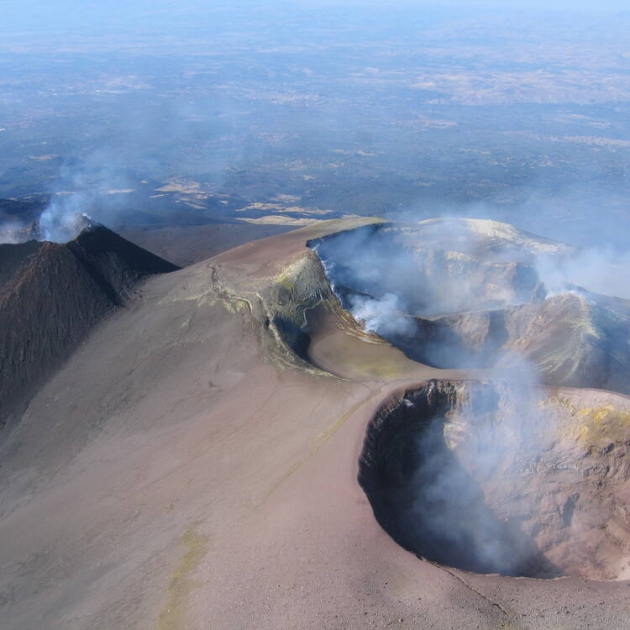
Towering above the city of Catania on the island of Sicily, Mount Etna, Latin Aetna, Sicilian Mongibello, is the highest and most active volcano in Europe.
The name comes from the Greek Aitne, from aithō, “I burn.”
It is the highest active volcano in Europe, its topmost elevation being about 10,900 feet (3,320 metres). Like other active volcanoes, it varies in height, increasing from deposition during eruptions and decreasing from the periodic collapse of the crater’s rim. In 1865 the volcanic summit was about 170 feet (52 metres) higher than it was in the early 21st century.
Etna covers an area of some 600 square miles (1,600 square km), and its base has a circumference of about 93 miles (150 km).
Etna has been studied systematically since the middle of the 19th century.
Three observatories have been set up on its slopes; they are located at Catania, Casa Etnea, and Cantoniera.
The Greeks created legends about the volcano, saying that it was the workshop of Hephaestus and the Cyclops or that underneath it the giant Typhon lay, making the Earth tremble when he turned.
The ancient poet Hesiod spoke of Etna’s eruptions, and the Greeks Pindar and Aeschylus referred to a famous eruption of 475 BCE. Another of Etna’s better-known ancient eruptions was that of 396 BCE, which kept the Carthaginian army from reaching Catania. From 1500 BCE to 1669 CE there are records of 71 eruptions, of which 14 occurred before the Common Era.
Etna has had scores of known eruptions in its history. In 1669, in what has been considered the volcano's worst-known eruption, lava buried a swath of Catania, the largest city in the east on the island of Sicily, and devastated dozens of villages.
In the early 21st century a major eruption began in July 2001 and lasted several weeks.
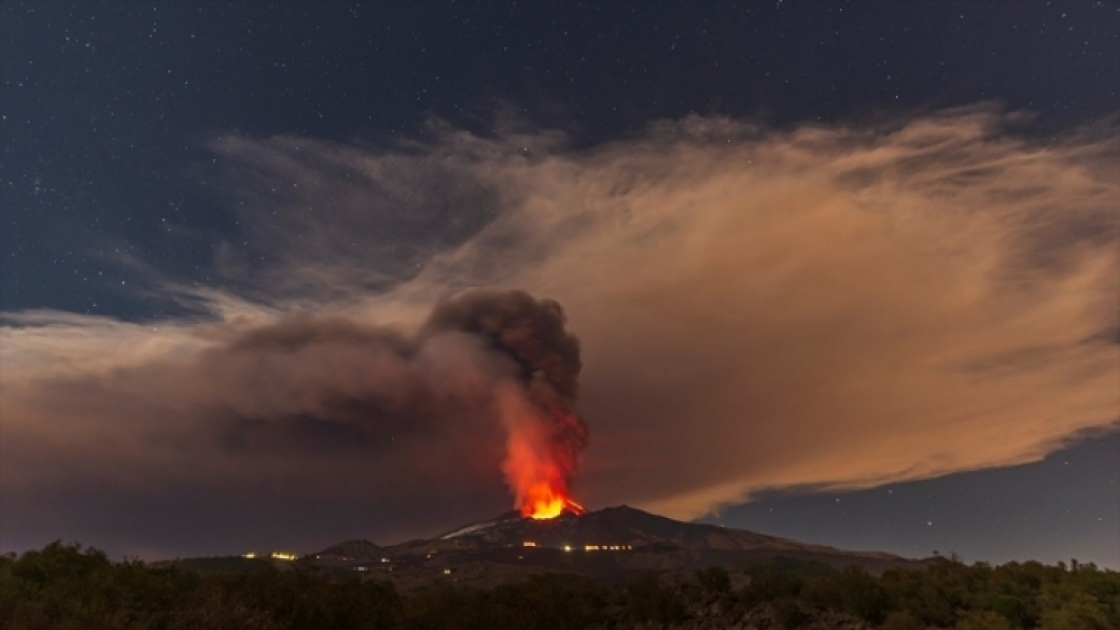
Other significant early 21st-century volcanic activity included the Strombolian eruptions of 2002-03, 2007, 2015, 2017, 2019, and 2020.
More recently, in 1983, dynamite was used to divert lava threatening towns. In 1992, the army built an earthen wall to contain the lava, flowing from Etna for months, so it wouldn't barrel into one of the villages on the slopes.
On February 22, 2022, Mount Etna roared back to spectacular action after a few months of relative quiet, sending up a 12-kilometer (7.5-mile) high volcanic ash cloud over eastern Sicily.
Other news in this section


